
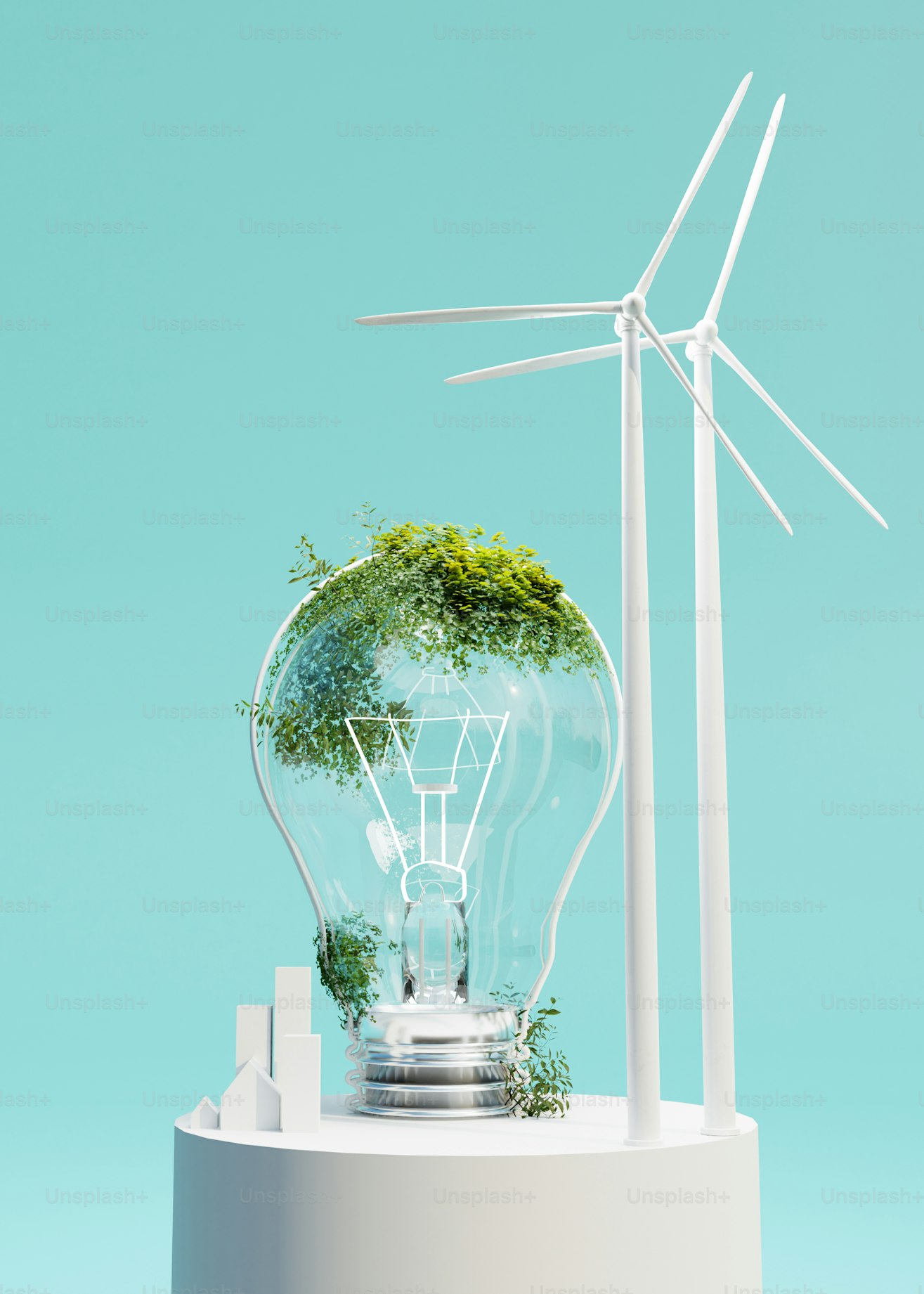
Fuel made from water and air? It sounds too good to be true. Something pulled from one’s wild imagination. No oil fields, no drilling rigs, no carbon-heavy supply chains spanning across continents. Just air, water, and electricity? It seems crazy, but this is exactly what Sunfire is doing.
Sunfire has positioned itself to address what may be one of the most challenging climate technology issues as the world searches for ways to reduce emissions without interfering with people’s daily lives: How do we replace fossil fuels in industries that cannot simply plug into the grid? And their answer is turning renewable electricity into fuel directly from water and air.
Though the invention of solar panels and wind turbines has created alternative ways to produce electricity, they still cannot power everything on their own. Aviation, shipping, steelmaking, chemical production, and even heavy industries continue to rely on fuel.
Enter synthetic fuels and green hydrogen plants.
Sunfire demonstrates that modern biotechnology can produce fuel using our current renewable energy sources without incurring carbon costs.
Sunfire provides a link between fossil fuels and the potential for clean energy in the future.
By converting air and water into usable fuel, the company is demonstrating how energy systems can adapt to change without collapsing. It is proof that decarbonization does not always require a new approach. Sometimes all that is required is a smart substitute.
Sunfire’s method is based on a careful type of engineering, an attempt to restructure what we know the energy system to be. Sunfire envisions a future in which we will no longer need to drill holes in the ground for fuel; instead, it will be manufactured.
Making fuel with air and water begins with electricity. But Sunfire’s process does not just use any kind of electricity—it depends on renewable electricity from wind, solar, or hydro. The company’s promise is about removing carbon emissions at the source.
Sunfire powers high-temperature electrolysis systems that split water (H₂O) into hydrogen (H₂) and oxygen (O₂) using renewable energy innovations. Sunfire’s solid oxide electrolysis operates at much higher temperatures than conventional ones. And this makes the process more energy-efficient when paired with industrial waste heat.
The result is hydrogen made without fossil fuels, which becomes the foundation for the innovation.
Hydrogen can be useful on its own, but the main breakthrough is the combination. Instead of carbon from oil or gas, Sunfire uses carbon dioxide from the air. This is an important step because Sunfire closes the carbon gap by recycling existing carbon rather than emitting new carbon into the atmosphere.
Through well-established processes such as the Fischer–Tropsch synthesis or methanol synthesis, Sunfire converts its hydrogen and captured carbon dioxide into synthetic fuels.
Depending on the configuration, there are several options available:
These fuels only require a little before they are ready for use. They can flow through existing pipelines, power current engines, and be used in planes and ships.
In sectors where batteries struggle to keep up with their heavy demands, this compatibility is key.
The Sunfire approach is taking on one of the most challenging questions in climate science today: decarbonizing industries that electricity cannot power because of their demand for dense, reliable energy sources to function.
This new synthetic fuel predicts a future with low carbon emissions.
There is also a system-level advantage. This fuel production can also become a form of storage for excess electricity in liquid form.
Sunfire’s journey from idea to industrial test ground has been methodical. Its early prototypes proved that it was possible for renewable energy sources to drive high-temperature electrolysis and split water into hydrogen. When this happens, the hydrogen in turn feeds into the reaction, making it possible to produce synthetic fuel from the carbon captured from the air.
In 2021, Sunfire launched its first integrated test facilities. A test was run as researchers attempted to combine electrolyzers, carbon capture, and fuel synthesis units into one single chain. These were not leisure projects. They were done to back up their notion that electricity can be converted to hydrogen to carbon-neutral fuel reliably.
But lab test runs and real-world applications are miles apart. Their engineers structured their trials to “stress” the systems. This trial produced synthetic fuel under industrial pressures for weeks, which contributed to industry observers’ increased interest in synthetic fuels.
The company has also collaborated with energy and industrial companies to test the technology in more demanding environments.
Having financial backing is one of the most crucial steps for any startup. Your technology cannot achieve meaningful success without funds. For any startup, its investors are the foundations that finance the vision. However, Sunfire’s investors buy into their vision, and their support is a reflection of their understanding of what Sunfire is trying to achieve with low-carbon fuels.
Analysts estimate Sunfire’s valuation to be around €1.7 billion, a befitting figure for a company of that scale.
Its ever-growing valuation reflects the market’s sentiment:
In other words, investors are not just putting their money into clean fuel technology. They are also buying into Sunfare’s vision for the next decade.
Sunfire’s vision is that raw materials for fuel can be obtained from anywhere without fear of scarcity. If they succeed, the future of energy sources may not be linked to drilling rigs and geopolitics anymore, but to a balanced reaction between air, water, and electricity.
Drilling holes into the ground with pipes to get fuel is cheaper than producing synthetic fuel. However, Sunfire believes that the falling renewable energy costs, rising carbon prices, and stricter climate regulations will flip the advantage to its side with time.