Eight years of rejection may knock the wind right out of many’s sails, but not Adesuwa Rhodes. A young, Black woman charting a course in capital management territory felt like a journey uphill in a male-dominated field. Worse still, the core thesis behind Adesuwa Okunbo Rhodes Aruwa Capital—investing in women-led businesses, didn’t appeal to many. What goes on in the mind of a determined woman like that as she faces rejection after another?
She wasn’t asking for favors; she was simply asking for a seat at the table on merit. She wasn’t given any, so she created hers.
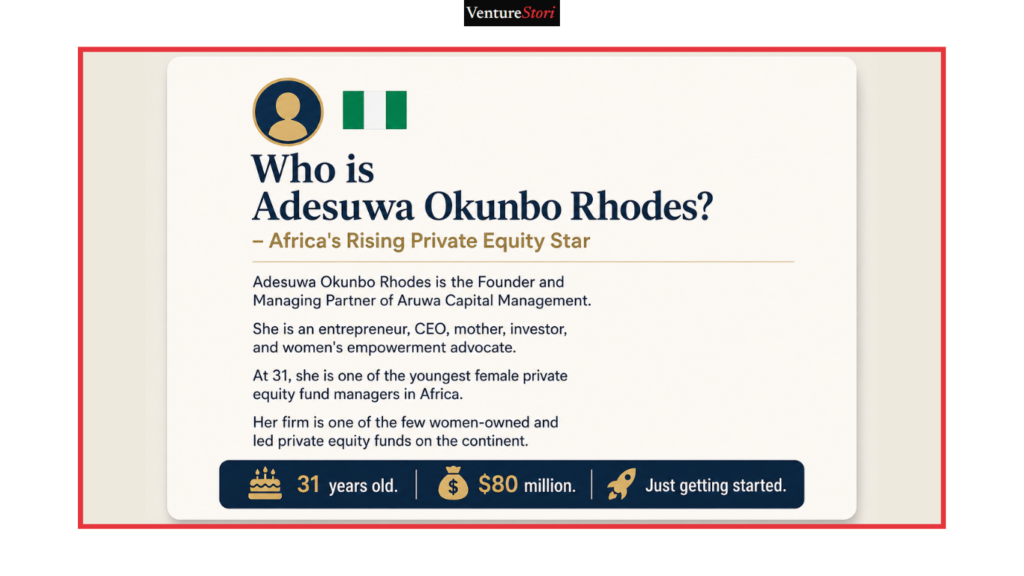
Who Is Adesuwa Okunbo Rhodes? – Africa’s Rising Private Equity Star.
An Unexpected Viral Moment
The early struggles faced by Adesuwa Okunbo Rhodes Aruwa Capital seem to have been replaced with loud ovations ever since her street-style interview with content creator James Dumoulin, founder of the hit series The School of Hard Knocks, went viral on social media.
As the Managing Partner behind Adesuwa Okunbo Rhodes Aruwa Capital, Adesuwa discovered she was trending online following an unplanned conversation with the creator, though she originally only wanted to meet him.
“I just wanted to meet the man James Dumoulin behind the machine The School of Hard Knocks,” she explained.
Hailed as the $80 million woman, Adesuwa Okunbo Rhodes Aruwa Capital has left thousands of Nigerians surprised and inspired as they tune in to hear her remarkable story and business successes.
8 Years of Rejection – The Persistence That Built an Empire.
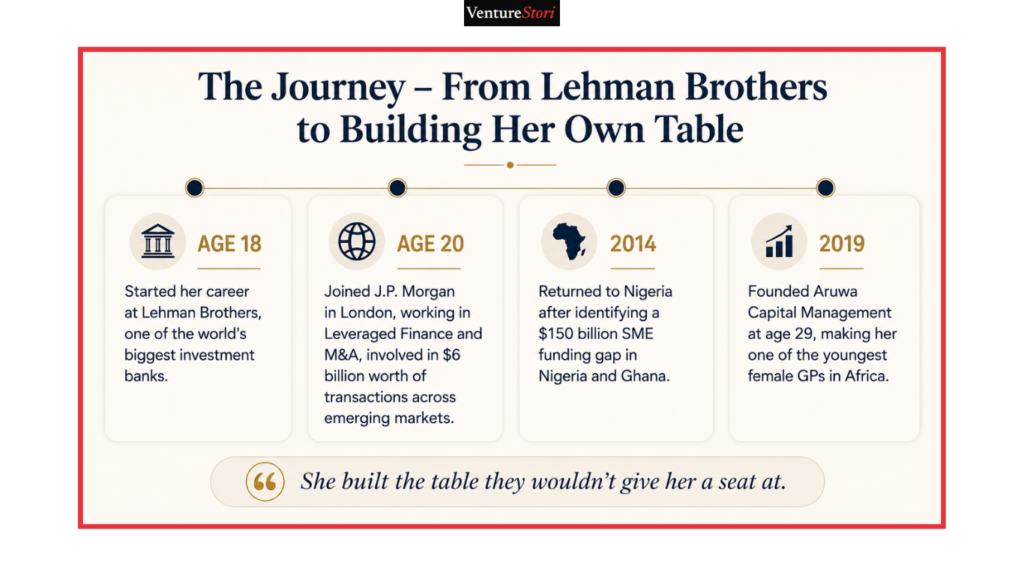
Adesuwa’s path to becoming a household name in women-led businesses didn’t come from a marketing perspective. She spent years with Lehman Brothers; an Africa-focused PE fund, TLG Capital; and Leveraged Finance and M&A teams at J.P. Morgan in London, where she worked on transactions worth billions of dollars in emerging markets.
In 2014, she co-founded Syntaxis Capital Africa, a company that provides capital to SMEs across Sub-Saharan Africa, leading transactions worth over $200 million across Sub Saharan Africa.
Over time, she started to realize there was a problem nobody had raised an alarm about. Some African female founders and entrepreneurs owned revenue-generating businesses across sectors like healthcare, consumer goods, and financial services, but there were fewer than 10 private equity funds owned by women that had successfully gotten capital for their businesses.
African women make up about half of the continent’s population, and they have the highest distribution of female entrepreneurs in the world, yet face a lot of structural barriers to getting the required capital they need for their businesses. The International Finance Corporation (IFC) estimates are that women-owned businesses in are currently facing a financing gap of over $40 billion.
Adesuwa saw an opportunity to provide a solution to this crisis. In July 2019, she founded Aruwa Capital Management in Lagos, with the intention of helping African female entrepreneurs gain access to capital.
Overcoming Eight Years of Rejection
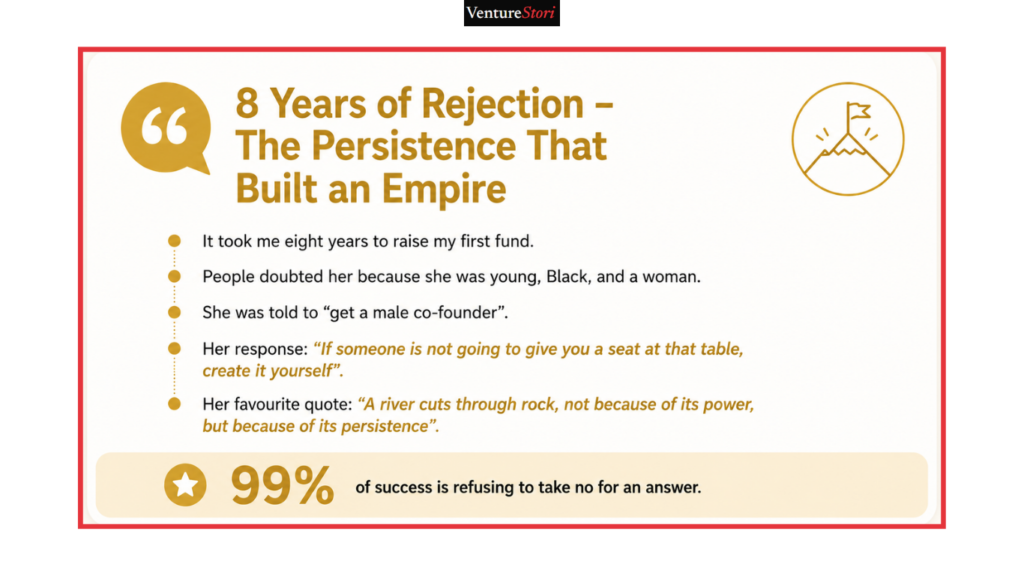
The backstory wasn’t included in the viral video, and a lot of people don’t know that it took Adesuwa Okunbo Rhodes Aruwa Capital roughly eight years, from her time at Syntaxis to securing the firm’s first institutional fund.
During the interview, she was vocal about the struggles and rejection she experienced due to age, race, and gender. A lot of prospective clients were reluctant to entrust capital to a young Black woman. She probably didn’t fit their idea of a capital-savvy entrepreneur.
“We love your pitch, but I’m sorry to inform you that you have to come back next cycle.” Investors claim to love the idea of investing in women-led businesses, but when the person leading the company is an unproven African woman like the founder of Adesuwa Okunbo Rhodes Aruwa Capital, they hesitate.
She ultimately learned the lesson that her extensive experience and excellent track record in investment banking and private equity weren’t enough to bypass the structural barriers facing Adesuwa Okunbo Rhodes Aruwa Capital early on.
8 Years of Rejection – The Persistence That Built an Empire.
Turning Grit into $50M+ in Funding
It eventually worked. Aruwa Capital Fund I raised over $20 million in 2022, led by limited partners in the Visa Foundation, the Mastercard Foundation Africa Growth Fund, and others. This investment made the 32-year-old Adesuwa Okunbo Rhodes the first Nigerian woman in Nigeria to raise a debut institutional fund of that size. The money was invested into several companies, including FairMoney, Taeillo, and Koolboks. weren’t enough.
It eventually worked. Aruwa Capital Fund I raised over $20 million in 2022, led by limited partners in the Visa Foundation, the Mastercard Foundation Africa Growth Fund, and others. This investment made the 32-year-old Adesuwa Okunbo Rhodes the first Nigerian woman in Nigeria to raise a debut institutional fund of that size. The money was invested into several companies, including FairMoney, Taeillo, and Koolboks.
By its second close in 2025, Aruwa Capital Fund II had raised about $35 million of its $50 million target, with investments from old and new limited partners: Visa Foundation, Mastercard Foundation Africa Growth Fund, Nigeria’s Bank of Industry (Nigeria’s oldest and largest Development Finance Institution (DFI)), and international investors such as British International Investment and EDFI Management Company, through ElectriFI.
The total investment Adesuwa Okunbo Rhodes Aruwa Capital has secured from its investors across Fund I and II is estimated at $50–60 million, based on recent public statements. This shows a variance from the $80 million valuation mentioned by the founder in her viral interview, a detail that warrants further observation. It is possible the $80 million figure attributed to Adesuwa Okunbo Rhodes Aruwa Capital stems from a yet-to-be-released financial report or additional private investments that further solidify the market position of Adesuwa Okunbo Rhodes Aruwa Capital.
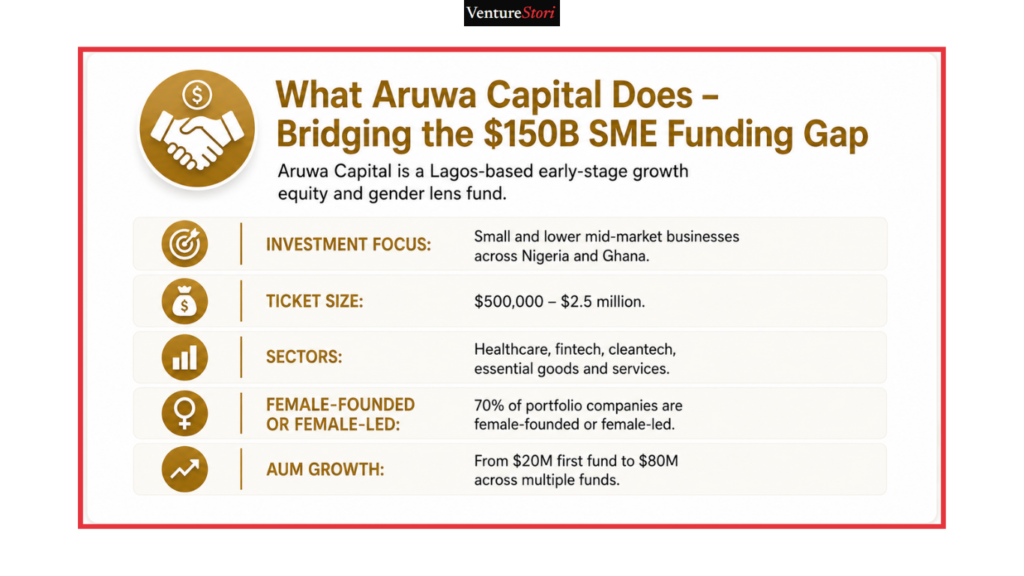
What Aruwa Capital Does – Bridging the $150B SME Funding Gap.
Proof That Women-Led Ventures Deliver
$50 million or $80 million, whatever the actual number, what matters is that Adesuwa Okunbo Rhodes Aruwa Capital was able to lead an African, women-led thesis from an idea no limited partner wanted to invest in into a company worth tens of millions of dollars.
This headline means more than mere figures. It confirms what other gender-lens companies in Africa have been trying to establish for years: that women entrepreneurs need capital, not favors.
The debate about gender-lens investing in the sector is still ongoing. Some Africa-based investors believe that it is usually supported more by development finance institutions (DFIs) than it is by pure market demand.
Adesuwa Okunbo Rhodes Aruwa Capital has responded to these claims by maintaining a strict standard of operational excellence irrespective of a gender focus. Over 70% of the companies that benefited from the Fund I investment were either founded or led by women, proving that Adesuwa Okunbo Rhodes Aruwa Capital only invests in high-performing ventures with at least $500,000 in revenue.
What Adesuwa’s story tells us is a story about perseverance, one determined female able to build enough credibility despite years of rejections and secure multiple investments from both local and global financial institutions.
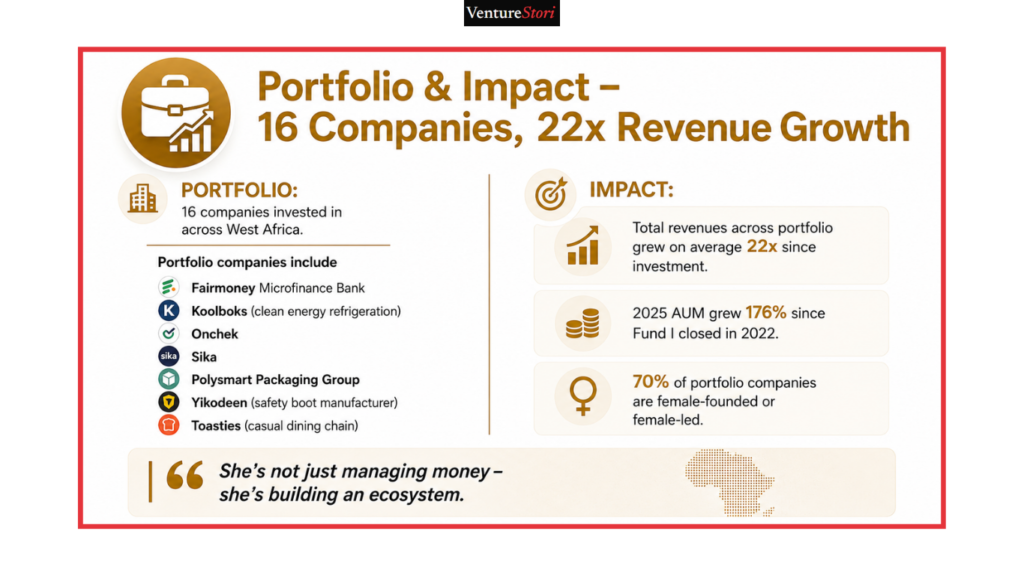
Portfolio & Impact – 16 Companies, 22x Revenue Growth.