Dropshipping in Nigeria gives entrepreneurs the opportunity to sell products online without having to keep large amounts of stock. When you start dropshipping in Nigeria, you promote products, accept orders, and collaborate with local or international suppliers and delivery personnel. This model reduces the overhead cost of starting, eliminating the need for a large upfront inventory.
However, dropshipping is not completely risk-free. Your reputation hangs on the type of product you sell, the suppliers you choose, and your customers’ reviews.
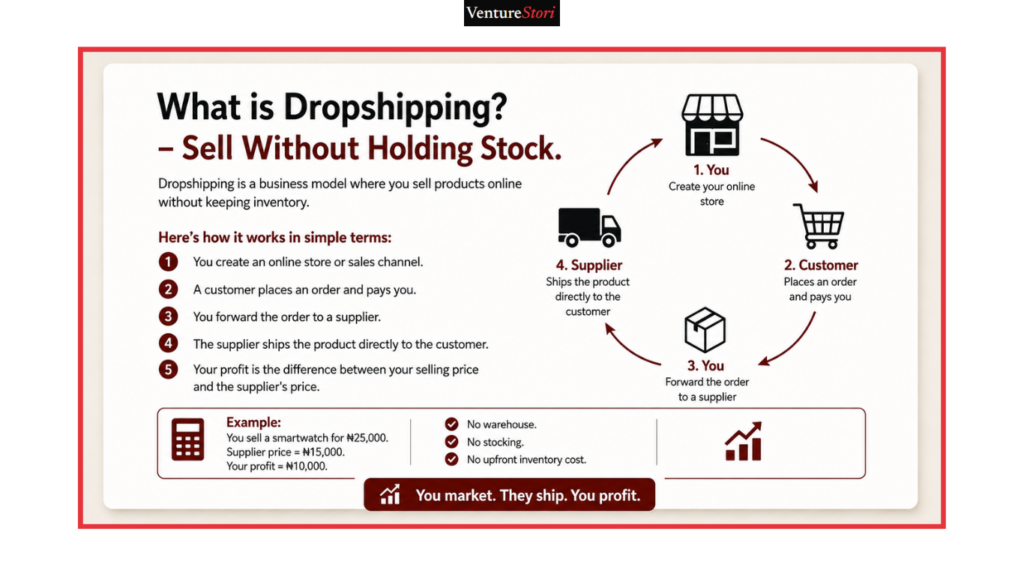
What Is Dropshipping? – Sell Without Holding Stock.
Why Dropshipping Makes Sense in Nigeria
One of the biggest advantages of dropshipping in Nigeria is that you do not need high capital to start. You can test the market with many products without committing a large amount of money to upfront inventory.
Practicing dropshipping in Nigeria allows you to focus more on building customer relationships and digital marketing instead of being stuck managing warehouse inventories.
You also have the unique opportunity to test different products easily. Once you discover the item that sells best in your location or is in high demand for e-commerce, you can scale your dropshipping in Nigeria business by increasing your marketing budget and negotiating better terms with your supplier.
Your Step-by-Step Guide to Getting Started
1. Choose a Profitable Niche
When launching your dropshipping in Nigeria store, various product options include fashion accessories, beauty products, hair wigs, phone gadgets, and home items. Choose your offerings based on local market needs. Entering dropshipping in Nigeria with a specific niche makes marketing much easier because it allows you to create targeted content tailored directly to people actively looking for that product category.
2. Find Reliable Dropshipping Suppliers
Local markets such as Balogun, Alaba and Trade Fair in Lagos provide reliable suppliers for dropshipping in Nigeria, giving you access to products without the long delivery times of international sourcing. With one or more dependable partners, your dropshipping in Nigeria business can fulfill orders consistently and maintain product quality. When dealing with suppliers for dropshipping in Nigeria, always discuss wholesale prices, delivery arrangements, product availability, and backup protocols for out-of-stock items.
3. Choose Your Selling Platform
You may not start with an expensive website. You can make use of social media apps like WhatsApp, TikTok, and Instagram to display the products, communicate with customers, and collect orders. You can also explore platforms such as Jumia and Konga. As the business grows, you may consider creating an online store on Shopify or Bumpa.
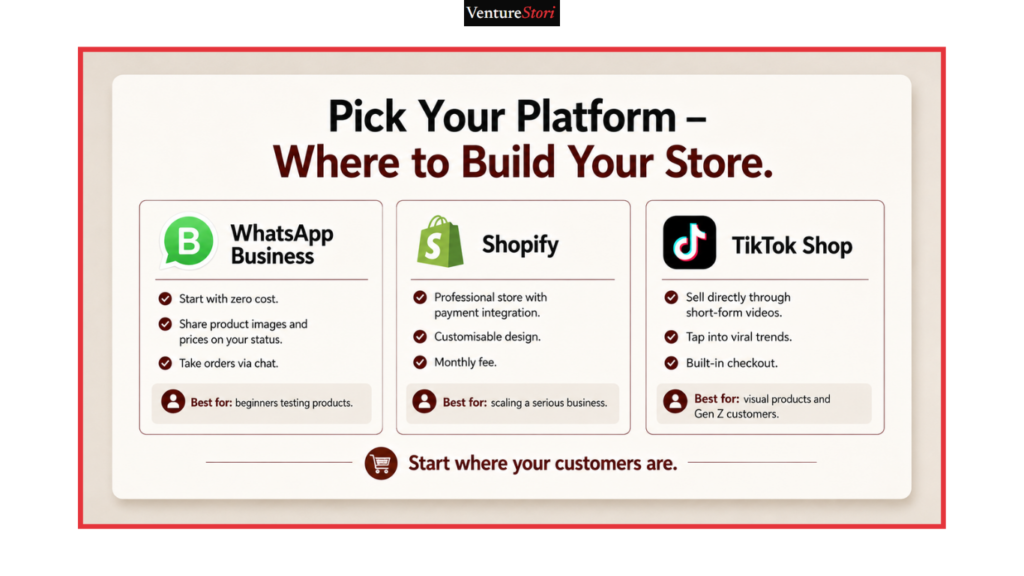
Pick Your Platform – Where to Build Your Store.
4. Make Your Store Easy to Trust
Transparency fosters trust. To captivate your customers, use bright pictures with descriptions and prices. There should also be clear policies for returns, exchanges, or refunds. This aspect is very important, as your customers need to be well informed of your mode of operation and what to expect. A formal registration can help you to establish credibility and support access to business banking and corporate opportunities.
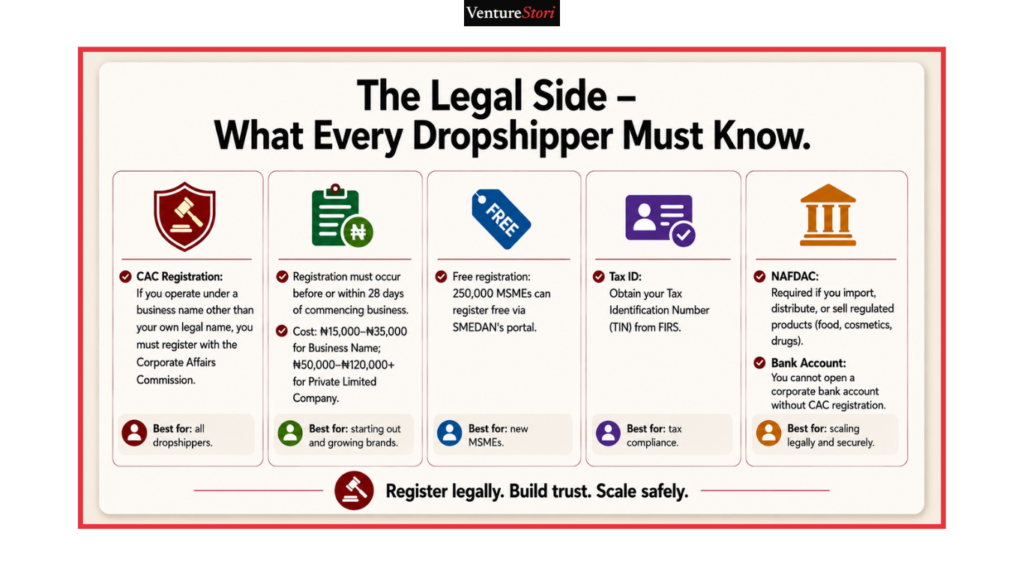
The Legal Side – What Every Dropshipper Must Know.
5. Set Up Payments
Ensure you make payments easy for your customers. Depending on your business setup, you may accept bank transfers and other payment solutions such as Paystack or Flutterwave. However, you need to consider transaction charges, settlement periods, and the payment experience for your customers.
6. Market Your Products
Platforms like TikTok, Instagram, and Facebook can become some of your most important tools for marketing and customer support.
Make videos about your products, tutorials, reviews, and comparison content. You can get the services of an influencer to reach an established audience, while paid advertising can help you target specific customer groups. However, keep marketing in line with established budgets.
7. Track Your Results
Give attention to the numbers once orders start coming in. Identify the best selling products, customer reviews, marketing performance, and repeat customers. The problem could be the price, product presentation, delivery terms or lack of customer trust. Use what you learn to improve your product selection and marketing.
Choosing Between Local and International Suppliers
When learning what the best products to dropship in Nigeria are, local sourcing serves as a practical starting point. Buying from suppliers in Lagos helps you identify some of the best products to dropship in Nigeria by reducing delivery times and making it easier to inspect physical items before listing them.
While international suppliers provide access to a wider range of the best products to dropship in Nigeria, they often involve longer delivery periods and logistics challenges. For beginners figuring out the best products to dropship in Nigeria, testing items locally reduces operational hurdles. Once you understand what your customers want, you can expand your catalog with international sourcing.
What Starting Capital Do You Really Need?
Understanding how to start dropshipping in Nigeria depends heavily on your approach, as you can begin with a relatively small budget. A modest starting capital of ₦50,000 to ₦150,000 is enough when learning how to start dropshipping in Nigeria to test products, create basic marketing content, and run initial promotions.
When figuring out how to start dropshipping in Nigeria, avoid spending all your funds on advertising. Set some aside for product samples, marketing, delivery-related costs, and unexpected expenses. At this early stage, your goal when learning how to start dropshipping in Nigeria should not be building a massive store, but rather discovering whether your chosen product can consistently attract paying customers.
Keys to Growing a Profitable Business
Profit in dropshipping in Nigeria is calculated as total revenue minus your overall expenses. Before setting your retail price, you must factor in margins like product cost, delivery charges, marketing expenses, payment gateway fees, and returns to ensure your dropshipping in Nigeria store remains profitable.
As your dropshipping in Nigeria business grows, reinvest your early profits. Once you establish steady buyer demand, you can transition from local fulfillment to mini-importation from China or Turkey to secure higher margins.
Always protect your brand reputation by avoiding low-quality items and unrealistic delivery promises. Keeping detailed financial records from day one is essential to tracking true profitability in dropshipping in Nigeria.

Real Success Stories – Nigerians Who Made It.
Actionable Next Steps for Beginners
Firstly, choose your niche, find out the competitors, and also identify potential suppliers. During your first month, test a small number of products, create your social media presence and begin collecting customer feedback. By your third month, review your sales data. Keep products that perform well, remove weak products and improve your marketing.
Businesses that are displaying strength today are those that focus on reliable suppliers, useful products, clear customer policies and consistent marketing.