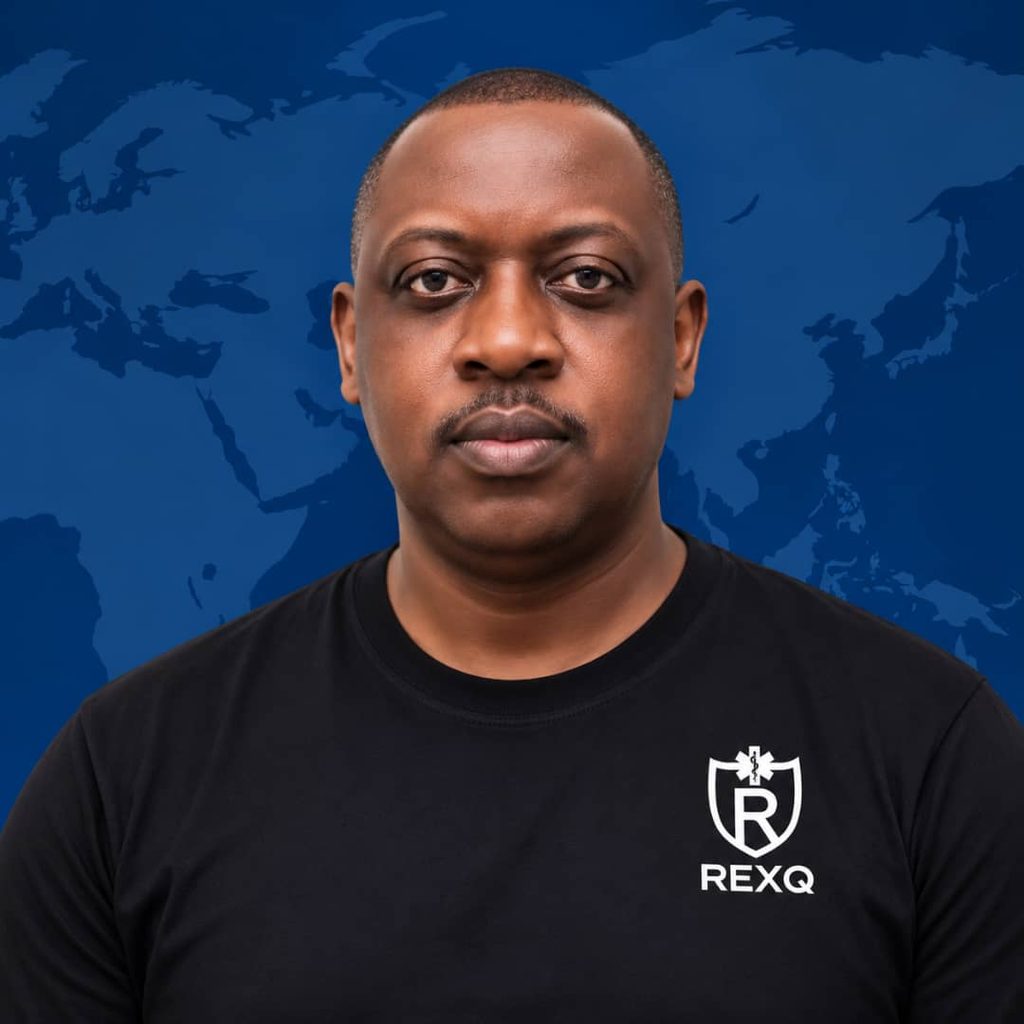
Olumide Martins Temenu lost his father after doctors dismissed his medical history. Now his company builds wearables that speak for people who can’t.
REXQ Africa started with one hospital visit that ended in loss. Mr. Temenu is the CEO and founder of REXQ Africa, operated by REXQLINK Technologies Limited. The company builds wearable emergency IDs and an SOS app that helps people speak when they’re physically unable to. Its promise is simple: “When You Can’t Speak, REXQ Speaks for You.” That promise reflects its mission to rescue, protect, and connect.
The Origin Story: A Hospital Visit in Ondo State
In an interview with Venture Stori, Mr. Temenu breaks down what inspired REXQ Africa. In January 2020, shortly before the COVID-19 lockdowns began, his father, who was suffering from ulcer-related pain, was rushed to a tertiary healthcare facility in Ondo State. His father had a history of cardiovascular health challenges, so Mr. Temenu made efforts to explain his father’s medical history to the two doctors attending to him, but his attempts were dismissed.
He then called his younger brother, an obstetrics and gynaecology consultant who had previously worked at the hospital, hoping the doctors would listen to him. They refused to speak to his brother as well.
His father was admitted and treated for the ulcer, and the pain started to subside. He requested his meal and ate later that day. The next day, he suffered a stroke, went into a coma on the third day, and on the fifth day, he died, in the same hospital where he regularly attended cardiovascular check-ups.
According to Mr. Temenu, “Losing him tore me apart emotionally,” and it made him ask, “What if there was a means for everyone to carry an accessible emergency medical profile, making it easier for them to pass essential health information to the doctors that will attend to them—even when they physically can’t speak for themselves?”
That question and the quest for an answer to it led to REXQ Africa.
Vision: Every Person Deserves a Voice in an Emergency
For REXQ, the vision is about addressing gaps in emergency identification, medical information, communication, and access to financial protection, according to Mr. Temenu.
An unconscious victim cannot narrate their medical history or provide a means to contact their family. Someone in a dangerous situation may be able to use their phone but find it difficult to make a call or explain their location properly. A good Samaritan who’s willing to help may be hesitant for fear of being accused or arrested if the victim dies or if the Samaritan is unable to pay the hospital deposit.
There is also the issue of dignity. According to Mr. Temenu, people tend to record victims in their vulnerable state and upload these pictures or videos to social media. REXQ is making efforts to rewire people’s instincts towards helping so that they scan or tap the victim’s emergency ID and privately share useful incident information with those who can help, instead of making and sharing videos.
Respect for life, human dignity, privacy, accessibility, and accountability are REXQ’s values. “A person does not lose their dignity because they are unconscious, injured, or unable to speak,” Mr. Temenu says.
To ease the burden of uncertainty for Good Samaritans, REXQ has introduced a report that records the location, time, and any available scene evidence, so more people can be open to helping.
“Safety should be affordable, helping should be easier, and technology should support the people working to save lives,” Mr. Temenu adds.
A Full Emergency Toolkit: How REXQ Works
REXQ works in two ways: raising the alert yourself or getting someone to assist you. First, a user registers a REXQ Emergency ID, adds designated emergency contacts and the necessary medical information, and then links the profile to a wristband or any other supported product.
If the wearer can raise the alert without help, they can press the SOS panic button in the REXQ Emergency Super App to alert their contacts and connected public safety agencies within their location at the time. If the user has active emergency protection insurance, the scan page can bring up their coverage status and guidance for getting assistance.
If the wearer cannot speak or operate a phone at that moment, a Good Samaritan can scan the QR code or tap an NFC-enabled product (the wearables are battery-free) to start an emergency report on their behalf. The system automatically alerts the designated contacts, as well as connected public safety and emergency responders, with the wearer’s current location and any available photos or video. Authorized medical personnel can view essential health information through controlled verification.
Mr. Temenu paints a picture of how the wider REXQ Emergency Communication Network is meant to work once it is fully operational. A Good Samaritan scans a crash victim’s wristband, which alerts the victim’s family. The Federal Road Safety Corps (FRSC) receives the location and video, and the responding team informs the nearest hospital that a patient is on the way, with an update on the victim’s condition.
REXQ’s offerings include:
- Emergency ID Wearables
- The Super App
- Smart Keyholders
- Asset ID Tags
- Motor Vehicle Emergency Alert Emblems
- REXQ CARE Emergency Protection, at ₦1,000 monthly through its insurance partner, subject to policy terms
REXQ is open to commuters, families, drivers, schools, students, children, adults, people with medical conditions, and workers in hazardous environments looking for an extra layer of security.
What’s Next for REXQ Africa
To date, REXQ has over 1 million interested users on its pre-launch waitlist. It has developed several safety product designs and pursued intellectual property protection and has engaged in potential partnership discussions with several institutions, transport stakeholders, healthcare providers, and public safety organizations.
Its next priority is to turn the interest into wider deployment and measurable results, such as successful emergency notifications, family connections, asset recovery, and access to covered care. Looking further ahead, REXQ Africa is targeting about 50 million Nigerians and assets connected to the REXQ ecosystem by 2032.
Mr. Temenu has a short, simple message for people hearing about REXQ Africa for the first time: “Wear REXQ. Wear Safety.”
Contact REXQ Africa
Website: www.rexq.africa
Email: contact@rexq.africa
Phone: +234 700 700 9911
WhatsApp: +234 803 474 9725
Social media: @REXQAfrica