PRAETDASSAH‘s Stephen Frederick grew up questioning the stories told about Nigeria’s history. Today, he tells those stories himself.
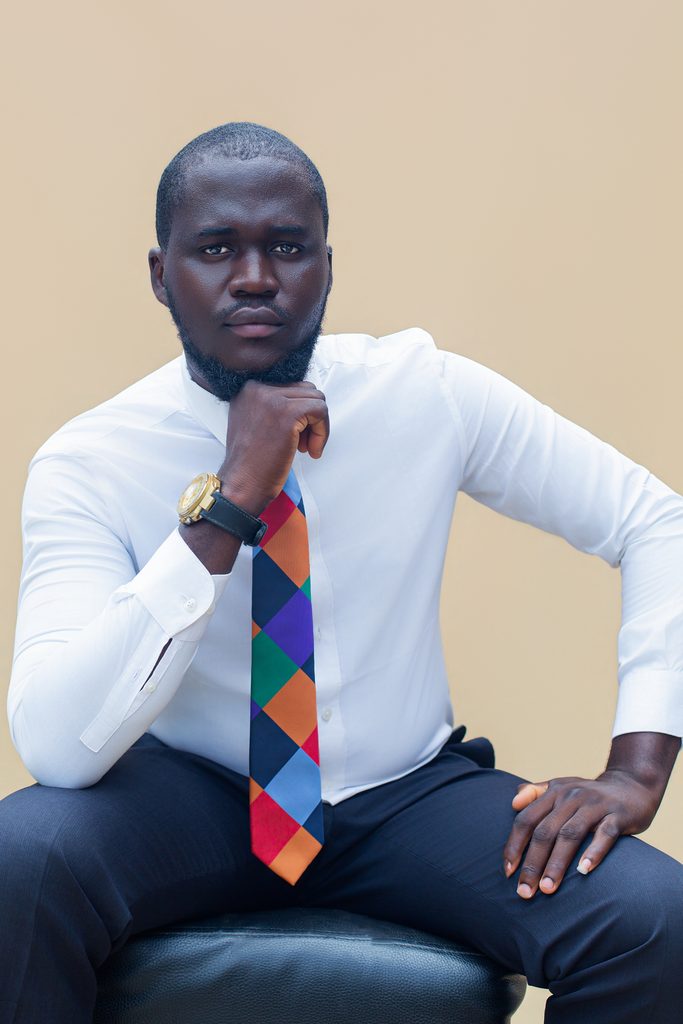
Stephen Frederick is a multi-camera director, creative director, brand strategist, A&R and PR professional, and talent manager. At the heart of his work is a simple but powerful belief: Africans should document their own stories, shape their narratives and own what they create.
The Origin Story: A Gap Between the Stories and the Books
Growing up, Mr. Frederick always felt that something wasn’t right with the stories he was told about Nigeria’s history. He realized that they didn’t quite match the history in the real books. According to him, if you go through a museum or walk through the palace of a King, you will find accounts written by the British. His response was to fill that gap by telling the stories himself.
“Growing up, our stories are being told by foreigners and not by us, the owners of the story,” he says. For him, that was the turning point. He believed that future African generations should have the liberty of learning their history from their own people directly, not from a third party. From then on, he committed to documenting stories firsthand.
Achieving his dream meant starting small. He realized that storytelling is more than just writing; it can also translate into film and video, and he ended up behind the camera. The breakthrough was the first time someone paid him for a photograph.
“What I was doing just for passion, or for fun, rather, was paid for,” he recalls. That was when he figured out he could make a career out of it.
Vision: A Home for African Creators’ Rights
Mr. Frederick’s biggest goal is ownership. According to him, “In the developed world, platforms such as Netflix own the copyrights to much of what we watch.”
He also says his studies showed him that no Nigerian label has full rights to its music, with artists tied to major names such as Sony Music, Warner, or Empire.
His dream is to build a home where creators can keep 100% of their rights. Over time, he says, these rights will earn money for the artists and their families. He uses musical legends like King Sunny Adé and Ebenezer Obey as examples: if their rights were still with them, their families could be living off that legacy today.
“This is how generational wealth is created,” he says.
A Full-Service Creative Partner: From Camera to Contract
Multi-camera directing and movie production. Mr. Frederick started working with multiple cameras after a frustrating episode. After a shoot, he observed that it took a lot of time to edit and put the footage together. His solution was to set up multiple angles and join them during live production. By the time he gets to post-production, the bulk of the work is to assemble the cuts, add sound, and do colour grading.
He has also worked on film sets, including Merry Men: The Yoruba Demons, which he refers to as “a very high-profile, interesting movie.” But his main business is documentaries for brands, and he only takes on movie projects when the work calls for them.
Creative work and business strategy. According to Mr. Frederick, “Many creatives simply post on YouTube without learning how content creation works as a business.” He believes that gap is his edge. He has studied business and has pursued certificate programmes at Lagos Business School, and the knowledge he has gained has helped him build his creative company on firmer ground.
He was partly motivated by the Nollywood stars he grew up admiring. In his view, some of them made money during the course of their careers but didn’t have the business structure to turn that income into a safety net.
“It’s not like they didn’t make money,” he says. “It’s just that they didn’t have the business sense around it to make it profitable.”
Talent discovery, A&R and PR. A&R stands for artists and repertoire, the branch of a record label that discovers young talent. For Mr. Frederick, discovery usually starts with a voice, but he points out that a voice alone cannot carry an artist. According to him, artists often make more money through their music videos, and this is where his PR, representation, and video production come in. His brand handles discovery and the whole process that follows.
He doesn’t leave discovery to chance either: if he sees a talent he likes at an event, he introduces himself and puts them out there.
Industry Challenges and Advice for Young Creatives
Mr. Frederick acknowledges that the path is difficult.
Nepotism is one hurdle. He once bid for a contract he was well qualified for but lost it to someone with “connections” in the office, who then handed him the job at a lower price.
Another hurdle is the cost of equipment. He believes quality is what gives you access: when people like your work, equipment becomes easier to acquire.
His philosophy for dealing with the hurdles is this: “Who hates you doesn’t matter. What matters more is who loves you and who likes you. Critics can only talk, while the people who value you will go to great lengths to help you.”
His advice to young and emerging creatives:
- Learn your roots.
- Educate yourself daily.
- There’s no perfect time. Start doing something that will help you grow.
- Put your best effort into any opportunity that comes your way.
What’s Next for PRAETDASSAH
Mr. Frederick is building more than a production company: a way for African stories to be told by Africans, true to their roots.
Contact Stephen Frederick.
Founder: Stephen Frederick
Location: Abuja, Nigeria (24 Douala Street, Wuse Zone) 5)
Instagram: @Stephenfredrick
Email: travelwithwonderboy@gmail.com
Business line: +234 816 584 5733
Services: Multi-camera directing, documentaries for brands, creative direction, brand strategy, A&R, PR, and talent management
If you are a brand looking for documentary work, an artist looking to be represented, or a creative who wants to collaborate, you can reach him through any of the channels above