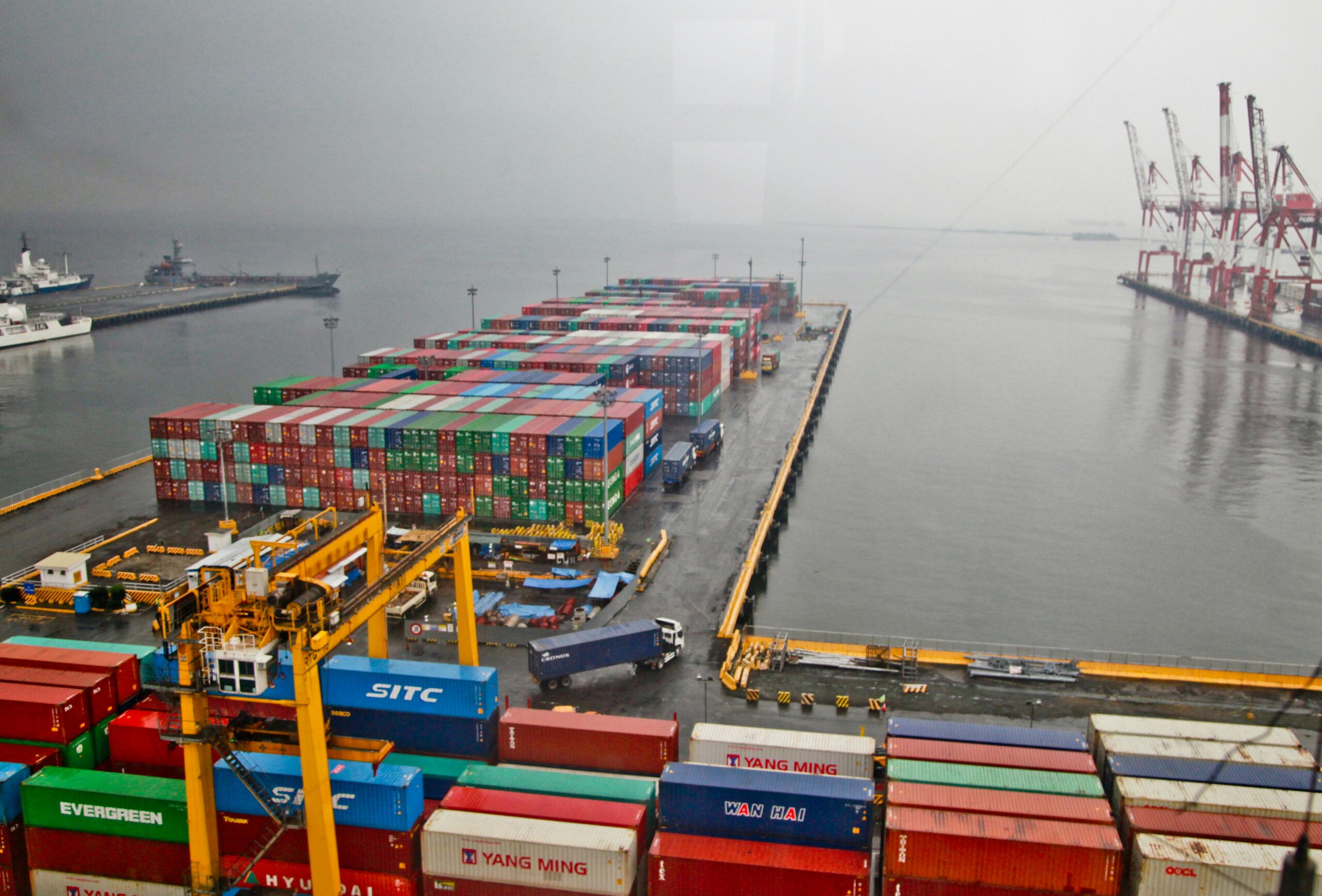
Due to the increasing port congestion and loss of goods, Zola developed an AI automated system that analyzes data, focusing on vessel schedules, weather patterns, and cargo operations. These AI tracking tools designed by Zola are becoming increasingly popular among various ports around the globe.
These AI-powered solutions are being used to improve operations and reduce congestion. AI in logistics plays an important role in solving the congested port problems worldwide. Ports are the backbone of global trade. Sadly, most ports across the globe, especially in Africa, are also major bottlenecks. Port operations across Africa are characterized by congestion and delays. The delays are caused by a lack of vessel tracking, shipment misalignment, low-budget maintenance on cargo ships, and many other factors that slow down trade.
What is Zola Intelligence?
Zola Intelligence is a logistics platform that uses innovative AI tools to mitigate the logistics problems in ports. Rather than creating products for final consumers, Zola works within operational systems where margins are narrow. It has a very practical approach. Zola intelligence does not replace port management systems. Instead, it layers intelligence on top of existing tools. The congested port problem was a natural entry point.
How is AI used in African ports?
Most African ports are beginning to adopt the use of AI automated tools to offer quality services and ensure customer satisfaction. AI in African ports, to put it simply, refers to the use of computers with cutting-edge AI technology to assist ports in reducing congestion early on and moving goods efficiently. For example, ports frequently encounter shipment delays, loss of goods, and other issues as a result of the growing volume of international trade and very low manpower. AI in logistics does not mean that workers will be replaced by robots. In actuality, it involves using data to make informed decisions.
How does this work, you may ask? Ports usually generate large amounts of data each day. This includes vessel schedules, container locations, crane movements, truck entry times, and customs clearance status. AI logistics solutions take and continuously process these huge amounts of data. Then, they use this data to identify patterns, predict delays, and make informed decisions.
The volumes of containers keep rising, but the traditional port system does not have corresponding facilities to accommodate this increase. African ports manage an increasing volume of import and export traffic with poor visibility, manual procedures, and little coordination. As a result, port operators are pushed to seek data-driven solutions, which led to the adoption of AI-powered automated tools by ports to meet the growing logistics demand.
In recent times, operators can track and monitor every shipment activity from a controlled screen to lessen the impact of congestion rather than reacting after it occurs. For example, an AI system can predict when a vessel will actually dock based on historical delays, port conditions, and current traffic. It can help to put things in place before the ship arrives. This improves flow without necessarily increasing physical capacity. Also Read: Inside Africa: African Innovation Stories Shaping the Continent
How Zola uses technology to improve flow and visibility
Port congestion is a recurring problem that plagues most ports. The use of technology has helped ports to: track every shipment accordingly, track the direction each good should go after containers have reached their deck, keep an accurate record of every transaction made, and keep an accurate record of the inflow and outflow of ships, containers, and goods. Now, movement of goods can happen in a smarter, faster, and cheaper way.
This shift from reactive to predictive operations is the core value of AI supply chain tools. As a researcher, one could ask questions like, what causes persistent congestion in ports? Why have congestion and delay become persistent problems, mostly in Africa? These concerning factors can be attributed to:
- Inadequate infrastructure
- Inefficient customs and regulatory systems
- Operational inefficiencies.
- Lack of manpower and many more.
In most African ports, poor infrastructural facilities are a major problem. That hinders the smooth operational activities. There is also a lack of modern cranes, limited berth space, and shallow drafts (that cannot accommodate larger, modern vessels).
These challenges make vessels wait longer at the ports, and longer wait times equal high demurrage charges. Then, demurrage charges are passed on to the economy. This increases the overall cost of goods, hence reducing the competitiveness of African trade.
How Zola Applied AI to Port Operations
Zola’s solution focused on three layers, namely prediction, coordination, and decision support. Zola AI models collect historical data and live inputs. Then, it uses the data collected to predict vessel arrival times more accurately. This reduces reliance on static schedules. Know that this prediction is not a one-time thing. It is a continuous process.
The system continually collects and observes data. Then, the system will also continuously adjust schedules and expected timelines based on adjusted weather, congestion levels, and shipping line behavior. This means that the Zola AI model continues to observe data.
The working of the Zola AI model enables terminals to plan yard space and equipment use before the arrival of ships. Instead of reacting to late ship arrivals, operators can now prepare for them in advance. Delay is reduced, and this cuts costs.
Cargo movement was also modelled. The system predicts which containers move fastest, which ones will face customs delays, and which ones should be positioned closer to exit points. This helps port operators in planning their operations.
Zola’s AI model also facilitates proper yard and equipment management. AI logistics solutions work best where there are limited resources. For instance, Zola used AI to optimize crane assignments and container stacking strategies.
Instead of placing containers based on simple rules, the system introduced expected dwell time and retrieval order. This reduced unnecessary reshuffling and improved crane productivity. All of this reduces congestion because both space and equipment are properly utilized.
The problem of truck congestion was addressed through data-driven scheduling. Zola’s system analyzes gate capacity, yard workload, and customs clearance patterns. This analysis now helps it to recommend arrival windows for trucks. Truck scheduling improves flow at entry points and reduces idle time for drivers. It also makes port activity more predictable for logistics companies. Also Read: Inside the Companies Fueling Africa’s Next Economic Leap
How Technology Improves Visibility and Flow
One of the biggest impacts of Zola Intelligence is improved visibility. Before AI came, many port workers worked with partial information. Shipping lines did not know the hard conditions. Truckers did not know how congested the gates could be. Terminal operators lacked reliable forecasts. Zola’s platform collects data into shared dashboards. This allows different actors to plan their actions around the same operational picture.
The use of Zola software has improved trust between stakeholders. Stakeholders previously blamed one another for delays. Now each stakeholder can “show working” on their ends thereby enhancing trust between them.
What limits still exist
You would love to think that Zola’s magic wand has taken away all port problems, right? But unfortunately, this is not the case. Zola intelligence solutions are based on limited data. That is to say, Zola’s solution to deflate the level of congestion at seaports is limited to the actual information given to it by an actual human. Therefore, the quality of data determines how efficient the system can be.
Zola tends to spend more time on data analysis. That is more time is spent on data cleaning and integration before delivering value. Data quality can be a major constraint. Also, institutional resistance is a limitation. Port operations involve entrenched workflows and multiple authorities. Aligning incentives and securing buy-in can be slow.
However, infrastructure gaps can limit the impact of Zola Intelligence. In addition to poor road access, limited rail connectivity, and power disruptions all undermine the effective impact of AI operations. These limitations remind us that AI logistics solutions work best as part of broader reforms and not just in isolation.
What these signals say about the future of logistics
Zola’s experience shows that there is a wider shift in how trade infrastructure in Africa is evolving. The future of African ports is not only about bigger terminals. It is also about smarter coordination. Data is becoming as important as concrete and steel.
AI in logistics supports flow and speed. It helps systems absorb shocks, adapt to variability, and use scarce resources better. As trade volumes grow, ports that fail to adopt intelligent systems will still be struggling to keep up.
Those that adopt the use of artificial intelligence, like Zola, will become competitive hubs for regional and global commerce. This is why logistics technology in Africa is attracting increasing attention from investors, policymakers, and operators. Also Read: Logistics Might Just Be Africa’s Hardest Business Problem
Concluding, the adoption of AI in African ports reflects deep operational strain, not just technology hype. Congestion persists because traditional systems cannot handle today’s complexity and global demand. Zola Intelligence shows that AI can improve visibility, coordination, and decision-making inside ports. The workings of AI support flow across the supply chain, and not just faster operations. As Africa’s trade volumes grow, logistics innovation is becoming central to economic growth. Ports are being rebuilt around data, one operational decision at a time.