
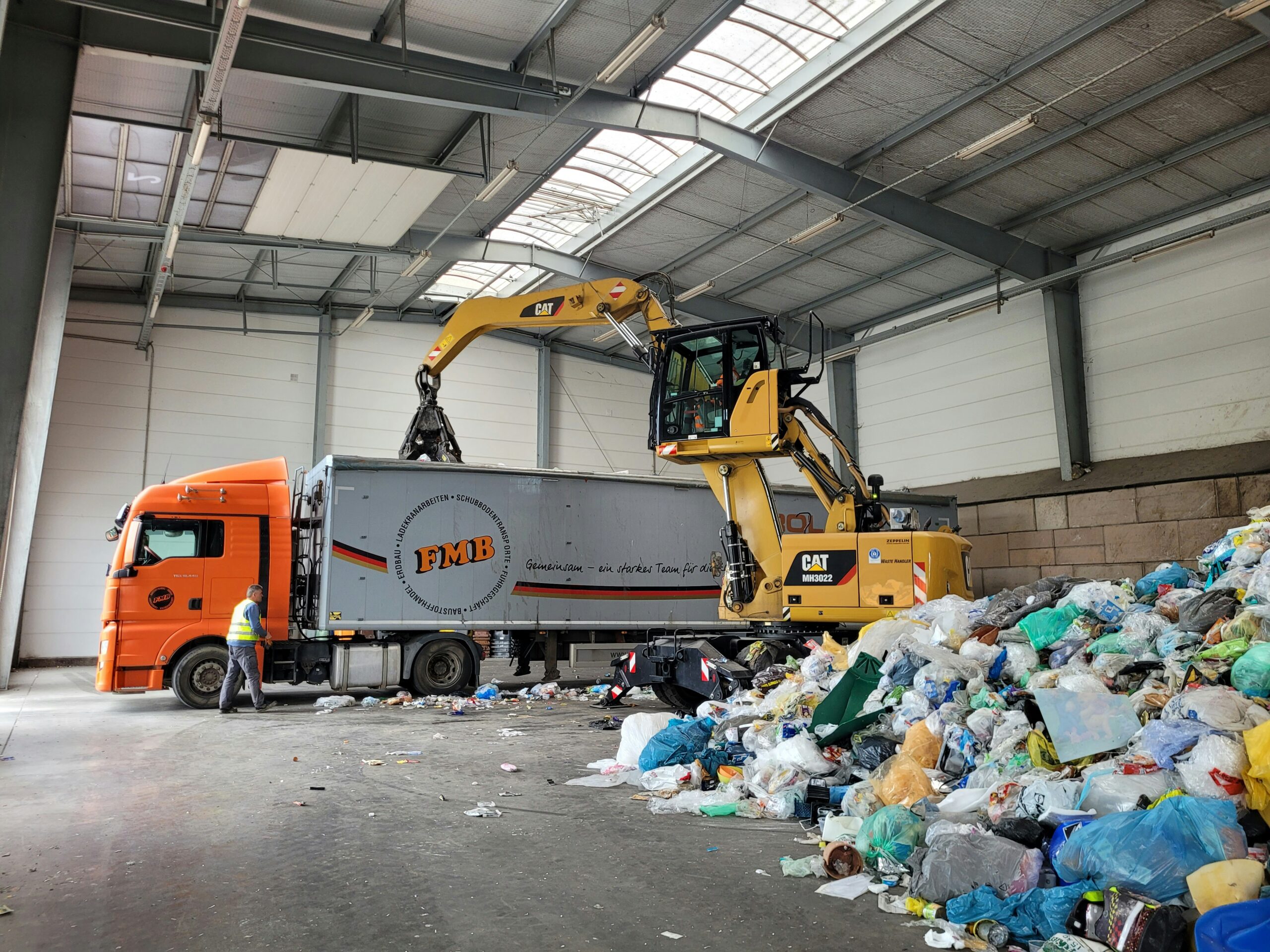
One would think that once people are well informed about recycling their waste and the waste being collected, it solves the waste management crisis problem in America. Well, this is not so. The United States generates hundreds of millions of tons of waste each year, yet only a fraction of recyclable material is successfully recovered
The major problem is that the traditional method of sorting out recyclable wastes have shown to be not very efficient in recent times. They are slow and not so accurate. Companies are now introducing AI sorting as a solution to the inefficiencies of the traditional system. AMP Robotics is one of the companies at the forefront of this innovation. We take a closer look at how AI automation works in waste sorting and how that innovation is changing the face of recycling in America.
Recycling in America is not failing because people lack awareness; it is failing because of the complexities associated with sorting waste. Most households in America operate a single-stream recycling system where paper, plastic, metal, and glass are all placed in one bin. Though this seems convenient, it is only convenient for households, but not for material recovery facilities (MRFs). Items arrive mixed and often contaminated with food or non-recyclable materials.
Sorting these items is done manually. Manual sorting lines rely on workers stationed along conveyor belts, where they pull out specific items by hand. This process is limited by speed, lack of accuracy, poor safety,, and labor intensity. These limitations result in lower recovery rates and more recyclable material ending up in landfills. This is exactly where waste management technology is evolving.
If something is not working, it is only reasonable to expect that something that works has to give. Manual systems are not quite getting the job done. This has led to the emergence and rise of automated sorting systems.
Automated sorting systems now combine the use of robotics, artificial intelligence, and optical sensors to identify materials by shape, color, texture, and even brand labels. Cameras are at the centre of this operation.The cameras capture images of waste moving along a conveyor belt. Then AI models analyze those images, identify whether an item is PET plastic, HDPE, aluminum, cardboard, or contamination.
The system has robotic arms. These arms will then pick specific materials using suction grippers or mechanical claws. Unlike human workers, these systems:
This is what defines modern smart recycling technology.Instead of relying solely on human judgment, facilities can use data-driven systems that improve over time.
Let us take a look at how AI waste sorting actually works inside a recycling plant.
After the waste trucks have collected the waste, they unload the mixed recyclables onto the tipping floors. The materials are then transferred to the conveyor belts.
The waste is first manually sorted. Basic mechanical processes remove large objects or separate materials by size and weight.
The cameras positioned above the conveyor belts then scan items. AI software is able to identify materials and classify them according to labels.
Instructions are then sent to the robotic arms. They target specific items and remove them from the pile.
The system keeps track of the materials being processed, contamination rates, and the amount of items recovered.
The accuracy of the machine learning models improves with time. When new packaging types come into the waste stream, the system is also trained to recognize them. This results in faster recovery of valuable materials.
AMP Robotics is focused on developing artificial intelligence and robotics systems for recycling and waste management in America. AMP’s systems are designed to blend well with existing infrastructure. This is important because trying to replace the entire existing system will be very expensive and even politically difficult.
Due to automated sorting solutions, recovery rates are not only faster and more efficient but also cost-effective. AMP’s system uses computer vision and machine learning to identify and sort recyclable materials from mixed waste. By automating sorting, AMP Robotics addresses a global challenge in recycling economics and also lends support to the circular economy. AMP’s technology has been deployed in recycling facilities across North America, Europe, and Asia.
Teaching the public about consumer behavior and recycling habits is very helpful, but the major contributor to the waste crisis in America is not waste collection but sorting the collected waste. AI waste-sorting robots reduce reliance on perfect consumer behavior. They can:
Simply, automation addresses the structural bottleneck inside facilities.
There are economic gains tied to improved recovery rates. Recyclable materials are commodities, but their value depends on purity. A bale of highly sorted PET plastic has a higher price value than mixed plastics contaminated with other materials. By increasing purity levels, automated systems:
Labor shortages have become a persistent challenge across American industries, including waste management. Robotics fills this gap. Facilities that are equipped with AI-driven recycling robots demonstrate higher recovery rates and more stable output.
Generally, the United States operates a decentralized system of government. So, it is not a surprise that the waste management system is decentralized. This means that different states have different laws that guide their waste management system. This decentralized system of government makes national reform a difficult task.
Fortunately, the AMP Robotics model blends with this decentralized system. This is because it does not require any policy change; rather, it tries to work with already existing systems, as pointed out earlier. The technology can be adopted facility by facility without any policy change.
Due to its compatibility with existing systems, there is ease of adoption by different facilities and states. You can easily say that AMP Robotics did not come to change the system, but it came to ease off the limitations of the existing system so that it can work better.
Automation of waste sorting has far-reaching consequences, the positive kind. First, waste sorting automation speeds up the recovery process, meaning that more resources are recovered more quickly while they are still usable. This reduces the need to discover new raw materials. This reduces the need for fresh natural resources every time. Doing this is very important to ensuring a sustainable environment and the climate at large.
For instance, recycled aluminum consumes much less energy than the production of new aluminum. Also, recycled plastics reduce demand for fossil fuel-based feedstocks. Recycling paper decreases deforestation pressure.
Traditional waste sorting methods rely heavily on manual picking and basic mechanical separators. Traditional methods tend to be slow, labor-intensive, and error-prone human picking. This is not to say that the traditional sorting systems are completely inefficient. The system works, but it is very limited in its efficiency.
However, AI-driven solutions like AMP Robotics bring in a layer of intelligence to support the mechanical system. With AI waste-sorting robots, the identification and sorting of recyclable waste become faster and come with higher precision and less cost. A blend of mechanical and digital waste sorting is the new future of automated sorting systems.
AMP Robotics is not the only company rethinking the waste management system. There are other companies trying to change the narrative in the waste management system. For instance, TerraCycle focuses on recycling complex materials that may be difficult for other waste management companies. The emergence of these companies points to the fact that recycling innovation is increasingly driven by technology and business model redesign.
The recycling problem in America is majorly a sorting problem. It is easy to sensitize citizens on the importance of recycling. It is also easy to collect these wastes. The major problem now lies in sorting these wastes to recover recyclable materials that can be reused.
Well, the AI waste-sorting robots offer a very innovative and effective solution. With AI, there is improved efficiency and accuracy in waste sorting. Now, it is no longer about what is collected but what can be recovered. As automation is increasing across recycling facilities in the United States, there will be
For investors, this points to scalable climate technology. For sustainability enthusiasts, it has shaped recycling as an operational systems challenge rather than a public relations issue.
Wrapping up, while automation may not eliminate waste problems, it is certainly changing how materials are identified and recovered. With companies like AMP Robotics, the economics and performance of American recycling infrastructure are taking on a new shape. In the long run, the future of recycling in the United States will depend less on what people put in the bin and more on what intelligent systems can extract from it.