
Anduril Industries is changing the United States’ border security by developing a virtual wall powered by AI, autonomous systems, and advanced sensor fusion to replace traditional physical barriers. Its Lattice OS system combines AI with sensors and drones to create an ever-expanding surveillance network, improving remote location surveillance and reducing the need for staff.
The system can automatically identify, recognize, and monitor items like people and vehicles, allowing its agents to focus on responding rather than monitoring. With the rise of AI border security, countries become more efficient as the technology is used to improve national security infrastructure, threat detection, and efficiency.
Anduril Industries is a defense technology firm that develops autonomous systems for security missions. Its Lattice platform is a high-profile data collection system that listens to sensors and drones to enhance the security of the borders. Lattice is an AI-based app that produces real-time operational intelligence. It monitors and recognizes objects and eliminates irrelevant information.
The main products of Anduril are the Sentry line of autonomous surveillance towers and unmanned aerial vehicles, including the Ghost drones.
The towers of the Sentry, 5.5 meters high, use sophisticated technology, such as radar, thermal imaging, and electro-optical sensors, to offer continuous security, particularly in anomalous routes of migration. They independently identify and categorize targets and issue notifications in case of intrusion. Presently, there are over 200 Sentry towers in operation, and the range model can see objects as far as 7.5 miles.
The AI-driven Lattice operating system forms the backbone of these systems, enabling sensor fusion and edge processing to provide efficient monitoring capabilities. Additionally, Anduril’s offerings include maritime security technologies and drones designed for reconnaissance. The deployment of these technologies in the UK reflects a heightened surveillance approach towards controlling irregular crossings, creating a “virtual border wall” that includes a growing reliance on autonomous systems to surveil and manage borders. Despite operational challenges, the Home Office’s contract with Anduril highlights the integration of such technologies in frontline border management. The military-grade capabilities of these towers underscore their role in a broader context of migration control, positioning them as tools for both surveillance and enforcement.
Traditional border monitoring often depends on fixed cameras, ground patrols, or manned aircraft, which cover limited areas and require constant human input. Anduril’s smart border security systems shift this paradigm through autonomy and integration.
The process starts with hardware deployment: Sentry towers scan wide areas continuously, day or night. Sensors capture visual, thermal, and radar data. Lattice then applies AI to analyze feeds, classifying objects, distinguishing threats from non-threats, and maintaining tracks across multiple devices.
When an anomaly appears, such as a person or vehicle crossing remote terrain, the system generates an alert with precise location, imagery, and trajectory details. Operators receive this on desktops or mobile devices, often with options to cue a drone for closer inspection. This closed loop of detection, classification, tracking, and response happens faster than manual methods.
Efficiency gains come from several factors. Towers run 24/7 without fatigue, covering terrain that would require many agents. AI reduces false positives, so agents spend less time investigating irrelevant signals. In maritime settings, similar setups monitor coastal zones, integrating with drones for extended reach.
Deployments show measurable impact. Anduril estimates its towers now cover about 30% of the U.S. southern land border, reallocating thousands of agent hours to higher-priority tasks. This has supported interdictions and contributed to operational outcomes like reduced illicit crossings in monitored sectors.
AI drones are transforming aerial surveillance with advanced data analysis, contributing to real-time situational awareness and operational efficiency. The global drone market is projected to grow to $279 billion by 2032, with uses in law enforcement, disaster response, and crowd monitoring. Key attributes of AI drone technology include autonomous navigation, immediate data collection, and intelligent threat detection. The Defense Department highlights the significance of AI and analytics integration to enhance surveillance capabilities.
AI drones serve as a cost-effective substitute for traditional surveillance methods, increasing their importance in public safety and security. Notable examples include Anduril’s Sentry towers, which utilize edge processing for local AI functions, reducing data transmission demands, and the Lattice system that integrates data for a comprehensive overview.
Drones like the Ghost are equipped for mobility, capable of autonomous tracking, patrolling, and deploying high-definition or infrared sensors for detailed activity confirmation, all while minimizing risk to personnel. AI-powered analytics advance beyond basic detection through machine learning, which continually improves classifications based on new data, while maintaining human oversight for critical decisions and automating routine tasks.
This integration helps to overcome limitations of traditional surveillance, as networked sensors and drones offer comprehensive coverage in challenging environments, with real-time data fusion enhancing situational awareness for timely and informed responses.
Since 2019, Anduril Industries has collaborated with U.S. Customs and Border Protection (CBP) to install autonomous surveillance systems. Towards the end of 2024, the company had placed 300 towers to track land and sea borders. The Autonomous Surveillance Tower is also effective at detecting and stopping illegal crossings, improving agent safety and efficiency. Using the towers, agents receive alerts only after verifying an alert as opposed to constant scanning. In addition to securing the borders, the technology is also used to secure military bases and critical infrastructure.
Anduril applies AI technology, in particular, Lattice OS, to enhance surveillance. It builds AI-controlled virtual border walls comprising Sentry Towers, autonomous drone sweeps (Ghost-UAV), and counter-UAS. The company applies sets of sensors to provide thorough monitoring and controls various unmanned assets through combined command-and-control actions, as in such exercises as Valiant Shield and Desert Guardian.
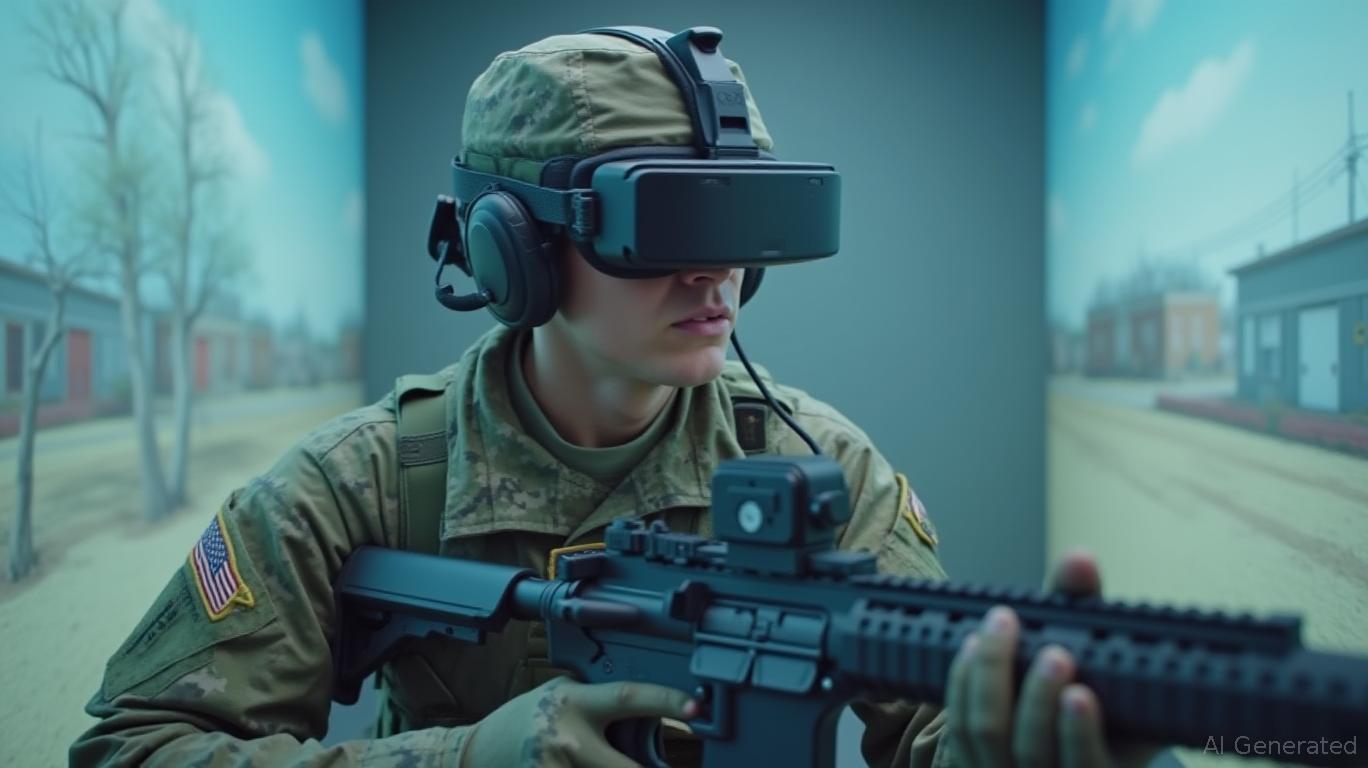
The most significant inventions are the Roadrunner, an autonomous car that could be used to intercept air threats, and IVAS (Integrated Visual Augmentation System). Anduril acquired the IVAS program at Microsoft in order to develop tactical support systems for the U.S. Department of Defense. These developments in surveillance and autonomous technology aim to mitigate risks to personnel while increasing the efficiency and effectiveness of monitoring and engagement in intricate operational environments.
Artificial Intelligence (AI) is significantly impacting the security, defense, and aerospace industries, enhancing decision-making speed, accuracy, and predictive insights. This technology is critical in improving flight safety, enabling smart surveillance, and facilitating autonomous operations. However, the rapid integration of AI raises substantial challenges regarding legislation, public safety, and economic security, especially in the US, UK, and EU, where governments are striving to create regulatory frameworks that ensure accountability, transparency, and protection against misuse.
Public safety is a central concern, evidenced by fears of biased algorithms and potential malfunctions in autonomous systems. The deployment of AI in military contexts necessitates careful consideration of the balance between human oversight and autonomous decision-making, with calls for international treaties on lethal autonomous weapon systems (LAWS) to maintain human control.
AI also represents a geopolitical asset, as governments invest in this technology to enhance strategic capabilities and secure economic futures. This includes focusing on supply chain resilience, job creation, and technological sovereignty. Nations are heavily funding research and development, forming public-private partnerships, and implementing export controls to safeguard national interests.
The ability of AI to transform the security sector necessitates a commitment to ethical implementation, bolstering public trust while promoting innovation. In the US, advancements in defense technologies aimed at border security exemplify this trend, showcasing AI’s role in optimizing resource allocation and improving operational precision by automating detection processes. Collaboration among government, industry, and academia is crucial for leveraging AI’s full potential in an ethically responsible manner.
AI-based security will also expand as advances in sensor fusion, longer drone lifespans, and edge AI enable them to cover more ground with fewer resources. We are creating distributed networks (connecting ground, aerial, and potentially underwater or space platforms) that provide us with a more aware domain. The agencies and allies will collaborate more readily with the help of investments in interoperability tools, like Lattice.
Wrapping up, Anduril’s solution is helpful for operational efficiency and safety. Autonomous surveillance and real-time analytics enhance U.S. border management, providing tools that extend reach while reducing risks to personnel. As defense technology innovation continues, AI-driven systems will likely play a larger role in redefining security infrastructure in the coming years—balancing capability with responsible deployment.