The best agbada styles for men in Nigeria remain one of the top choices for major events. Tonal 3D puff embroidery has become the key difference between a regular agbada and a truly stylish one. From weddings and owambes to the Ojude Oba festival and the AMVCA red carpet, agbada has become a signature look for many influential men across the country.
Behind every well-crafted agbada is a network of designers, embroiderers, and fabric sellers. In this guide, we explore the best agbada styles for men, the trendsetting designers behind them, current price ranges, and the best places to buy quality agbada in Nigeria.
The 2026 Agbada Trend Story
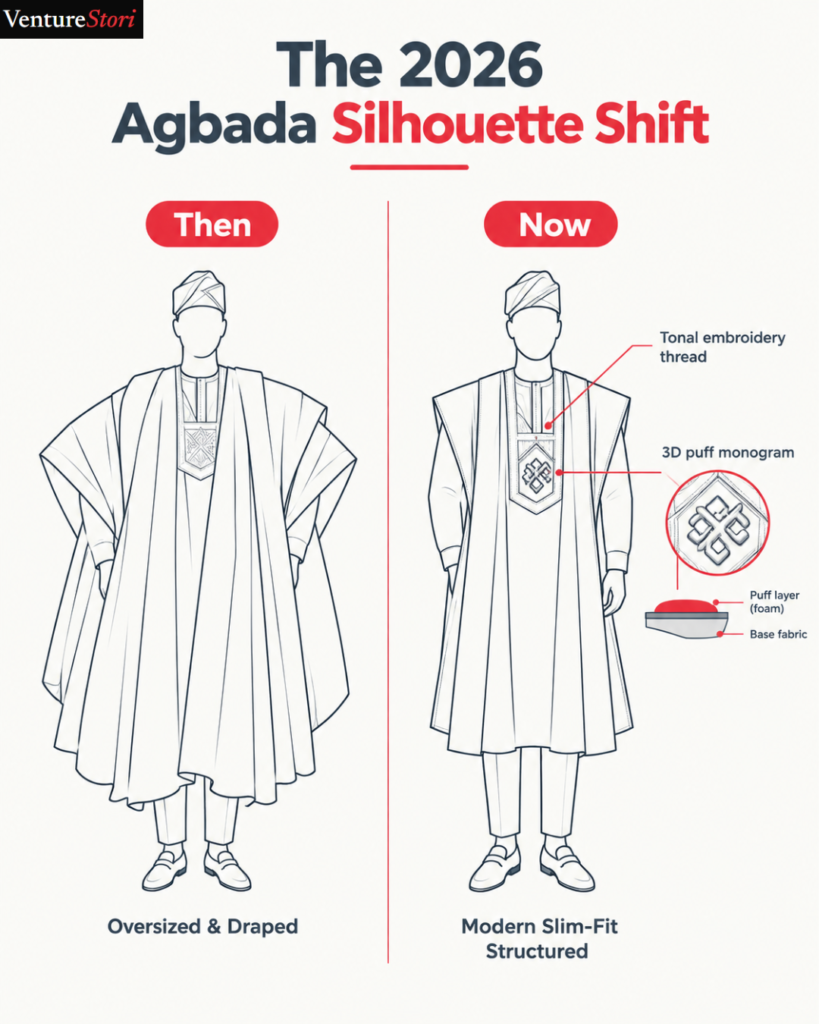
The oversized agbadas that you constantly had to tug up your arms that dominated the fashion scene for decades are going out of fashion. They’re now being replaced by slimmer, more structured models. According to research on cosmopolitan fashion in Nigeria, men’s native clothing is now designed with less fabric, and it’s no longer cut oversized. Recent coverage of Nigerian fashion in different events across the country shows slim-fit agbada is now “the gold standard.”
Tonal embroidery—where the thread exactly matches the fabric color—is fast becoming the popular, sophisticated choice compared to the loud, heavily contrasting embroidery that was once the design standard for agbadas. Another current, popular choice for agbada designs is the raised 3D puff monogram embroidery; this uses a foam layer under the stitching to give off a sculpted effect.
These contemporary agbada trends aren’t only displayed or seen on fashion runways only. They are everywhere—from Nigeria’s red carpets and cultural festivals to weddings, title ceremonies, and Owambes. At the 12th AMVCA in Lagos, popular Nollywood actor Tobi Bakre wore a custom three-piece agbada designed by Deji and Kola, built from the brand’s monogram canvas denim. According to BellaNaija, the custom agbada weighed 8 kg, and it was inspired by the Yorùbá and Hausa-Fulani dress of the late 1950s.
On the 29th of May, 2026, the Ojude Oba 2026 in Ijebu-Ode had a lot of spectacular native wear designs on display. Akin Faminu, a fashion stylist, was the focus of Channels Television. His attire for the festival was highlighted: a richly embroidered wine, navy, black, and gold agbada with a dramatic black cape lined in fuchsia. Vector, a popular Nigerian artist, was another standout figure during the festival. He adorned a sleeveless, bold, geometric-panelled agbada with heavy shoulder fringing. BellaNaija described Vector’s and Akin’s traditional attires as two of their favorite menswear pieces at the Ojude Oba 2026.
The Designers Setting the Standard
Yomi Casual
Founded by Omoniyi Makun, Yomi Casual, Omoniyi Makun, who was a student of Fashion Design and Clothing Technology at Auchi Polytechnic, Edo State. He started his own fashion brand in 2007, and over the years, he has become a household name for contemporary Nigerian menswear and a celebrity clientele.
Mai Atafo / ATAFO
Ohimai Atafo had his tailoring training at the Savile Row Academy in Leeds before he started his fashion career in Nigeria. His fashion brand, ATAFO, is a leading African brand in making clean cuts, precise fits, and modern interpretations of traditional Nigerian clothing. The brand, headquartered in Lagos, has worked with many brands, including Moët & Chandon.
TDA Couture
TDA Couture was founded by Dare Aliu in 2018, and the fashion brand is widely acknowledged in Nigeria for its elegant and bespoke agbadas and kaftans. These attires are custom-made and can be ready within 24 hours, according to its Instagram page. The fashion brand has expanded into TDA Retail, selling ready-to-wear agbadas, kaftans, suits, and accessories.
Oyecouture Bespoke
Oyecouture Bespoke was founded by two brothers—Oyekan Emmanuel and Oyekan Ebun Williams—in 2018. The brand positions itself as a contemporary menswear brand trying to redefine African tailoring. The brand combines modern African styles with minimalist design, creating an authentic alternative to traditional heavy embroidery.
Deji & Kola
Deji & Kola, the fashion brand headquartered in Lagos, with stores in Abuja and the U.K., was founded by brothers Ayodeji Adebayo Olabintan and Kolapo Olabintan. The brand offers its tailoring services for suits, agbada, dashikis, and clothing for weddings, corporate events, and traditional occasions. They gained extra popularity when Tobi Bakre wore a custom three-piece agbada made by the fashion brand to the 2026 AMVCA.
BenFash
BenFash is a Lagos-based luxury fashion and tailoring brand launched by Iroaye Benson Adetoye in 2016. The brand specializes in native wear, suits, tuxedos, shirts, trousers, accessories, and bespoke made-to-measure clothing. Its current catalogue includes agbada and other traditional Nigerian pieces. BenFash fashion brand has also been recognized with the Most Distinguished CEO 2026 award within the African Brands Awards 2025/2026 initiative, under its “50 Distinguished CEOs and Leading Brands Transforming Africa” honors.
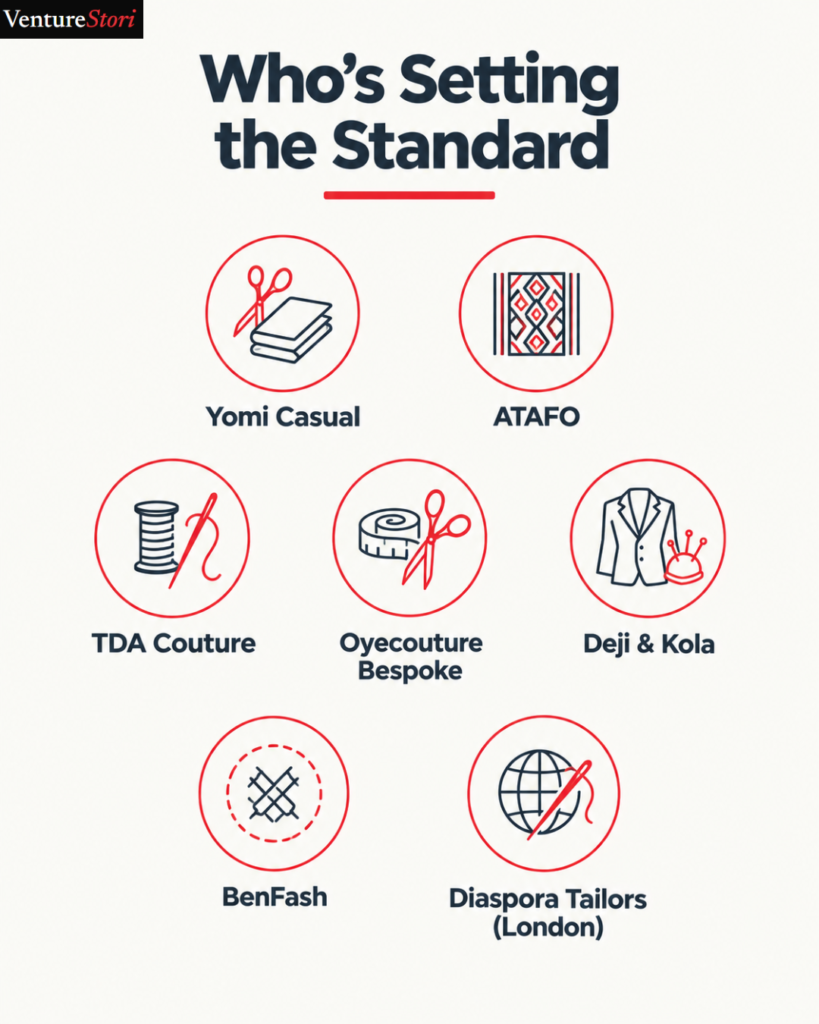
Diaspora-facing Bespoke Tailors
A growing hub of London-based Nigerian tailors like Deji & Kola, David Wej, and Tolu Bespoke, amongst others, serving diaspora clients directly or indirectly. These diaspora tailors and Bolt share something in common: they serve clients both in Nigeria and London.
Price Transparency: What Agbada Actually Costs
The fabric, embroidery, construction, and designer determine how much an agbada costs.
The figures below are based on insights, and they’re not fixed prices, because brands and sellers have their own prices.
Currently, there are ready-to-wear men’s agbadas on Jumia that cost below ₦100,000, including embroidered pieces that cost ₦70,000–₦90,000. The luxury and bespoke agbadas cost around ₦150,000, and there are more expensive pieces made with quality materials that go for ₦300,000 or more.
The fabrics used to make these agbadas can be expensive; some luxury fabrics sell for ₦150,000–₦470,000 for five yards.
Embroidery increases the final cost of making an agbada, but the actual cost for embroidering depends on what type of design is used. Designs that require dense work, monograms, or specialist techniques will naturally cost more. Some designers separate the embroidery cost from the agbada cost, so it is best to get the actual cost directly from the designer because there’s no fixed price list for all designers.
The best way to handle it is to request a current quote before you budget for one. Fabric prices, embroidery requirements, turnaround time, and designer fees can all change the final amount.
The Embroidery & Accessories Ecosystem
One person cannot completely make an agbada without help. Designers have their fair share of work, but embroidery specialists take care of the stitching design. Cap makers make the fila that complements the outfit; accessories like beads, coral jewelry, and walking sticks are provided by accessory makers; and shoe makers provide the shoes to complete the outfit. Top designers usually have an ecosystem of specialists that take care of each category.
The Fabric Markets: Where Designers and Buyers Source
Balogun Market—arguably the biggest market in Lagos—is home to one of the biggest fabric markets in the state. Traders sell fabrics with different textures, colors, designs, and brands in the market—both in wholesale and retail.
Aba, in Abia State, popularly called “Japan of Africa,” has a large garment and manufacturing ecosystem. With hundreds of tailors, fashion designers, and factories around Ngwa Road—the center of this industry- serving customers across Nigeria and beyond.
Katangowa Market in Lagos is another main hub of Lagos’s clothing economy. The market is mainly known as a thrift market, or Okrika and Bend-down select, as Nigerians call it, rather than a fabric-sourcing market. But fabrics are sold by traders in different parts of the market.
Ojude Oba as Cultural Anchor and Fashion Runway
The Ojude Oba festival is held in Ijebu-Ode, Ogun State, every year. It has gone from a homecoming celebration to one of the most anticipated cultural festivals in Nigeria, bringing people across Nigeria and the diaspora to grace the event. Fashion plays an important role in this public spectacle. Regberegbe age-grade groups show up in elegant Aso-Oke attires and other traditional outfits, while Balogun and other horse-riding families display pageantry with their regal traditional attires.
This festival also gives designers significant organic exposure. People who wear their designs can end up trending on social media or fashion blogs, drawing attention to the designer behind the outfits.
How to Buy Agbada: The Practical Guide
Getting one from an experienced designer or tailor allows you to have more say over measurements, fabric, and finishing; it also allows more time for fittings and custom work.
A simple agbada will naturally cost a lot less than a luxury agbada with intricate embroidery.
If you decide to buy a luxury piece in Lagos, for instance, going to a showroom may be worth it because you’ll directly assess the fabric and quality of previous work and speak with experienced designers before committing.
If you decide to buy online from marketplaces like Jumia or through a vendor, ask for current pictures or videos of the particular piece you’re interested in buying. Also verify the seller’s credentials and compare them with official brand information.
Local tailors are relatively affordable. Many of them handle fabric, construction, design, and embroidery at different costs.
Starting an Agbada Brand: The Business Angle
Yomi Casual and Mai Atafo have shown that one can build a recognizable fashion brand through having a consistent aesthetic, quality, and high-profile clients. Omoniyi Makun, CEO of Yomi Casual, started building a celebrity client list in his brand’s formative years, while Mai Atafo became known for dressing high-profile Nigerian entertainers and public figures. Their hard work over the years has positioned them as leading fashion brands in Nigeria and Africa, just like how Adesuwa Rhodes built Aruwa Capital through hard work and perseverance.
For new agbada fashion brands, having capital for this business is not just being able to cover the cost of a sewing machine. You also have to factor in fabric, skilled tailoring, embroidery, and fittings, as well as the cost of finding customers on social media, in person, through referrals, etc.
BenFash uses Instagram to showcase its brand’s new collections.
Also, you need to offer services beyond one type of occasion. Weddings, owambes, traditional ceremonies, and other formal event markets are as important as the agbada market. Having diaspora customers will also give you access to clients outside the country.
Another practical option is to employ a mixed model; don’t simply stick to one-off commissions. Include ready-to-deliver or semi-standardized pieces that require less production time in your business. Established fashion brands are doing this already; you shouldn’t be left out.
Conclusion
Agbada Styles in Nigeria is now a fashion ecosystem as well as a fashion statement. Designers, embroiderers, fabric traders, cap makers, and accessory makers are all part of the process. The current agbada trend remains slimmer silhouettes, tonal and 3D embroidery, and moments like Tobi Bakre’s AMVCA commission will continue to give designers more publicity. No matter how much your agbada costs, ensure that your money matches the fundamentals you’re paying for. And also remember, it takes a small network of specialists to bring your agbada to life.