
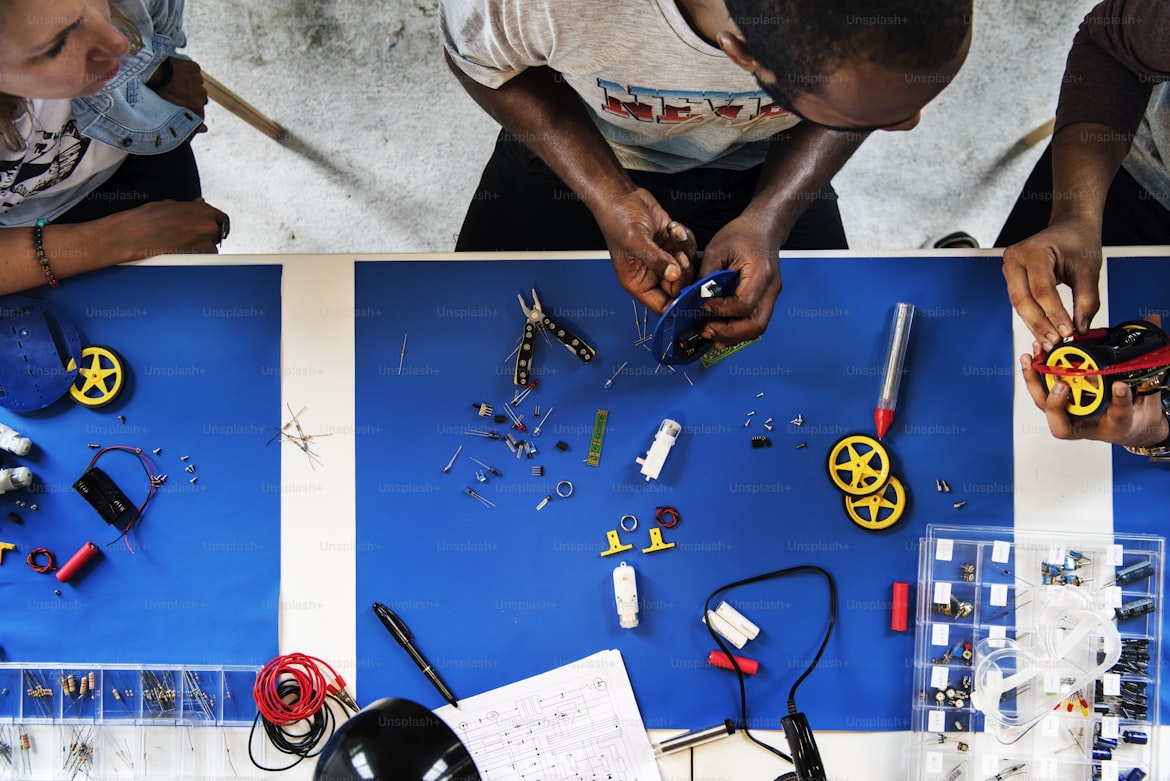
Innovation stories in Africa are no longer just buzzwords, they reflect reality shaped by necessity, fast-moving consumer markets, infrastructure gaps, and access challenges. In 2025, Ethiopian-German entrepreneur Weyni Tesfai drew the world’s attention to a truth now undeniable in the innovation sphere: Africa is rising, and anyone who misses this growing opportunity has no one to blame but themselves.
From thriving ecosystems and groundbreaking start-ups to modern digital revolutions, policy reforms, evolving investment flows, and global recognition, the continent is actively reinventing itself and climbing the Global Innovation Index. Africa’s transformation stems from its potential and its dynamic economic landscape. This essay examines Africa’s success stories through Afro-case studies, highlighting sustainable innovation patterns, key sectors, and structures that drive its momentum.
Africa has been underestimated by global innovations for a long time now. But lying beneath this perception is a silent revolution, borne of ingenuity rather than abundance. For several decades, the narrative about Africa has revolved around leadership and managerial deficiencies and projected hopelessness. It focused on the continent’s challenges rather than its opportunities.
A new story is emerging: links of possibilities from Africans for Africa. Across Kenya, Rwanda, Nigeria, Ghana, and South Africa, and indeed, other African regions, innovation is redefining the continent. Today, Africa is reshaping the frontier. It sets global standards through homegrown technology, finance, healthcare, and creative arts solutions.
In a place where scarcity is often the foundation, African innovators try to imagine how to achieve their dreams despite known infrastructural limitations and limited access to resources. The lack of sufficient resources has catalysed a wave of groundbreaking solutions to solve local problems. These solutions are driven by the average African entrepreneurial spirit to address needs.
Right now, Africa is a powerhouse of innovation across many areas. It changes lives and addresses problems through unique African solutions. Some of the select African entrepreneurship stories are discussed seriatim:
A popular African tech story is M-Pesa. Kenya launched M-PESA, a mobile phone-based money transfer app that transformed mobile payments and expanded financial inclusion across Africa.
M-Pesa is the brainchild of Nick Hughes, a former Vodafone head of social entrepreneurship. Nearly two decades ago, he noticed a gap in Kenya’s system for sending and receiving money and created a simpler solution to bridge it.
M-Pesa allows people to transfer money digitally, reducing the difficulties that traditional methods cause. Millions of unbanked individuals now participate in the economy using digital wallets, and this success inspired similar mobile transfer apps worldwide. The platform actively promotes financial inclusion, transforms daily activities, and provides secure digital services across many countries in Africa.
Uganda’s bark cloth industry is an ancient craft of the Baganda people. It produces a unique, non-woven textile from the Mutuba fig tree’s inner bark. This process uses one of humankind’s oldest savoir-faire, a prehistoric technique that predates the creation of weaving. As a result, UNESCO recognizes the craft for its cultural significance. At the same time, the industry blends traditional methods with modern fashion to create sustainable and eco-friendly products that are gaining attention on the international stage.
Traditionally, this sustainable material, pounded and stretched into a distinctive terracotta fabric, makes royal attire and serves in ceremonies and funerals. Today, however, modern designers explore its untapped potential in fashion and decor, creating opportunities for change and diversity despite challenges in scaling production.
In 2016, the Rwandan government announced a contract with Zipline to kickstart drone deliveries of blood to hospitals and health centers across the country. The news drew a mix of admiration and skepticism from the public.
Because blood has a limited supply, a short lifespan, and high demand from many hospitals, transporting it has always posed a major challenge. This challenge made the creation of a more efficient transport system essential. People wondered how this strategy would play out, whether it would work, and if investing in drone blood delivery would improve hospital responsiveness and blood management.
The investment delivered strong results. Drone-based blood transportation in Rwanda outperformed road transportation in responsiveness and improved how hospitals managed blood supplies.

Image: Unsplash
Hello Tractor has emerged as a trailblazer in revolutionizing agriculture through cutting-edge technology.

Image: Unsplash
This platform was founded in 2014 with a vision to solve the growing challenges small-time farmers faced. As a result, Hello Tractor has become a leading source of hope, empowering the agricultural sector with innovative solutions.
Its mission is to empower small-scale farmers by providing technology that promotes sustainable agricultural growth. To achieve this, a team of passionate innovators, engineers, and agricultural experts oversees Hello Tractor’s operations. Through this effort, the platform aims to close the gap between farmers and the modern tools they need to prosper.
At the core of Hello Tractor’s mission, the company commits to improving agricultural productivity, efficiency, and profitability for smallholder farmers.
By leveraging the power of IoT and AI, Hello Tractor has integrated a platform that transforms traditional farming practices. Specifically, Smart Tractor serves as the startup’s flagship, a technologically advanced tractor equipped with IoT sensors. Through a mobile app, farmers can access this smart tractor and place requests for tractor services with ease. In addition, the platform connects farmers with nearby tractor owners, creating an on-demand tractor service market centered on tractor utilization.
Furthermore, farmers can access real-time data on tractor usage, fuel levels, and maintenance needs through the Hello Tractor app. This data-driven approach helps farmers make better decisions, streamline operations, and improve overall farm efficiency.
Overall, Hello Tractor’s contributions have created a profound social impact on farmers’ lives. They have enhanced agricultural sustainability, reduced rural unemployment, and empowered women in agriculture. Consequently, the company ranks among Africa’s top innovative firms and has earned global recognition and several awards, affirming its position as a leading force in agritech.

Image: Unsplash
Computerized solutions integrated into the maritime sector have eased the burden of moving goods by sea, and even more advancements are on the way. For many years, the shipping process has largely remained the same. Ships load and unload cargo while traveling to and from Africa’s Atlantic, Indian Ocean, and Mediterranean ports, as well as freshwater ports along the continent’s major rivers and great lakes.
Today, modern technologies such as GPS actively support these journeys and ensure that vessels do not get lost at sea. Meanwhile, cargo still passes through traditional customs procedures. However, digital technologies now accelerate and simplify this process.
The digitalization of Africa’s maritime industry will, by necessity, continue to accelerate. This growth will accommodate innovative technologies such as super-sized cargo ships and self-piloting autonomous vessels.
The industry has also shown strong adaptability during emergencies. For example, when Russia’s invasion of Ukraine cut off crucial grain imports, shipping companies arranged alternative shipments from North and South America.
Similarly, when Yemeni terrorists began attacking cargo vessels, companies responded by rerouting ships away from the Red Sea and the Suez Canal.
Looking ahead, the African Continental Free Trade Agreement will drive further innovation. The agreement aims to boost intra-African trade by 62 percent through water routes. To meet this growing demand, the maritime industry must continue to digitalize its operations.
Flutterwave was founded in 2016, by Iyinoluwa Aboyeji, Olugbenga Agboola, and Adeleke Adekoya.
Before co-founding Flutterwave, Iyinoluwa Aboyeji, was part of a team that founded Andela, a coding jobs and training platform, where he encountered issues when trying to pay developers based in African countries. And as a result of this, this firm began to process payments every 1-3 months to avoid incurring costs coming from transaction fees. The high fees weren’t the only problem, payment would also take a long time before they get to the local bank accounts of the developers.
In a bid to combat these sissies, Iyinoluwa Aboyeji announced that he was co-founding Flutterwave.
“Flutterwave is a solution to some of the major challenges I’ve witnessed while building Andela. Despite all the entrepreneurial spirit and expertise in Lagos, businesses still have trouble conducting transactions that are an afterthought in most of the world. It’s a problem that is prohibitive to the future growth of the continent, and one that we felt we could no longer ignore. So we decided to do something about it.” Says Iyinoluwa Aboyeji.
Flutterwave provides payment products for individuals and businesses. Initially, the company diversified its revenue streams by focusing on enterprise clients before considering small to medium-sized businesses (SMBs) and then extending its services to individuals.
Flutterwave’s core product is its payments API. This offers solutions that help businesses to accept payments from customers and send money to others as well. Businesses that are building websites, apps, e-commerce stores, or creating any online product can send or receive money from customers through verified methods of payment, including card payments, direct debit, bank transfers, and mobile money, as long as they integrate Flutterwave’s API into their products.
These innovations seek to solve the immediate challenges faced in the African market and also to ensure collaboration across borders. These products are the blueprint for what Africa is capable of when creativity meets necessity and when stakeholders come together to break barriers.
There’s no isolated success story: each of them in their own unique way represent a collective shift to having a more connected, inclusive, and forward-thinking Africa.
“Africa’s transformation is not a distant aspiration; it is an unfolding reality driven by courage, creativity, and collaboration.”
The future of the African youth remains both its greatest opportunity and its most powerful challenge to effect change. Over 60% of the population in Africa is under the age of 25, and young Africans are making progress in changing the industry, redefining systems, and using technological innovations to offer solutions to long-standing social and economic problems. From coding camps and agritech innovations to creative enterprises and digital platforms, the youth have decided not to sit idle and wait for something to change. Instead, they’re leading the change. If the potential of this demographic is harnessed through quality education, innovation, and leadership development, it can speed up the continent’s journey toward sustainable prosperity.
At the same time, Africa’s transformation is being championed by women as well; they’re the backbone of the home, communities, and economies as well. Across markets, boardrooms, and farms, women are leading growth, innovation, and resilience. Initiatives such as the African Women’s Entrepreneurship Program (AWEP) and SheTrades Africa are expanding access to finance, markets, and mentorship, empowering women to lead with confidence and become prosperous.
Empowering women should be seen as a strategic imperative and not just as equity. When women break barriers, their families and communities flourish and the economy grows.
“Empowering women is not only a moral imperative, but it is also an economic strategy that fuels inclusive growth.”
The African Innovation Ecosystem is a growing, diverse network of African startups, hubs, investors, governments, and academics that is working effectively to deliver specific solutions for developmental challenges, highlighted by a need for cautious optimism despite global headwinds, with major trends including a focus on local problem-solving, stronger policy support, increased pre-seed funding needs, and more collaboration through networks like AfriLabs. The aim is to leverage local talent in a bid to create sustainable tech-driven African business stories, going beyond mere replication of external models to provide solutions to unique African needs in health, education, finance, and more.
Africa’s innovation ecosystem is built on a foundation of a diverse mix of stakeholders working together to create solutions for problems facing the African economy.
To grow, you need to have vision and have policies in place to bring your vision to life. This has become a cornerstone of the progress of innovation in Africa. Morocco’s Innovation Strategy is a good example of such; it’s led to initiatives such as technoparks that help startups seeking to develop in ICT, green technology, and cultural industries. Another example is the Kenya National Innovation Agency (KENIA) in Kenya, which is leading efforts to develop a positive innovation culture, particularly through the Kenya Innovation week.
Universities like the University of Nairobi and Stellenbosch University in South Africa are incubators of talent and ideas. They’re providing a platform for young innovators to explore and refine their innovations, from tech applications to agricultural advancements, every talented young mind has a place.
African Startups are leading the change when it comes to solving real-world problems. For example, in Uganda, the Uganda Industrial Research Institute helps incubate businesses, while there are several tech hubs in Lagos, Nairobi, and Cape Town that have become synonymous with innovation.
Antler, 54 Collective, E4IMPACT, Anza Village, Eldohub, Starthub, Lakehub, Innovation Village, among others are some of the spaces that make room for the provision of critical support to entrepreneurs. In addition, they offer mentorship, networking opportunities, and resources that enable startups to flourish and compete on the global stage.
Collaborating with each other, these players have the potential to create a dynamic ecosystem that will propel innovation across sectors. But the only hindrance to this vision becoming reality is a unified narrative; a way to maximize these efforts and connect them with global opportunities.
In many African markets, innovation is defined by usefulness. It’s not defined by advanced technology or breakthrough scientific results. Products are successful when they provide solutions to immediate, nagging problems and easily integrate into people’s daily routine.
This usually means that it is better to build around informal systems instead of trying to replace them. Markets are broken, infrastructure is in poor condition, and purchasing power is unstable. Innovation should be able to focus on reliability, accessibility, and affordability over sophistication. A product that works consistently on low-end devices or limited connectivity will outperform a technically superior device that has stable infrastructure on average.
African innovation is more about adapting to the continent’s needs and less about being sophisticated. Companies innovate by adjusting pricing, simplifying processes, and designing for real-world friction rather than ideal conditions.
There are several recurring challenges that continue to shape innovation in Africa.
This remains a key challenge in Africa. Despite the innovations emerging, there are still regions where traditional banking access is limited, and more digital wallets and mobile money platforms are trying to fill a clear gap. The customers who have adopted them did so not because they were special, but because they worked consistently and earned their trust.
Some examples of these platforms are M-Pesa, Opay, Flutterwave and Moniepoint.
This is another consistent constraint. Transporting goods across cities or borders can be very expensive, difficult, and unreliable. Startups in the logistics sector are now attempting to address routing, aggregation, and last-mile delivery, focusing on reducing friction rather than building flashy platforms with no substance or effective solutions.
Uber, Freightos, LogiNext and Oracle are some examples of logistics platforms making deliveries easier.
This sector also presents structural gaps. Overcrowded classrooms, poor teaching quality, and limited medical supplies create demand for supplemental digital tools. These solutions gain traction when they work with existing systems instead of attempting to change the entire system.
Across sectors, innovation in Africa is mainly driven by necessity. The problems in existence remain because infrastructure evolves slowly. Consumers also acclimatize to new products quickly when they’re cheaper, save time, or offer increased reliability and efficiency.
Helium Health, Mahalo Health, and Lagos SHIP are examples of health platforms. While Udemy, Coursera, and edX are examples of educational platforms.
In this modern age of disruption; climate change, pandemics, global inequality, amongst others. Africa is offering the world a chance to view its compelling model of innovation rooted in resilience, affordability, and human-centred design. The continent is no longer seeking permission before it takes part in redefining the future. Its brilliant minds are working smartly, ideas are flowing, its technologies are maturing, and its influence is expanding.
Across payments, logistics, education, and services, African companies are having great success by responding to real market needs. They grow through adoption, trust, and repeat use, not hype or narrative. Which should be the motto for new Africa market trends in 2026.
These innovation stories from Africa are showing that meaningful innovations are being shaped by constraint and validated by consumers. As global markets continue to be put under increasing pressure by access, efficiency, and resilience, the lessons coming from African markets are no longer peripheral. They are crucial to understanding how innovation truly works.
Africa will not just be heard, its innovations will be heeded. In the years to come, the world will consume more of African-made innovations and depend on them.
Innovation in Africa is not defined by ambition alone. It is defined by what it offers.