

Picture this: you’re standing at a train station in Hamburg just at the crack of dawn. The platforms hum softly. Trains arrive on time. You’re able to stop by the hospital for a quick check and get to work on time. Everything is in order. Nothing feels out of place, and everything works. This is where innovation in Europe begins; it doesn’t start with fanfare, but with being functional.
Across Europe, innovation stories are defined less by bold claims and more by a single question: Will this create ease for the future?
While other continents may prefer the media’s attention, Europe’s approach is different. It prefers to build in silence, and its innovators have learned to navigate borders before going into markets, to regulate before growth, and to have sustainable systems in place before it goes public. This hesitation doesn’t slow innovation; it shapes it.
Entrepreneurs across Europe turn piracy into platforms, bureaucracy into infrastructure, and scientific problems into global breakthroughs.
Some distinct innovations from Europe include:
Daniel Ek has always been a big fan of technology, right from childhood. He started programming and creating websites at the age of 14. Eventually, his passion grew, and he started a company with a couple of his friends while still in high school. But he loved something even more: music. As a superfan, Daniel saw an opportunity to create a tool for legally streaming music when Napster, arguably the biggest illegal music platform, shut down.
Created from the words “spotlight” and “identify,” Daniel Ek and Martin Lorentzon launched Spotify in Stockholm, Sweden, in 2008. This was at a point when Europe had a problem no one wanted to admit out loud: music piracy was rampant, and the regulatory system was not effective.
Daniel’s vision wasn’t driven by technical motives but by a cultural perspective. People didn’t steal music out of dislike for the artists; they did it because they could get away with it.
Spotify rose to prominence and altered the course of the music industry by providing a legal way to consume music. Rather than ownership, it provided access.
The product quickly gained traction, changing how music is streamed. Now it features not only music but also podcasts and audiobooks. and it became a global force. According to a 2025 poll, Spotify has 700M+ users and 280M+ active subscribers.
Wise, formerly known as TransferWise, began from a personal frustration. The idea behind its birth was powerful though simple, it originated from Taavet Hinrikus and Kristo Käärmann, two Estonian men, back in 2011. They both lived in London. Taavet was Skype‘s first ever employee, and Kristo was working for Deloitte at around the same time. Earning in foreign currency, every time they tried to move money back home, a significant part of it was lost to transfer fees. So, an idea sprang up. Every month, Taavet transferred money in euros into Kristo’s Estonian account, and Kristo transferred money in pounds into Taavet’s English account to carry out their transactions. This way, they both got the exact amount of money they transferred instantly without having to pay for exchange fees or anything related to it.
This genius move became the foundation on which Wise was built. Taavet and Kristo decided to remove the problem of exchange fees entirely. No magic tricks. No illegal moves. Just transparency. A clever move, right? I bet we all agree to that.
Wise solved cross-border payment problems and made the public see how inefficient traditional banks were, especially in a continent that claims to be united despite the borders separating them. According to Barry Elad at CoinLaw, Wise has over 70 licenses across the world and can operate in over 160 countries, serving about 15 million users.
“Every other industry had been transformed by technology. Amazon changed the way we shop, and Spotify changed the way we buy music. But nobody had really changed the way we bank. So in 2014 I quit my job to start a bank.” — Anne Boden, founder of Starling Bank.
Starling Bank wasn’t built to look modern. It was built to lead banking into a modern era. Since temples and palaces in ancient Mesopotamia served as the first banks in 2000 BCE, the basic principles of banking had remained largely unchanged. Until Anne Boden, founder and former CEO of Starling Bank, came along and changed everything. After decades spent working for traditional banks, Anne had a different idea of what banking should look like. She didn’t think it needed any more branding; she believed it needed to be fixed.
The experience of the financial crisis of 2008 was the major factor in her decision to go down this road. During this time, she began to pay close attention to fintechs, and became increasingly excited about the possibilities of what banking technology might look like in the future.
Anne’s brainchild changed the structure of banking from the core: real-time payments, clean APIs, mobile-first design, and operational transparency. Every single decision was shaped by regulation.
In Europe, where trust matters more than publicity, second chances don’t come easily. Starling was successful in what it was built for: not to disrupt banking, but to rebuild it.
Founded in Germany in 2008 by Ugur Sahin and his wife, Özlem Türeci, BioNTech spent over a decade getting ready for a moment no one ever saw coming: the COVID-19 pandemic.
Before the pandemic started, the company’s focus was on mRNA technology for personalized cancer treatment. It wasn’t as progressive as they wanted, getting funding for research was difficult, and getting results took time, but they didn’t give up. On the 24th of January, 2020, Ugur Sahin knew that the COVID-19 virus was going to be a full-blown pandemic. And when it eventually happened, BioNTech had a clear focus on what it wanted to do; the company decided to change direction and channel its limited resources into creating a vaccine to put an end to the pandemic.
“He [Ugur] approached me and explained his thoughts and his fears,” Türeci said. “And it was immediately clear to both of us that the technology we had, which we had already clinically developed, could help to ensure a rapid response.”
The couple knew that they couldn’t do this alone; so they reached out to Pfizer, a company with which they already had an existing partnership, and they got to work. BioNTech’s partnership with Pfizer produced one of the most effective vaccines in history. And this isn’t just because of how fast it was; it also boils down to its preparation. BioNTech is an excellent example of what Europe’s greatest innovation strength is all about: long-term scientific investment.
The biggest enterprise software company to come out of Europe in the last decade came from Bucharest, Romania.
Founded in 2005 by Daniel Dines, a former Microsoft engineer, and Marius Tîrcă, UiPath, formerly known as DeskOver, started when they noticed that the workload of repetitive digital tasks was taking its toll on businesses. They took on the challenge of finding the right product–market fit, working for over a decade from an apartment in Bucharest.
Their original idea never succeeded, but one day, they got lucky and stumbled upon an untapped gold mine in the enterprise software category called Robotic Process Automation. They immediately pivoted, changed the name of the company to UiPath, and their growth skyrocketed. They went from being unknown to becoming the fastest-growing SaaS company ever at the time.
Their unusual rise challenged assumptions about where success can come from. UiPath originated from Eastern Europe.
In 2010, two Irish brothers, Patrick and John Collison, dropped out of their respective schools, Massachusetts Institute of Technology (MIT) and Harvard University. And in 2011, down in Palo Alto, California, Stripe was born.
The idea came as a result of their persistent frustration with how difficult it was to make online payments and the complex systems of the entire process. Their technical expertise gave them the foundation they needed to start a company that would be able to make online transactions easier to use.
Formerly known as Dev Payments, Stripe has expanded into becoming one of the biggest fintech companies in the world. Its user-friendly interface quickly drew users in, and significant funding from Elon Musk, Peter Thiel, and venture capital firms such as Sequoia Capital and Andreessen Horowitz laid the groundwork for its long-term impact. Stripe reported that they processed over $1.4 trillion in total payment volume (TPV) in 2024, a 38% increase year on year and roughly 1.3% of global GDP.
Although Stripe has spread throughout the world, its DNA was shaped by European origins. Trying to build a payment system in Europe has its challenges: VAT, broken regulations, and the headache that comes with dealing with multiple currencies. All of these contributed to ensuring that Stripe was built with great systems that made dealing with transactions on the internet easy.
There’s a high chance that you’ve never heard of Volotea, and you’re simply one of the many. Despite not being popular, it’s one of the most efficient, budget-friendly airlines that you can find anywhere in the world. When you think of European airlines, what you probably think of Ryanair and Wizz Air. But Volotea match up quite nicely against the big airlines in Europe’s hyper-competitive market.
Europe is dense, diverse, and filled with cities that matter economically but get ignored on the logistics side. And this is what Volotea is interested in, it’s focused on connecting these places directly with one another.
Derived from the Spanish verb “revolotear,” meaning “to fly around, ” Volotea is a Barcelona-based low-cost airline founded in 2011 by Vueling founders Carlos Muñoz and Lázaro Ros.
The airline’s focus is on mid-sized, ignored European capitals. People who reside in Nantes, Bordeaux, Verona, and Asturias, amongst others, are taking careful to avoid the major cities that are always congested. Volotea specializes in direct, non-stop flights between small-to-medium-sized European cities.
According to statistics, it has expanded its fleet to 41 Airbus A319/A320s by 2025 and have served about 75 million passengers since inception. As of 2025, it operates over 420 routes, serving more than 100 cities in 16 countries with a significant portion being exclusive to the airline with its major routes particularly in France, Italy, and Spain.
It provides direct flights that other European airlines do not offer and sets fares lower than many European low-cost carriers. This strategy helps it carve out a niche in the European aviation market by offering unique solutions for passengers connecting between overlooked cities. Volotea has managed to grow at a sustainable rate because of how affordable it is.
Instead of competing with European airline giants, Volotea designed its own routes around European geography and stuck to them. The airline achieved success and became profitable because it understood how Europeans actually travel. It is innovation by observation, not ambition.
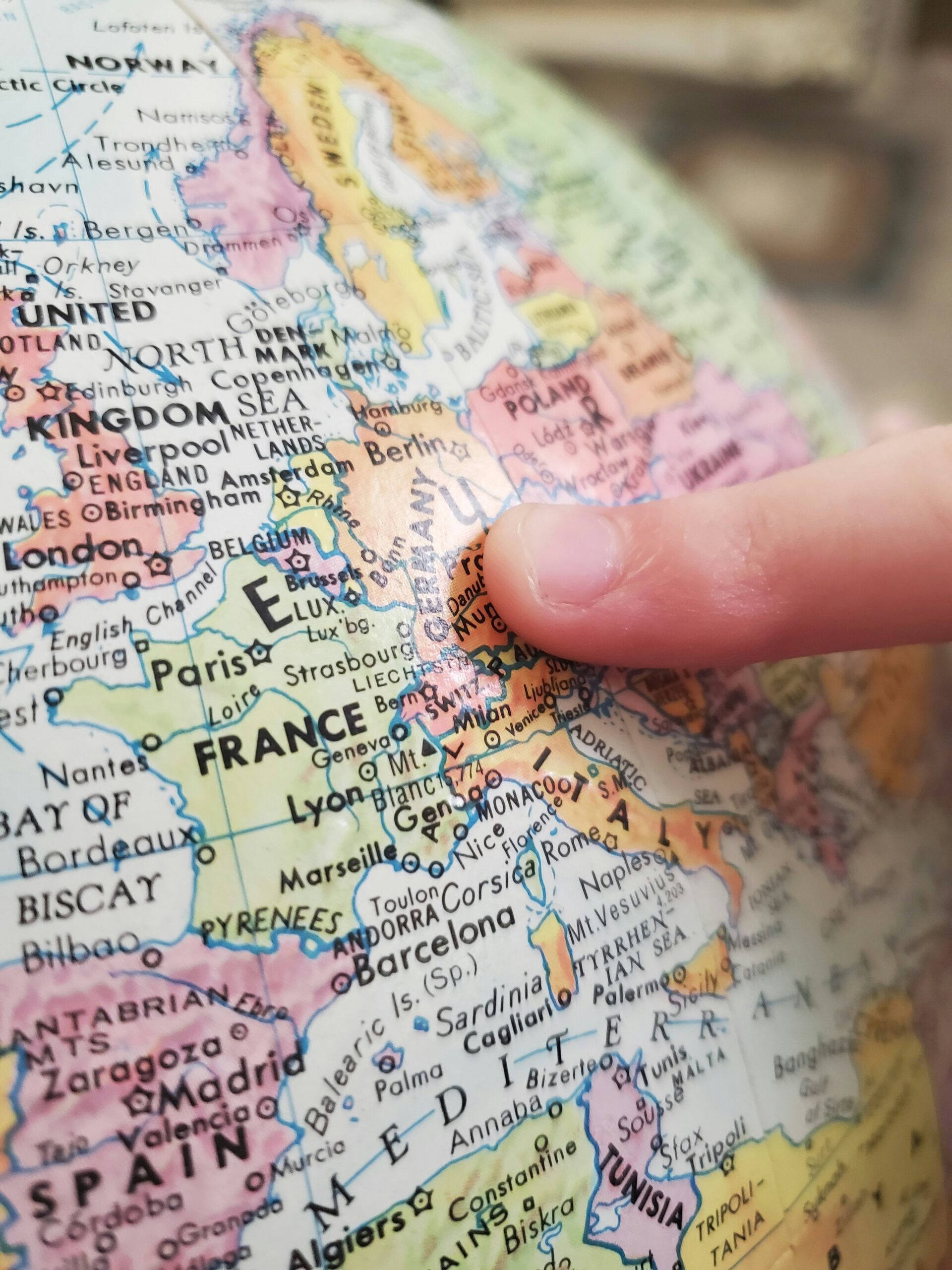
Image: Unsplash
Across these European business stories, there’s a clear pattern in them: European innovations are not defined by speed but by structure. European innovations are not loud. Instead, they’re structured. They grow through regulation, they don’t bypass it. And they’re successful because they are capable of solving problems that others ignore.
Founders create innovations within existing systems; legal frameworks, labor protections, research institutions, and cross-border markets and they gain success when they understand how to work through them rather than around them. This is why a lot of European technology companies focus on building and tuning out the noise.
Spotify changed music distribution. Wise fixed cross-border money movement. Starling redesigned the entire banking structure. BioNTech waited patiently for its turn by continuously investing in science before it became needed. These businesses didn’t chase flashy trends; they found solutions to problems that had been tolerated for too long.
Another defining feature is waiting for the right time. European founders make their announcement when the product is ready and not before. Companies that scale through Europe’s complexity come out stronger when they scale globally.
Geography is also very important. Innovation in Europe happens everywhere. It comes from Stockholm, Athens, Bucharest, Berlin, Dublin, Barcelona; all places with different histories and economic needs. This diversity in needs often leads to innovations built for real-world conditions rather than for ideal conditions.
Most importantly, these stories show that European innovation is practical. It values trust, continuity, and long-term relevance above anything else. In a global economy that’s becoming increasingly dependent on reliable infrastructure, the European way of innovation may prove to be its greatest advantage.
“We didn’t move slowly because we lacked ambition. We moved slowly because people’s lives were involved. Speed without responsibility doesn’t scale here.” — Anna Keller, Co-founder, Health Technology Company, Germany.
The definition for innovation in Europe is: practical, regulated, and infrastructure-driven.
European entrepreneurs and companies alike are mostly interested in solving the difficult problems that persist within existing systems instead of ignoring them and focusing on entirely new ones. This problem-first approach has defined how European startups grow and what business models they adopt.
A climate startup in Sweden can spend years refining energy-storage efficiency before introducing it to the market. A German automobile company might collaborate with the government for over a decade before driving its innovation onto the streets. A French healthtech firm could remain hidden from the public while it carries out clinical trials to improve healthcare. To the outside world, nothing seems to be happening. Inside, everything is.
“In Europe, you don’t get applause for ideas. You get respect for execution. That forces you to be serious from day one.” — Lars van Dijk, Clean Energy Founder, Netherlands.
A lot of European societies place modesty over self-promotion. Instead, they prepare to let their results do the talking. This makes European innovations appear rather “boring” on the global stage.
The quiet beginning does not mean they’re less ambitious. It means delayed visibility.By the time European innovations reach the public, they have already entered supply chains, public services, enterprise systems, or daily life. The thrill is not in the public launch, but in realizing that something solid has been growing and quietly gaining adoption all along.Understanding what this means is the key to understanding Europe itself. Innovation there is less about disruption headlines and more about being powerful enough to effect change.
Diversity, regulation, research depth, and long-term infrastructure thinking are some of the factors that shape European innovation, and as it continues to steadily evolve, integrating itself into the world’s most important industries. As layers continue to form, the story keeps on writing itself.
In conclusion, applied science, sustainable models, and collaboration across borders are leading the charge on how European companies are redefining global business and technology. And if you’re very observant, you’ll come to figure out something surprising and reassuring at once: By the time you notice European innovation, you’re already using it.
These innovation stories from Europe remind us of something rather fundamental; progress does not always announce itself. Sometimes, it simply works.