
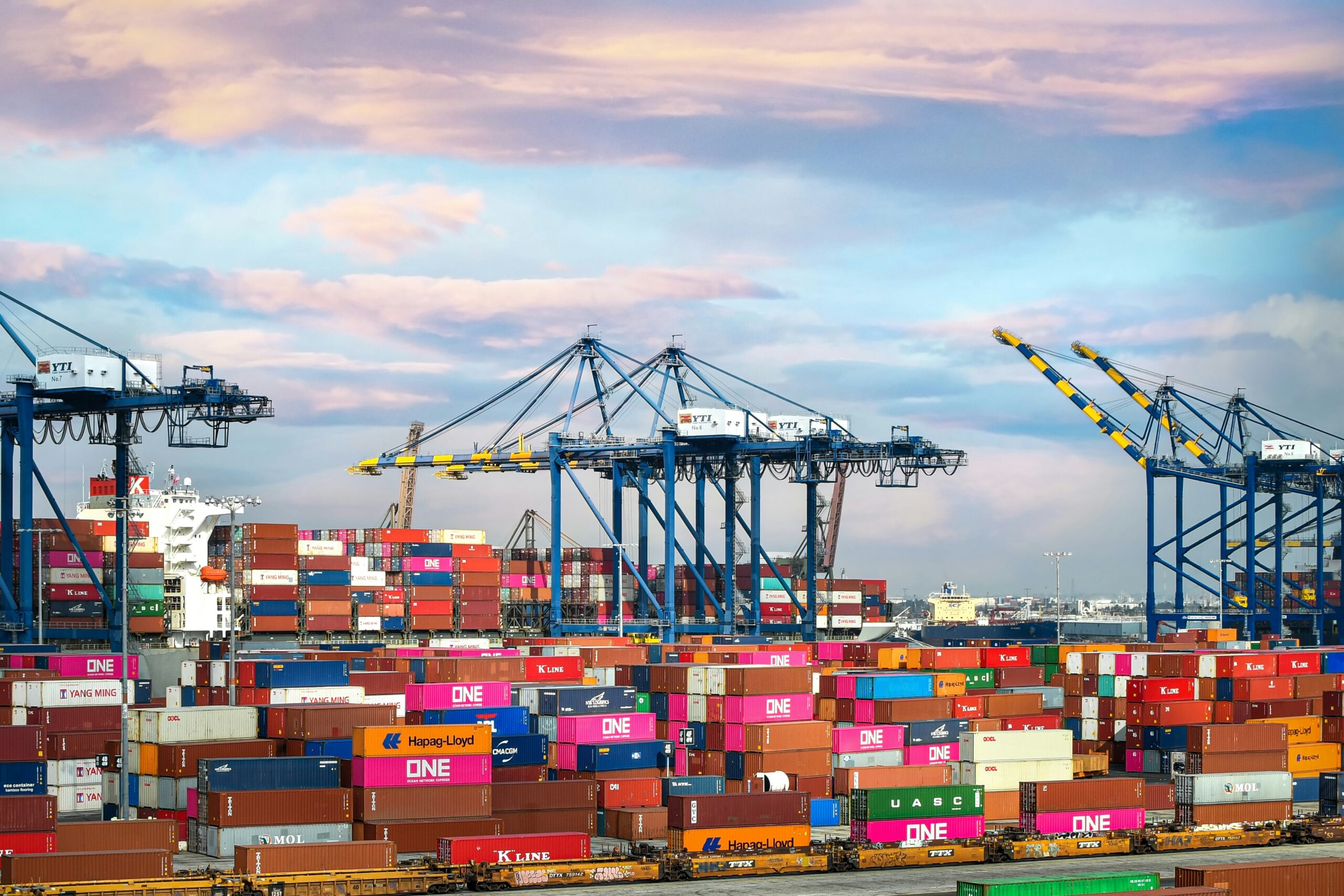
Kobo360 is changing how freight is moved across Nigeria, acting as the connecting link between shippers and truck operators through a centralized logistics platform. Rather than having trucks, Kobo360 places itself as a coordination layer to reduce friction within Nigeria’s freight ecosystem.
Nigeria’s logistics market is broken. Truck supply lacks coordination, delivery times are unpredictable, operational costs are high, and shipping visibility is limited. Kobo360 is an attempt to solve these problems.
Logistics in Nigeria is often discussed as a transportation problem, but the deeper issue is coordination.
Imagine this scenario:
John has a shipment to offload at the docks on Monday morning, following several reschedules by the shippers, and in order to avoid the daily traffic congestion in Lagos, he called a friend on Sunday night to arrange for drivers to arrive at the port as early as possible. It’s Monday at noon, and John is waiting at his warehouse for his trucks to arrive. He tries calling the designated drivers, and they begin a series of excuses on why they couldn’t make it to the port due to the poor road conditions and fuel scarcity.
Frustrated, John calls his shippers to apologize for the delay caused by his drivers, but he ends up finding out that his goods are yet to be unloaded due to several unforeseen delays.
His shops are empty, his customers are tired of his excuses, and all John can do is lament about the constant problems he faces regularly.
Thousands of truck operators work independently and this is a major problem. A lot of them depend on informal brokers, phone calls from certain agents, favors being called in, and personal relationships to get jobs. On the other hand, shippers find it difficult to deal with inconsistencies in pricing, delays, and the limited visibility that arises as soon as the goods leave the warehouses.
In addition to these growing concerns, there are also the issues that come with poor road conditions, an increase in fuel prices, security risks, and congestion. But the core problem remains fragmentation.
Freight moves, but it is done inefficiently. And this is where Kobo360 comes in, to act as an organizer, not a transporter.

Image: Unsplash
Kobo360 operates as a freight marketplace and logistics platform. Kobo360 carries out both its functions effectively. On one hand, it sums up truck operators and fleet owners. On the other hand, it works closely with manufacturers, distributors, FMCGs, and businesses that are looking to move goods across cities and regions.
Its operations include matching the loads to its designated trucks, giving the right coordinated routes, tracking deliveries, and managing payments as well. In essence, Kobo360 acts as a digital and operational bridge between demand and supply.
In Nigeria, logistics platforms are valued when they’re capable of organizing existing assets rather than finding replacements. This positioning matters.
Kobo360 was created to provide solutions to the recurring problems in Nigeria’s freight market. First is fragmentation. Having a consistent capacity is extremely difficult when there are thousands of independent truck drivers. Second is unpredictability. Delivery timelines aren’t delayed because of just infrastructure, they also change due to poor coordination. Third is a lack of visibility. Many shippers actually cannot tell you where their goods are in real time. Fourth is trust. Payment delays, cargo losses, and inconsistent service will definitely create friction between shippers and truck operators.
Freight marketplaces aim to reduce these issues through standardization and coordination.
Many times, freight marketplaces are seen as simple matching tools and that is a wrong description. In reality, platforms like Kobo360 handle:
Meeting and matching demand and supply is only half the job. Where the real challenge starts is when the need to manage variability across routes, vehicles, and operators occurs. And because of the complexity of these processes, logistics platforms need both software and operational oversight.
Logistics software is central to Kobo360’s model, but it is not sufficient on its own. Including software in its operation will enable data collection, visibility, and decision-making. It will also help to standardize pricing, track deliveries, and monitor performance. As a bonus, it also allows platforms to learn over time. Despite these introductions, the logistics environment in Nigeria presents constant exceptions. Trucks can become faulty. Routes can change at the last minute due to traffic congestion. Security risks. Drivers go offline.
To overcome these obstacles, logistics software must have an operational team on standby that’s able to solve these problems in real time. This hybrid model can be costly but it is necessary and effective as well. Supply chain technology in emerging markets must accommodate disruption instead of assuming stability.
Trucking platforms operate at the point where digital systems and physical infrastructure meet. Unlike the marketplaces that are purely about software, logistics platforms take on the complexities of the real world. Each shipment introduces new variables, including weather, road conditions, fuel availability, and human behavior.
When it comes to Nigeria, these variables are amplified. Kobo360 coordinates across long distances, uneven infrastructure, and inconsistent regulatory enforcement. Making sure that they meet the required operational adjustments constantly.
Logistics platforms appear capital-intensive because of these costs that aren’t only included in software development, but coordination itself.
One of Kobo360’s central value propositions is improved reliability. Supply chain technology allows platforms to reduce uncertainty through data. As time goes on and through constant regulation; shipment histories, route performance, and driver behavior create patterns that will lead to better decision-making.
Being reliable doesn’t mean you’re removing disruption completely. What it means is that you’re simply predicting and managing it. For shippers, there will be fewer surprises. For drivers, it leads to more consistent work. And for the ecosystem, there is a gradual efficiency boost. In fragmented markets, reliability is often more valuable than speed.
Growing logistics platforms in emerging markets follow a different logic from that of consumer apps or fintech products. Firstly, supply has to be onboarded and retained. And for this to happen, trust, timely payments, and operational support are required. Secondly, there has to be a consistent demand. Platforms are dependent on customers who are able to generate predictable freight volumes. Thirdly, coordination costs rise with scale. Having more shipments will mean that there will be more exceptions, not fewer. Lastly, infrastructure gaps remain. And platforms create systems that are able to work regardless of power outages, network instability, and road failures.
Kobo360’s model reflects these realities. Growth is restrained by operational bandwidth, and not by user acquisition alone.
A key strategic decision in logistics is whether to own assets. Having a fleet of trucks gives control but it also demands significant capital and maintenance to keep them up and operational. While coordinating through third-party assets takes away capital intensity but increases complexity.
Kobo360 has chosen to go down the coordination route. This approach is in line with emerging market conditions where owning assets is a risky option and fragmented supply is in surplus. However, coordination models are heavily dependent on execution quality. The margin in logistics platforms often comes from efficiency gains, not pricing power.
Kobo360 illustrates how logistics innovation in Nigeria is evolving. Innovation isn’t only about reinventing transportation. It goes beyond just doing that, it is also about effectively organizing existing capacity to the required standard. Freight marketplaces arise when informal systems have reached their limits. They’re able to formalize processes without removing the local actors.
Supply chain technology is valued when it reflects real operating conditions and not ideal assumptions. Nigeria’s logistics future will be redefined by the platforms that understand these constraints and Kobo360 is already rewriting the future.
Kobo360 represents a systems-level attempt to organize logistics in Nigeria. Logistics platforms that achieve success can get it because they’re able to coordinate supply and not just make their requests digital. Freight marketplaces reduce fragmentation but it adds operational complexity to the system. And while supply chain technology is central to scale and reliability, it must also be created not just for efficiency alone, but for disorder.
Emerging markets need logistics models that are designed around infrastructure gaps, not in spite of them. The future of logistics in Nigeria will depend on who can build dependable coordination layers across a highly fragmented ecosystem and Kobo360 is leading this charge.