
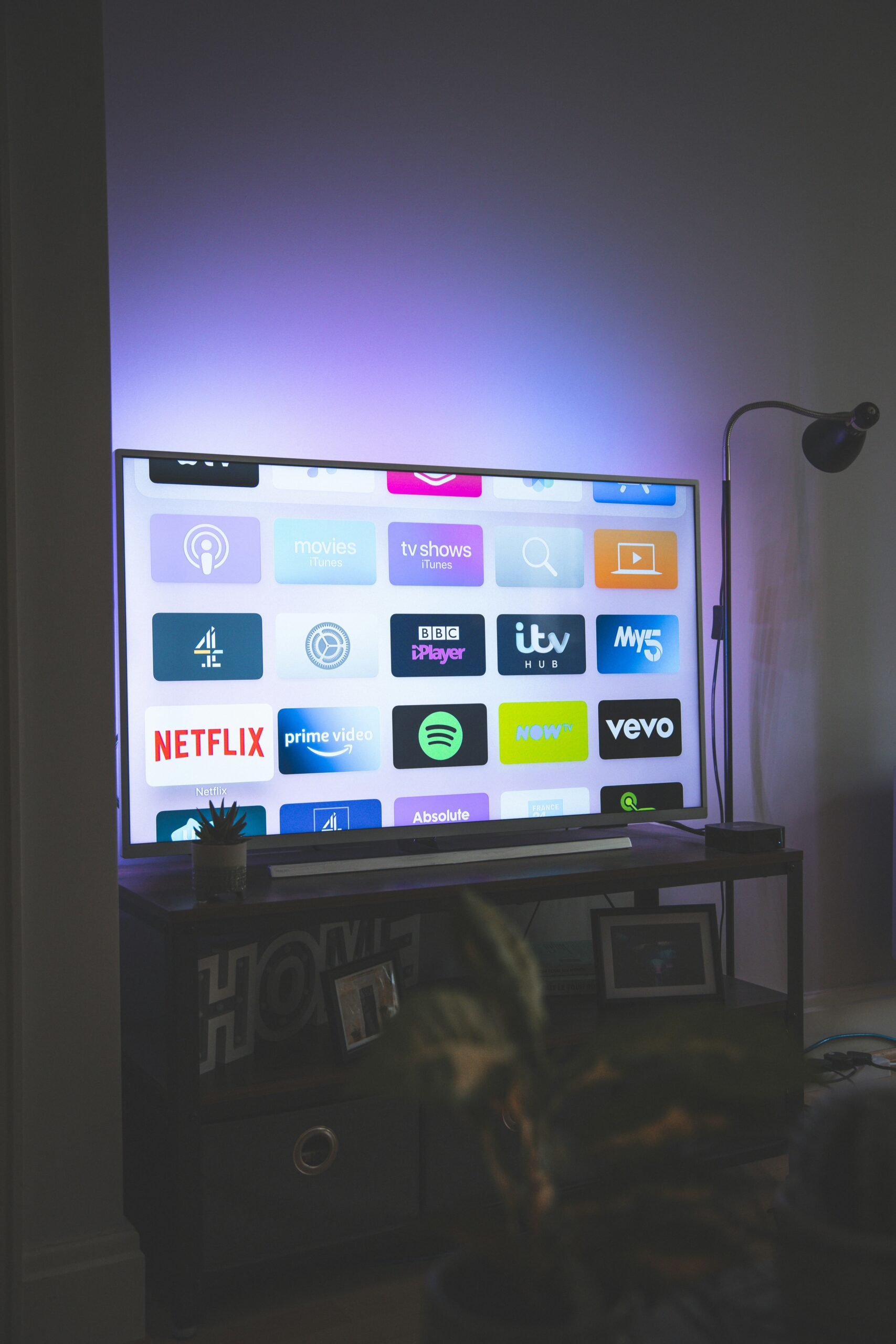
Did you ever watch a superhero movie as a kid? Or pictured yourself using your mind to control things around you? NextMind is gaining popularity for making it possible for you to control TVs by using just your thoughts.
This is mind-blowing because it shows that the brain-computer interfaces are moving from laboratories into a technology ready for use. Instead of making use of remotes, buttons, or voice commands (the latest trend). NextMind takes it several steps further. Its users can carry out commands on TVs using neural signals generated by focused attention.
NextMind wants to come up with a new kind of interface, one that does not need screens, buttons, and touch. Completely taking them out of the equation. The most significant part about this isn’t particularly the idea that mind control might become possible but rather what it means for humans to be able to control and communicate with technology.
For decades, interactions between humans and digital devices have solely centered on physical input like keyboards, remotes, touchscreens, and voice commands, but NextMind is changing all of that. You won’t need to move your muscles, say commands, or press buttons; the system simply reads your mind and carries out your intention.
The system is built around a brain-computer interface (BCI) that can detect specific patterns of neural activity. It’s interesting how the brain responds when it’s focused on an object. When someone concentrates on a digital device, let’s say a TV screen, what the brain does is that it produces a distinct neural response as a result of this action. And this is what NextMind wants to bring to real life, because its technology seeks to identify that signal and translate it into action, all powered by neural response.
This is a rather subtle explanation, but in truth, it is powerful. The users aren’t trying to come up with commands in their heads by putting in much effort; all they simply need to do is focus. The interface responds to attention and not instructions; this allows interaction to feel more natural.
Its design isn’t strictly a headset made for labs, medical research, or anything of that sort. Its main goal is to satisfy the needs of the public. The company’s wearable sensor is compact and made in a way that it is able to be part of the devices that people use every day: AR glasses, headsets, or headbands. They’re looking to make neural control a part of the product people use every day instead of an entirely new system.
While it has been said that they’re looking to make it possible for TVs to be controlled with the mind, they’re also looking to take this principle beyond that. Any device that has a visual interface can theoretically respond to neural focus by depending on real-time processing.
Brain signals are complex enough to deal with, and they can be weak, noisy, and highly different from one another. To solve this, NextMind’s system is continuously adapting and learning how a particular user’s brain will respond to visual stimuli. Personalization is important because the system adjusts to the user instead of the other way round. The fact that NextMind can adapt is what makes it different compared to the earlier experiments.
Another major part of what NextMind is seeking to create is a developer platform. Other companies are welcome on this platform, and if they’re open to the idea, NextMind will enable them to integrate thought-powered input into their products as well, as part of its plan not to limit neural control to one network.
Also, NextMind doesn’t see its work as science fiction. Neural control isn’t a breakthrough innovation; it is simply part of the evolution of what has been happening already. As we know, touchscreen phones replaced the button ones, and voice assistants reduced how much people type. And now, neural interfaces may become the next big step as they continue to build a bridge between human thoughts and machines.
In essence, NextMind is not just trying to make it possible to control technology with our thoughts; it is redefining what control means.
Brain-computer interfaces (BCIs) operate by detecting electrical activity produced by neurons. Every thought, movement, and sensory perception creates tons of patterns of neural signals. And what BCI does is that it identifies the specific patterns that are important for the neural interface and maps out a line of action for them.
NextMind’s approach depends on non-invasive neural sensing, similar to electroencephalography (EEG). The wearable can measure even the slightest change in one’s brain activity while the user is focused on a particular digital element. These elements were designed specifically for gathering consistent neural responses from one’s brain, so it’ll be easier to recognize by machine learning models.
As soon as the system detects a recognised signal, a command is sent to the connected device. When it comes to a TV, this could mean that the signals received can start a show, pause playback, or navigate menus without the user needing to move or speak.
To carry out a test, a TV or digital display screen is connected with NextMind’s software. While the moving elements displayed on the screen have visual markers that can be picked out with neural detection.
The user wears the NextMind sensor and stares at the screen. And when their focus is on a specific option displayed on the screen, for example, “play” or “pause,” the system recognizes the neural response that’s linked, and within seconds, the command is carried out.
Firstly, the recent advances in neuroscience have greatly improved what people understand attention and perception manifestation in neural signals to mean.
Secondly, meaningful data is now being detected with machine learning models even within a “noisy” brain.
Thirdly, wearables are becoming a lot more comfortable.
While the narrative around using your mind to control TVs is a very interesting concept, NextMind’s plans for its technology go beyond that.
There are a couple of areas where NextMind plans to introduce neural inferences:
Right now, NextMind’s technology is aimed at developers, hardware manufacturers, and researchers that are actively working to develop next-generation interfaces. But their vision for the future includes the average everyday user.
As software is becoming more advanced, neural interfaces can become common in consumer electronics.
While it holds much promise for the future, brain-computer interface technology still has limitations. Neural signals are different for each person, and they can also be affected by fatigue, distraction, or environmental noise. While improvements are being made, it remains far from being flawless.
NextMind offers user control, but it is limited. Users cannot think of certain commands and expect the device to respond to them. Interaction is structured, and it cannot go outside the box.
NextMind is becoming a realistic possibility because traditional interfaces are getting to their limits. As screens multiply and digital environments continue to expand, more natural ways to interact are becoming a necessity.
Brain-computer interfaces offer a glimpse into a future where things are changing; technology adapts to humans, not the traditional method. Thought-powered devices reduce physical effort to nearly zero, interaction becomes seamless, and there are new possibilities for accessibility and integration.
In conclusion, while it may take a while to become accepted by the public. In a world where the act of simply focusing may become enough to control the digital world. NextMind is already thinking ahead of its time.