
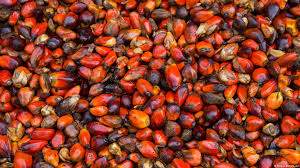
Palm oil, often referred to as “red oil,” is more than just a cooking ingredient; it is the livelihood of millions of smallholder farmers who produce 80% of the nation’s supply. Yet, for all its cultural and economic weight, the industry has long been stuck, hobbled by methods that haven’t changed in a century. Nigerian farmers remain trapped in a grueling cycle of manual labor, while the world moves toward automation and precision.
Here comes Releaf Nigeria, a company that isn’t just trying to provide a better tool; they are rebuilding the very architecture of the African factory. Releaf Nigeria is proving that the future of African prosperity lies in its seamless, high-tech blend of physical infrastructure and digital precision.
In the humid, sun-drenched palm groves of Nigerian states like Akwa Ibom or Rivers. The morning air is usually filled with a specific, rhythmic cadence. It is the sound of machetes spilling all their momentum on the fruit bunch and the heavy thud of palm fruit bunches hitting the forest floor. For generations, this sound has been the heartbeat of Nigeria’s rural economy.
To understand why Releaf Nigeria is a necessity, one must first look at the tragic irony of Nigeria’s agricultural history. In the 1960s, Nigeria was the global leader in palm oil production, accounting for nearly half of the world’s supply; now, we are importers, spending hundreds of millions of dollars annually to bring in oil from Southeast Asia.
The tragedy isn’t a lack of fruit; Nigeria has millions of palm trees. The problem is a lack of efficient palm oil processing technology, as is the case when it comes to food mechanization in Nigeria. In West Africa, the industry is mainly in the hands of small-scale farmers,, unlike countries like Malaysia or Indonesia. Compared to the huge amount of palm oil we consume, these small-scale farmers with ancient tools for processing palm oil are left handicapped, so we have no choice but to import.
Nigerian production happens in small clusters. After the oil is extracted from the fleshy outer layer of the fruit, the valuable palm kernels remain trapped inside rock-hard shells. Smallholders often resort to hand-cracking these nuts with stones. It is slow, dangerous, and inefficient. Alternatively, they use a local cracker like a wooden mortar and pestle, where the nuts are pounded lightly to break the shell. This is quite inefficient because it frequently crushes the kernels along with the shells.
This leads to high levels of “dust” and impurities. For major food processing companies, these “dirty” kernels are unusable. This creates a massive disconnect; farmers have the goods but no way to refine them to industrial standards, and factories have the demand but no reliable local supply. This is the wall that agribusiness innovation in Nigeria has long struggled to climb. Until now.
The Releaf company didn’t start in a farm field; it began in the halls of Ivy League universities. Founders Ikenna Nzewi and Uzoma Bailey Ayogu, graduates of Yale and Duke, respectively, didn’t initially set out to work in the palm oil industry. However, they were able to see the massive untapped potential of the Nigerian agricultural sector. They realized that most African agritech companies were focused almost exclusively on software.
There were apps for everything: to check the weather, to find buyers, and to get loans. But as Uzoma often points out, “You cannot code a palm nut to crack itself. ” The bottleneck was physical.
They saw that to transform the industry truly, they needed to build something tangible. They needed a machine that could handle the unique, tough-shelled wild variety of palm nuts found in Nigeria, which are vastly different from the softer, plantation-grown varieties in Asia.
At the center of the Releaf story is a piece of hardware with a name as formidable as its function, the Kraken. Sounds like a Super Saiyan character. How Releaf works is a masterclass in localized engineering.
After years of prototyping, the team developed the Kraken, a de-shelling machine designed specifically for the West African landscape. It doesn’t just crack nuts; it does so with a level of precision that was previously thought impossible for small-scale operations.
It brings industrial speed at a local scale. The Kraken can process palm nuts at a rate that is 250 times faster than manual hand-cracking and roughly 25 times faster than any local mechanical alternative. The machine achieves a 95% purity rate. This is the magic number for industrial food and cosmetic brands. By reaching this standard, Releaf allows smallholder farmers to finally enter the global value chain.
One of the biggest challenges in modernizing palm oil production is logistics. Rural roads in Nigeria are often impassable for heavy trucks. Releaf solved this by creating Kraken II, a modular and more portable version of their technology. Instead of forcing farmers to spend their meager profits transporting heavy, unrefined fruit to a distant central factory, Releaf brings the factory to the farmers.
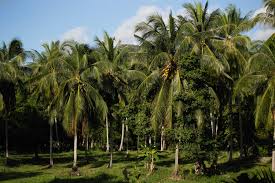
Image: Unsplash
While the Kraken is the muscle of the operation, the brain is its software. Releaf employs this strategy that sets them apart from other palm oil startups in Nigeria. The company uses a proprietary geospatial app called SITE to precisely map Nigeria’s oil palm belt. By combining satellite imagery with soil data and historical yield patterns, they can identify the exact locations where processing power is most needed.
This makes sure that Kraken II units are always positioned in high-yield palm tree clusters, maximizing their efficiency.
This is the true meaning of digital agriculture in Nigeria. It isn’t just about giving a farmer a smartphone; it’s about using high-level data to scale and de-risk the entire supply chain. Releaf assures farmers that they will purchase the oil palm fruits grown under their sourcing or program, providing farmers with price stability. Through a simple USSD interface, farmers are notified when the Kraken is in their area, allowing them to sell their harvest instantly and receive payments, bypassing the sharks who have long exploited the sector.
The shells of the palm nuts are treated as waste. They pile up in mountainous heaps, where they either rot, releasing methane, or are burned in open pits, releasing thick, black carbon smoke into the atmosphere.
Releaf saw this environmental liability as a secondary opportunity. They introduced Releaf biochar to their processing cycle. By subjecting the waste shells to a process called pyrolysis (burning in the absence of oxygen), they convert the “waste” into biochar, a carbon-rich, charcoal-like substance.
This biochar is great for soil health. Mixed with soil, it helps retain moisture and nutrients, which is critical in an era of unpredictable rainfall due to climate change. Also, biochar effectively locks carbon into the ground for hundreds of years.
By integrating this into their business model, Releaf isn’t just improving food processing tech in Nigeria; they are creating an economy that makes the industry carbon-negative. This is a great innovation story in Africa that every startup would be proud of.
The success of Releaf Nigeria signals a shift in the future of agritech in Africa. For years, the narrative was that Africa would skip industrialization and go straight to a service-and-software economy.
Releaf shows us the contrary, that you cannot have a robust digital economy if the physical foundation of food and raw materials is still being managed with 19th-century tools. They are showing that when you solve the physical bottleneck, the digital benefits like financial inclusion and data-driven farming follow naturally.
Despite the momentum, the path to agricultural technology in Africa hasn’t been easy. The first challencge has been trust.. Farmers who have been doing things the same way for sixty years are naturally skeptical of young engineers from the city bringing machines like the Kraken. Releaf has had to spend years on the ground, building relationships and proving that their tech actually puts more money in the farmers’ pockets.
The second challenge is infrastructure. While the Kraken II is portable, it still requires roads to travel on and a stable environment to operate in. Now this is why most investors prefer software. And why it has not been a proven way to secure funding for a startup. Even with all its potential, software scales faster and costs less to build. Finding investors willing to put capital into steel and grease is a constant battle.
Wrapping up, the story of Releaf Nigeria is more than just a story about palm oil. It depicts the next decade of African development. In the future of agritech in Africa, the winners will be those who respect the heritage of the land. Releaf isn’t just processing oil; they are reinvigorating the Nigerian economy. They are doing this by turning a labor-intensive chore into a high-tech, data-driven industry. Palm oil is finally getting the 21st-century upgrade it deserves.