Searching how to start a business in Nigeria in 2026 on Google doesn’t often have a straight answer. You’ve gotten vague information and they don’t add how much it actually costs.
That’s the missing part that this guide covers. It explains the structure of CAC fees, how registration is done on the CAC portal, as well as the regulatory changes: the RC Number/Tax ID merger and mandatory Persons with Significant Control disclosure.
First Things First: Picking the Right Business Structure
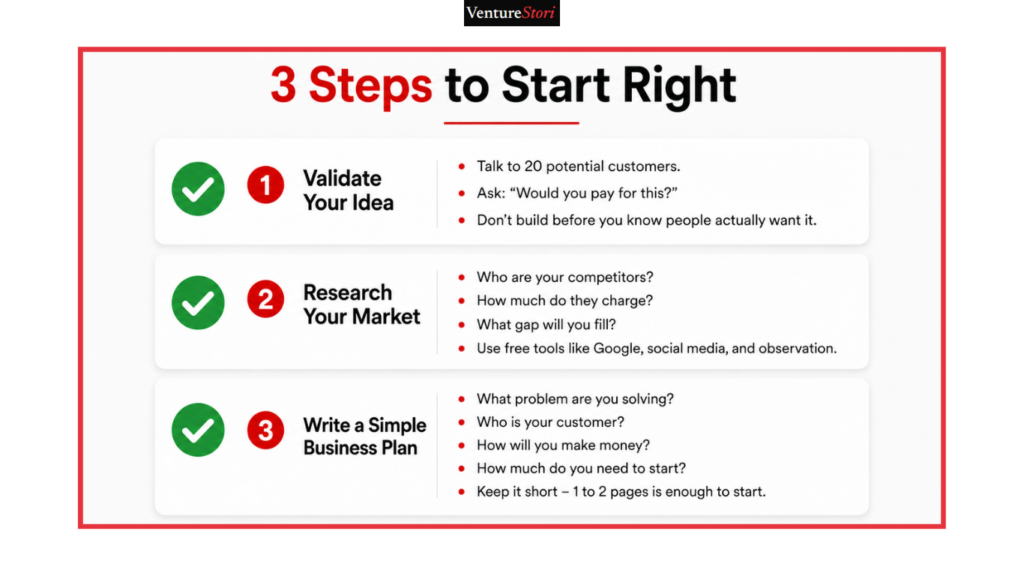
Nigeria is one of the best countries for emerging businesses in Africa. And when you’re about to start your business, your first decision shouldn’t be what type of logo you want, or opening a business account, or even investing in your brand. Your first decision should be deciding the right legal structure for your business. Whatever you decide will determine your CAC registration cost 2026, compliance burden, and your credibility to financial powerhouses, investors, and customers from day one.
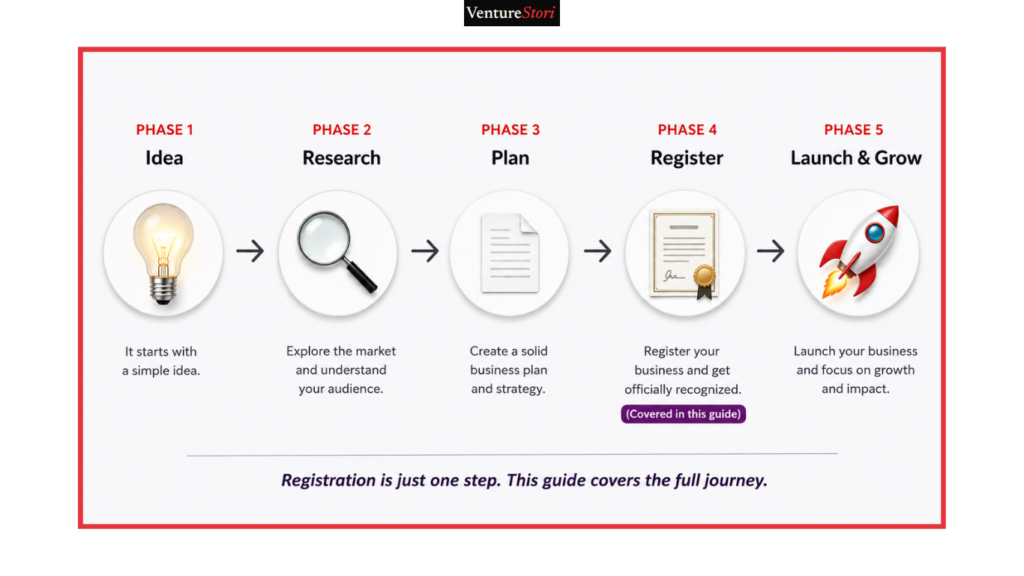
Many Nigerian entrepreneurs tend to choose from any of these three options:
- Business Name registration (for sole proprietors or partnerships):
This is arguably the cheapest and simplest option any entrepreneur can choose. It is the right choice for SMEs, freelancers, and side hustles. It gives these businesses legal recognition without any added requirements of a company.
- Private Limited Company registration:
This is the structure for any business looking to get investors, business partners, or bid for contracts that require a registered company not a single entrepreneur. It is more expensive than Business Name registration in Nigeria and it has more compliance responsibilities, but this is what investors, banks, and clients are looking forward to seeing.
- Incorporated Trustees registration:
This option is specifically made for NGOs, churches, foundations, and other similar organizations. It has a different process and it is more expensive compared to the other business structures. The cost is more because of the mandatory newspaper publications.
What CAC Registration Costs in 2026
The Corporate Affairs Commission (CAC) notified the public about the increase in registration fees—linked to the new AI service charge — that became official on the 1st of April, 2026.
The actual cost mentioned is gotten from the new CAC fee structure. Remita fees are also added to every payment so make sure that you confirm the actual price from the CAC portal before paying.
For Business Name, prices are as follows:
- Business Name reservation: ₦1,000
- Registration fee: ₦20,000
- Total cost of CAC filing: ₦21,000
However, the old price of ₦500 for reservation and ₦10,000 for registration is still mentioned on some search results on Google. However, the current price has been made public and official for months and you should plan your budget according to the price.
For Private Limited Company, prices are as follows:
- Private Limited Company (Standard ₦1 Million Share Capital) Name reservation: ₦1,000
- Registration fee: ₦10,000
- FIRS stamp duty (0.75% of share capital): ₦7,500
- Total cost: ₦48,500
You should plan your budget according to the official total cost of ₦48,500.
For any share capital of more than ₦1 million, the CAC fee goes up by an extra ₦10,000 for every additional ₦1 million, including the mandatory stamp duty fee.
For Incorporated Trustees, prices are as follows:
- Incorporated Trustees (NGOs, Churches, Foundations, Associations) Name reservation: ₦1,000
- Registration fee: ₦40,000
- Mandatory newspaper publication: ₦20,000–₦30,000
- Also, agent or lawyer fees (if you have one): ₦15,000–₦50,000
The total cost for an Incorporated Trustees registration is usually in the range of ₦65,000–₦130,000. And sometimes, it can go higher than that. The total price usually depends on how much the newspaper publications cost and if you’ll need help with the trust deed.
The reason why the Incorporated Trustees registration costs more than the other registration processes is because of the newspaper publication cost, not the CAC fees.

Business Ideas That Work in Nigeria – What Can You Start?
Agent and Lawyer Fees
If you prefer a CAC-accredited agent or lawyer to handle your business registration process, it will cost anywhere between ₦15,000 and ₦50,000—this doesn’t include the actual CAC fees. Extra costs will depend on the service you need and if legal documents may have to be prepared — if you’re registering a Private Limited Company in Nigeria.
If you’re looking to process a Business Name registration, you can simply log onto the CAC portal and in about 20 minutes, you would’ve completed the process. Some agents can charge you over ₦100,000 for something that costs ₦21,000 and can be done in 20 minutes.
Always make sure you check prices before paying and be wary of any price that’s a lot higher than the actual government cost.
A Simple Step-by-Step Guide to the CAC Registration Process
The CAC registration process happens on its online portal. You can register your business following these processes:
- Search to verify the name of your business name hasn’t been registered: You can search your business name on the portal to check if someone else hasn’t registered a business under that name. If it’s taken, use your backup.
- Pay to reserve your name: To make sure the name you’ve chosen isn’t taken before you’re done with the registration process, you need to pay the name reservation fee to keep it safe.
- Complete the online registration form: Fill in your business details and owner information on the form. If you’re registering a Private Limited Company, you’re required to enter your share capital and shareholding structure as well.
- Upload required official documents: For your business registration, you’ll need to have a valid ID as the owner of the business and passport photographs. If you’re registering a Private Limited company, you’ll be required to upload its legal documents as well.
- Make every payment on the portal: Registration fees are paid through Remita or through CAC’s payment system.
- Download your digital CAC certificate: After your registration has been completed and confirmed, your business certificate and registration documents are presented in digital form.
How Long Will It Actually Take? Realistic Timelines
- Business Name Registration: Most times, it usually takes between 24 hours -5 working days after payment for business registrations to be processed and confirmed. However, some registrations may take up to 14 working days to be processed if there is a problem with the business name or a document has to be corrected.
- Private Limited Company registration: It takes between 3-14 working days for registration to be processed and confirmed if the details were submitted rightly. Some can take up to 20 days if there are complications.
- Incorporated Trustees registration: This is the slowest of all three, and it usually takes between 25 and 45 working days to be processed.
Most times, the processing delay doesn’t come from the CAC. It is down to some applications having wrong information or wrong spellings. Any application that is flagged will be automatically returned to the applicant for the right correction. And there’s every chance that after corrections are made, it will be put at the end of the queue instead of going back to its original place. To avoid this, cross-check every single detail required of you before you submit on the portal.
Keeping Up: Important Regulatory Changes to Watch in 2026
1. Your RC Number Is Now Your Tax ID
On the 1st of January, 2026, following the new tax rules in Nigeria, it became official that any CAC Registration Certificate (RC) number automatically serves as Tax ID. This move replaces the previous process of registering with CAC and the tax authority — now, Nigeria Revenue Service (NRS)—separately.
Now, once your business has gotten its certification from CAC from the 1st of January, 2026 onwards, the business already has its Tax ID. You can verify it by putting your Business Name (BN) number on the tax authority’s verification portal.
You don’t have to pay for it, there is no physical Tax ID card either—everything is digital—and you don’t need any “agent” to help you process your tax ID either.
If someone tries to get you to pay in order to get your Tax ID, you should turn them down instantly.
2. Persons with Significant Control (PSC) Disclosure Is Enforced More Strictly
The PSC (Persons with Significant Control) register didn’t just start this year. It has existed since the Companies and Allied Matters Act (CAMA) 2020. The major difference is that CAC is no longer overlooking the PSC requirement. It is now being enforced and checked during registration and observed through annual returns. The key driving factor is this; any person that holds at least 5% of any company’s shares, owns voting rights, or wields enough power to appoint directors must be listed as a PSC.
Note: The 25% for PSC listed in some articles is outdated and the information is probably gotten from what is required in other countries like the U.K., where 25% is the threshold.
As a PSC, you’re supposed to report your new status to the company within a period of 14 days or cease to be a PSC in the company. In turn, the company has 14 days to disclose this information to the CAC. Failure to do this attracts penalties. Under CAMA 2020, this is regarded as a criminal offense, and the companies that default in informing the CAC about their PSCs are subjected to daily fines. Also, the CAC has the executive authority to revoke the defaulting company’s rights on share transfers or voting rights for undisclosed PSCs.
For SMEs that have one or two co-owners, this can be handled with a simple declaration during CAC registration. But any new investor or potential co-owner that’s added to the board and owns 5% or more has to be disclosed to the CAC within the given timeframe.
Next Steps: What to Do Once You’re Registered
- Open a business bank account:
Most banks will ask for your CAC—which now serves as your Tax ID before opening a corporate account for you. They also require a first deposit with a minimum amount of ₦10,000–₦20,000.
- Keep up with compliance requirements:
The CAC registration is only the first phase. The company and Business Name are required to keep records of their annual returns with the CAC to keep their status active. Defaulting attracts a penalty that may cost more than what it costs to register the business as time goes on.
Did You Know You Might Be Able to Register for Free?
Before you pay for anything, ensure that you check whether you qualify for the CAC–SMEDAN free registration program. The program which will be handled by CAC for the free official Business Name registration of 250,000 qualified nano, micro, and small businesses across Nigeria. The fastest people to apply will be attended to through the SMEDAN portal until the slots are filled.
After checking if you qualify for the CAC-SMEDAN program, your business can be registered without you having to pay any registration fees. Applications are done through SMEDAN. Make sure you turn down anyone asking you to pay a fee to be eligible or to qualify for the program.
Going Beyond the CAC: Local and Sector-Specific Rules
Registering with CAC is just the first step, not the final one. You may have to secure extra licenses and registrations depending on what industry you sell and operate in. Some founders often tend to simply register their business and overlook getting other necessary paperwork, which can attract penalties.
If You Work in a Regulated Sector
Food, drugs, cosmetics, or supplements: Most importantly, you’ll have to register your product with the National Agency for Food and Drug Administration and Control (NAFDAC). This is a different registration from CAC. Whether you’re a local manufacturer or you import your product, NAFDAC registration is an essential, separate process that has its own fees and timeline. Think of it as an extra business cost that is not included in CAC registration.
Real estate, car sales, jewelry and precious metals, hotels, casinos, law firms, accounting firms, and NGOs: These businesses are categorized under Nigeria’s Designated Non-Financial Institutions (DNFI) category. As a result, the Special Control Unit Against Money Laundering (SCUML) registration is mandatory, mostly within the early months of operations.
There’s no mandatory fee during SCUML registration. But your CAC certificate, Tax ID, a director’s BVN, and valid identification are needed. Most banks now check if a business has been registered with SCUML before opening a corporate account for any business in any of these sectors because of CBN’s AML/CFT customer verification rules. Failure to do this means you risk being fined as well as having several restrictions on your business account.
Healthcare businesses (clinics, hospitals, diagnostic labs, pharmacies): For any business in this sector, registering for CAC is not enough. You’ll also need a legitimate medical license from the state health facility monitoring body wherever you are. For instance, in Lagos, Health Facilities Monitoring and Accreditation Agency (HEFAMAA) serves as the monitoring body. Also, the professionals in charge of the health facility may have to be registered with health bodies like the Pharmacists Council of Nigeria or the Medical and Dental Council of Nigeria.
Private schools: The schools will have to be accredited by the necessary regulatory body depending on the school. It could either be state education ministries, Nigerian Educational Research and Development Council (NERDC), National Universities Commission (NUC) for universities, or the National Board for Technical Education (NBTE) for polytechnics. It is a different registration process from CAC registration and most times, the process takes longer and has more paperworks than CAC.
Construction and real estate businesses: You will need a building permit from your state’s building control agency. For instance, Lagos State Building Control Agency (LASBCA) grants permits in Lagos. For agents and surveyors, they will have to register with the Estate Surveyors and Valuers Registration Board of Nigeria (ESVARBON).
If the business you own doesn’t fall under any of these categories, it doesn’t mean that it won’t have extra paperwork or requirements. To avoid assumptions, check the current DNFI list and your state’s licensing rules before you kickstart your business.
The best thing is to make sure you have every possible necessary document instead of finding out you need them when your bank or a regulatory body asks you to present them.
Starting Up in Lagos? Here’s What You Need to Know
Businesses in Lagos have extra requirements aside from registering with CAC. Many founders miss this because they tend to assume that the only important registration or process is the CAC registration.
- Business premises registration:
Business owners in Lagos are required to register the location of their business with the Lagos State Internal Revenue Service (LIRS). This process is done on the LIRS e-Tax platform. The official fee is determined by the location of your business — if it falls under the urban category or the non-urban category. Check where your business falls and the fee you’re required to pay on the LIRS e-Tax platform.
- Signage and outdoor advertising permits:
Before you can put up a shopfront sign, banner, or any outdoor branding for your business, you will need permission from the Lagos State Signage and Advertisement Agency (LASAA) first. The total fee you’ll have to pay will be decided by the size and where the signage will be displayed—the fee may be higher if the signage will be in a busy area.
- PAYE and staff-related tax registration:
If you have employees on your payroll, it is required that you register for Pay As You Earn (PAYE), fill every necessary paperwork with the LIRS, and also pay your federal tax.
Lagos isn’t the only state that has requirements. Other states do, but their agencies and fees may be different from the ones in Lagos. Having a CAC certificate doesn’t mean you’ve covered all obligations. Make sure you research your state revenue service before your business starts operating.
Learn from Others: Three Common Mistakes to Avoid
The examples listed below reflect the common mistakes that business owners often make and how business owners should plan to avoid them.
Scenario 1: The Business Name that became too small
Two years ago, a business owner decided to register a Business Name for his growing business because it was the more affordable option. Now, the business has expanded and attracted big investors. However, one investor wants to go into business with a registered Limited Company for its procurement process. Another interested investor wants to own equity in the business, but a Business Name does not have this because it owns no shares.
What many business owners don’t always expect to see is that you can’t just change your Business Name to a Limited Company by changing your records. The CAC doesn’t have the option for this.
The actual process involves:
- Make sure you don’t have any outstanding annual returns: CAC will not give its green light for a Business Name to change to a Private Limited Company if it still owes unpaid annual returns.
- If necessary, apply to keep the same business name: As the business owner, if you want to keep the same Business Name for the Limited Company, you have to get approval from the CAC Registrar-General.
- Close the old Business Name: Submit a Notice of Cessation of Business (Form CAC/BN/8) to formally close the Business Name registration.
- Incorporate the new Private Limited Company from the start: CAMA 2020’s standard incorporation process can give the new Limited Company a new name, new company documents, new directors’ and shareholders’ details after you’ve paid the registration fees for a Private Limited Company.
- Open a new corporate bank account: You cannot use the old account tied to the Business Name for the new Private Limited Company. You must open a new corporate bank account under the Private Limited Company name.
The entire process can be done between a 2-4 week period, depending on how fast it takes to sort out any outstanding annual returns. Also, if the Business Name owes debt, it doesn’t just magically go away, it still has to be paid even after the change has been approved.
Always make sure you plan for the future whenever you’re registering your business, because the process to change the business into a Limited Company is usually a complete full re-registration.
Scenario 2: Spending on branding before checking the business name
Imagine a scenario where a business owner spends a huge part of their budget on a business logo, business cards, and signage before verifying if the name they’ve chosen for their business is available. After spending money on branding, they eventually check with the CAC and they find out that someone else has registered a business under that same name or that the name is similar to an existing business name already. CAC will have no other option but to reject the application.
Now, the business owner has to start branding all over again after finding an available business name.
The right way is to check if the name is available on the CAC portal and pay the sum of ₦1,000 to reserve the name. When this is settled, CAC can reserve the business name for 60 days. Giving you enough time to finish your business registration process. If it takes you more than 60 days to complete the registration, you can pay another fee to reserve the business name again.
Also have alternative names if it happens that your first choice is turned down. It can save you time instead of having to start all over again from scratch.
Scenario 3: The agent charging far more than the actual registration cost
An agent asks a business owner to pay ₦85,000 for their Business Name registration. This is over four times the official CAC fee of ₦21,000 and a business owner can do this themself on the CAC portal without paying any agent. For people that aren’t aware of this, the ₦85,000 may seem like the standard price. Especially if the agent says it is for “processing” and “fast-tracking” the registration process.
To make sure you don’t overpay:
Firstly, make sure you verify the official CAC price before you pay for anything. It is ₦21,000 to register a Business name—without any extra charges.
Secondly, make sure to confirm if the agent you’re speaking to about the registration is accredited with the CAC. Any accredited agent must belong to any of these four recognized professional bodies: the Nigerian Bar Association (NBA), the Institute of Chartered Accountants of Nigeria (ICAN), the Association of National Accountants of Nigeria (ANAN), or the Institute of Chartered Secretaries and Administrators of Nigeria (ICSAN).

Free Government Support in 2026 – Don’t Miss These.
Your Action Plan
What should influence the business structure you choose for your business is the vision you have for it, not the most affordable registration option. Think about growth, investment plans, and potential investors.
Using the current, verified registration prices in 2026 when you’re budgeting for registration, instead of old prices that are still displayed online. Also, before you pay for the registration, check if you qualify for the SMEDAN waiver that will cover 250,000 business registrations.
Most times, there’s no good reason for you to pay an agent several times more than what the actual official registration fee is. The registration process is quite easy and you can process it yourself through the official CAC portal.
Market Insights & Recommended Next Steps
For a step-by-step breakdown on how to map out your promotional campaigns, allocate your budget, and position your brand across local channels, read our practical editorial guide on how to do SWOT Analysis for business success.