Analyzing the scale of the Bridgement AI SME lending South Africa framework, it demonstrates how alternative credit scoring is reshaping capital access for small businesses across the continent. A small restaurant in Johannesburg has maintained steady sales, growing revenue, and its loyal customers for three years. Looking to grow, its owner applies for a working-capital loan to build a second location.
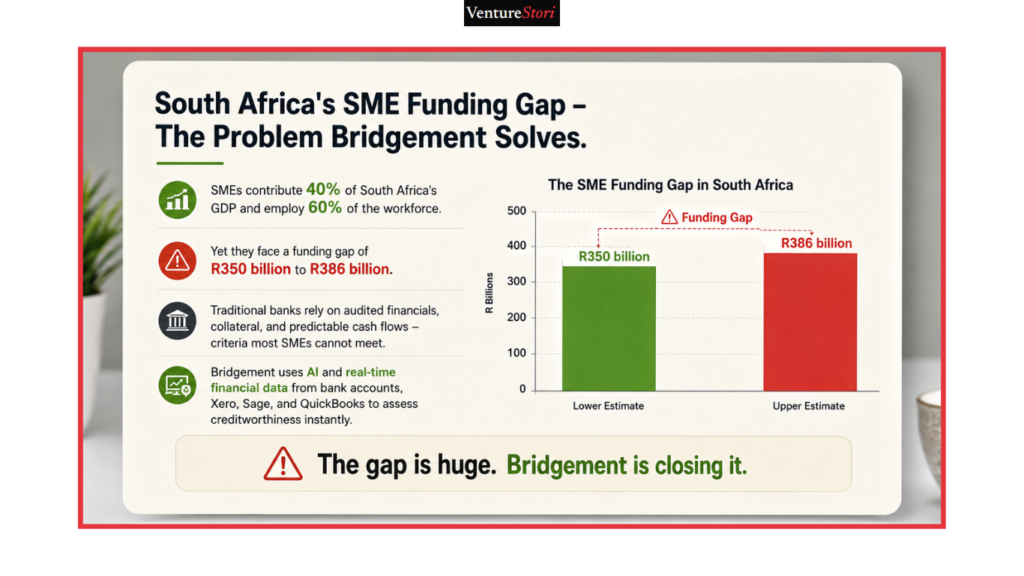
South Africa’s SME Funding Gap – The Problem Bridgement Solves
The bank asks for property collateral before it grants the loan. But the business has cash flow, not real estate. The loan application is abandoned and then rejected.
But the restaurant’s payment history, accounting software, and bank transactions suggests it can repay the loan. But someone has to be able to read and understand the data first.
That’s what AI lending in South Africa, and Bridgement specifically, wants to solve.
Why Bridgement Matters
South Africa is home to one of the strongest financial sectors in Africa, but many small businesses in the country find it difficult to get loans. Small businesses in South Africa represent about 98% of businesses in the country and are responsible for about 39% of the country’s GDP, wiith between 50% and 60% of the workforce. Yet, they face a significant financing gap between R350 and R386 billion.
Many traditional banks give out loans based on audited financial statements, collateral, and manual review cycles that small businesses usually do not have. Not because they’re not making profit, but because they’re still growing, have few assets, or are structured informally. Traditional banks approve just 28% of loans for small businesses, leaving 72% of them unattended.
Bridgement, founded in 2016 by Daniel Goldberg in Johannesburg, South Africa, follows a different method when it comes to giving out loans. Instead of lending based on collateral or property assets, they focus on the day-to-day operations of the business. They analyze the live data from bank accounts and accounting software like Xero and Sage. This way, they’re able to determine how healthy a business’s finances are.
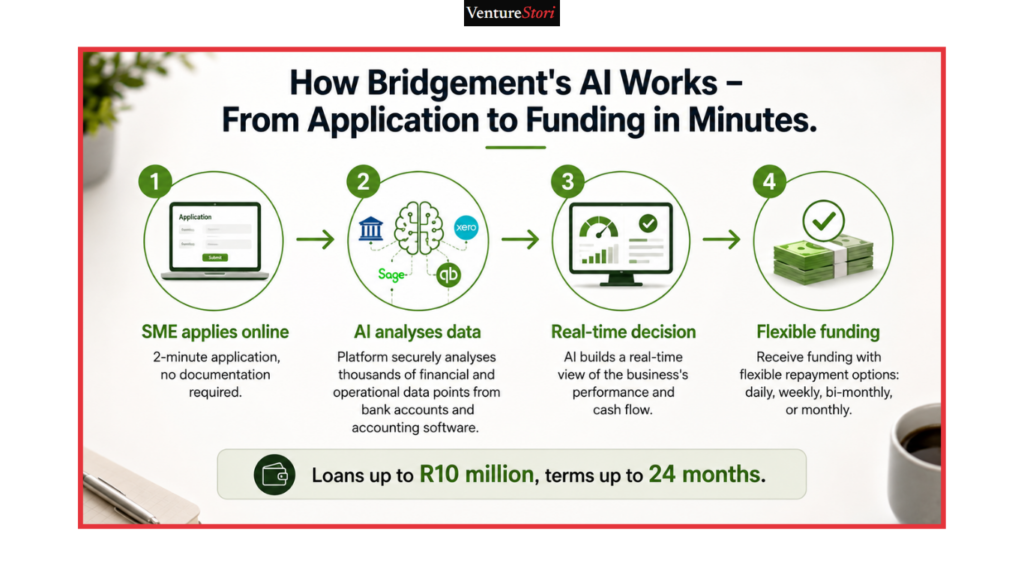
How Bridgement’s AI Works:From Application to Funding in Minutes.
Solving the Small Business Lending Crunch
Small business loans are expensive and time-consuming. Goldberg founded Bridgement to fix this problem. The company introduced itself with invoice financing and making loan decisions in a couple of hours through analyzing business data instead of the collateral-based process traditional banks use.
“The technology and data exist to simplify access to funding. We consume the financial data from accounting packages and bank accounts and use it to build a realistic picture of the business, which means a viable SME isn’t turned away because their paperwork isn’t perfect.” Says Daniel Goldberg, CEO of Bridgement.
The Criteria Behind the Loans
Bridgement’s AI judges if a business is qualified for a loan by analyzing transaction history, revenue trends, and accounting data to get a clear and accurate picture of its financial condition.
How Bridgement’s AI Works – From Application to Funding in Minutes.
Before the loan is given, the business has to be exclusively operating in South Africa. It must have been registered and functional for over six months in the country while meeting minimum revenue requirements. Startups and NGOs are not permitted, but if a business meets eligibility requirements, it qualifies for a loan, no matter the industry.
In practice, this means:
- Faster decisions: Loans can be approved in about 24 hours instead of the weeks traditional banks often use to review loans.
- Lower costs: Using automated data analysis instead of people to review loan applications.
- More consistent decisions: Every loan application is analyzed with the same data, method, and criteria, rather than varying by which bank personnel reviews the loan application.
- More opportunities for growing businesses: Businesses that have strong financial records but little or no collateral or a short financial history will have a better chance of securing loans.
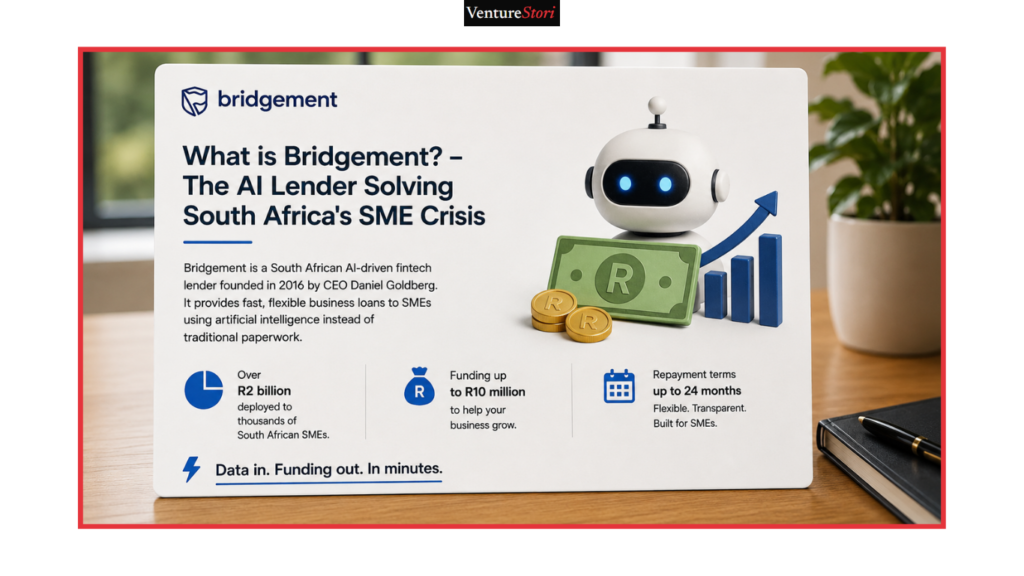
According to reports, Bridgement has given out over R2 billion in loans to South African small businesses over the years. Businesses can get as high as R5 million for a fixed term after the loan has been approved.
Big Banks, Big Bets: A Milestone in Funding
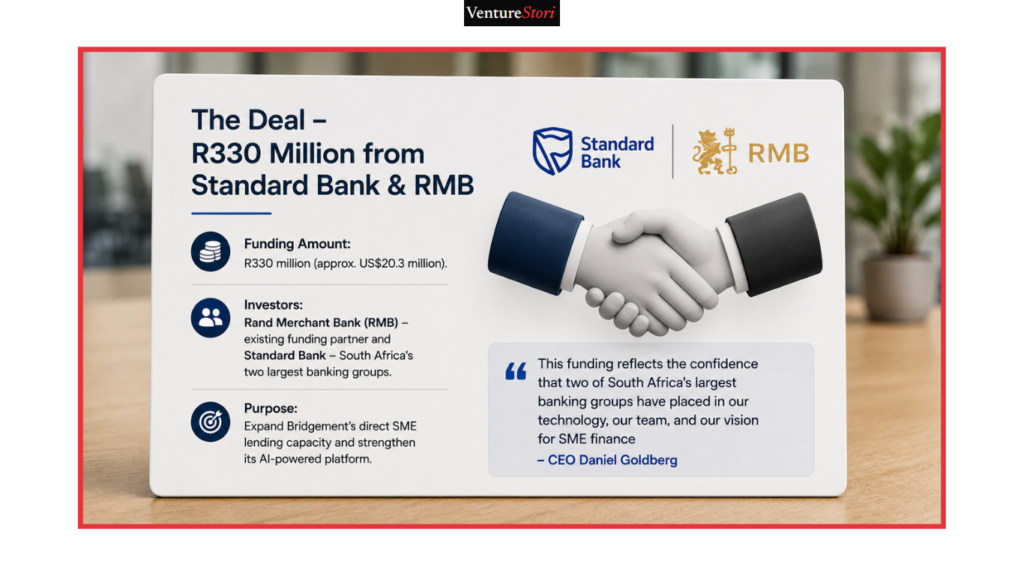
Bridgement secured a R330 million debt facility from two of the biggest banks in South Africa, Rand Merchant Bank and Standard Bank.
Different from traditional funding, the banks aren’t buying stakes in the company. Rather, they are offering Bridgement the necessary capital to offer loans to small businesses. This means they’ve vetted Bridgement’s credit-scoring technology and are confident that the system can sustainably identify businesses capable of repaying.
This funding presents Bridgement as a legitimate lender and not as another high-interest payday loan company.
“This funding reflects the confidence that two of South Africa’s largest banking groups have placed in our technology, our team, and our vision for SME finance.” Says Daniel Goldberg.
Bridgement isn’t trying to replace banks but to partner with them in providing loans to small businesses.
A Blueprint for Financial Inclusion
The financing gap in Sub-Saharan Africa’s small business sector is estimated at $331 billion.
The small business sector in Nigeria is facing similar problems. Traditional banks give out loans depending on collateral. Some fintech companies in Nigeria are testing similar methods but in a bigger and more varied small business market.
Kenya’s mobile-money-driven lending market can serve as an alternative for lenders. They can assess a business’s eligibility for loans through its transaction history, airtime purchases, and mobile money flows to decide what businesses qualify for loans.
Bridgement is betting that this logic can work at a higher level by leveraging commercial bank partnerships.
The Road Ahead: Hurdles and Opportunities
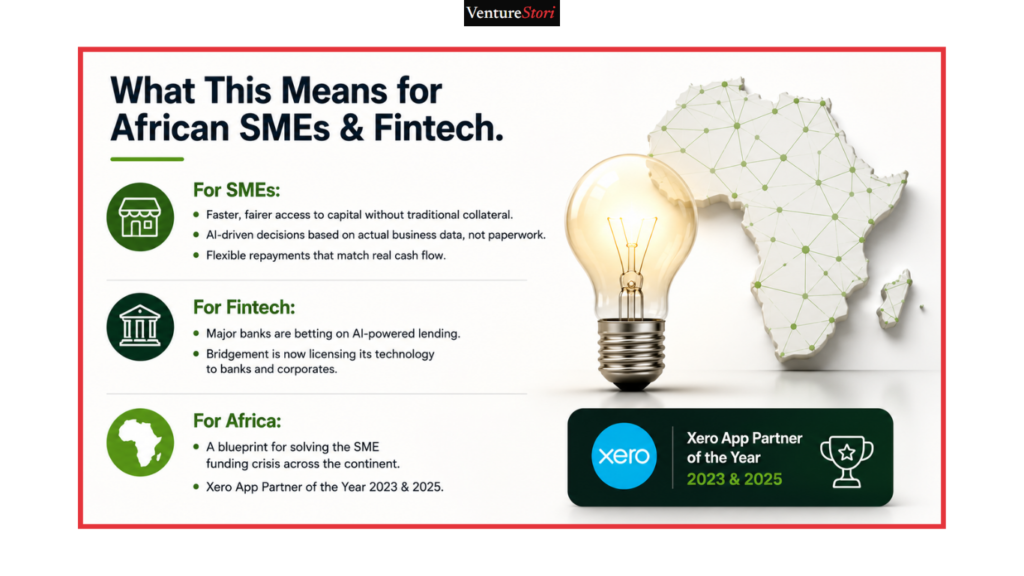
What This Means for African SMEs & Fintech.
However, Bridgement technology has real risks attached. AI-based lending methods can become biased through the data the engine is trained on, making lending decisions questionable. It can also become difficult to explain why the system denied a loan, and regulators are trying to figure out how automated credit decisions are made.
Privacy is another challenge—getting business owners to feel assured about sharing sensitive information about their bank accounts and accounting software.
Also, competition is on the horizon. Nedbank’s recent partnership with JUMO is an example. There might be more competition in the future if more banks decide to install their own AI lending platform.
There’s also the challenge of economic downturns. A credit model with a history of good performance may struggle during economic crises. It’s important that the models can adapt when repayment conditions change.
The interesting question is whether AI lending will become the standard for small businesses to secure loans or if it will remain an alternative to traditional banking loan services.