Every mobile banking app in Nigeria faced a major shift on July 1st, 2026, when the Central Bank of Nigeria (CBN) issued a strict regulatory circular regarding instant payment security. The mandate enforces a strict one-device rule per account and caps all outbound transfers at ₦20,000 for the first 24 hours of activating a new device to curb rising cases of account takeovers and SIM-swapping fraud.
This digital hygiene measure was considered a must-have by policymakers, delivering an immediate impact on everyday users and how they navigate their preferred mobile banking app. This regulatory showdown is taking place in an already competitive environment where agile fintech companies and traditional Tier-1 banks are locked in a full-scale war for retail deposits.
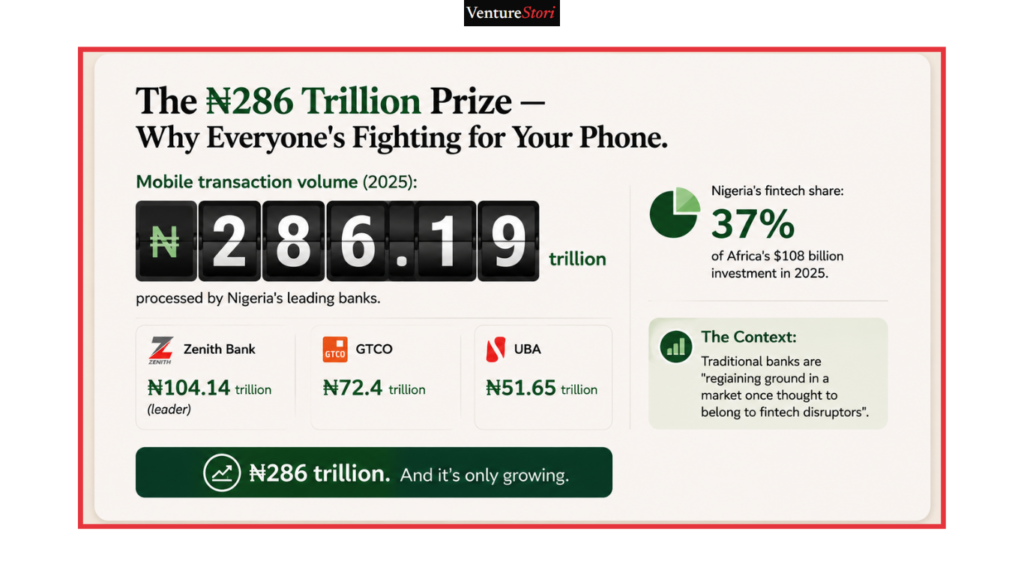
The ₦286 Trillion Prize — Why Everyone’s Fighting for Your Phone.
The Numbers Behind the Battle: Neobank Challengers vs. Conventional Giants
The use of digital services in banking has to become a volume war in Nigeria. Traditional players such as Access Bank, United Bank for Africa (UBA), and FirstBank have all managed to hit the 10 million app downloads milestone on the Google Play Store.
However, digital banks are way ahead of the curve:
OPay: 50M+ users—dominates daily transactions, has zero-fee transfers, high-yield daily savings products, and has made aggressive investments into network uptime under the leadership of CEO Zhou Yahui.
PalmPay: 35M+ users — goes for mass market by pre-installation deals on Tecno, Itel and Infinix gadgets and with a gamified incentive framework.
Branch: Instant micro-loans directly integrated with zero-fee money transfer features—50M+ downloads—to ensure ongoing interaction.
Access Bank: 10M+ app downloads—Benefits from the trust of institutions, extensive cross-border payment infrastructure, and enterprise trade financing.
UBA: 10M+ App Downloads — Focuses on building an omnichannel integration and conversational AI banking with its Leo platform.
FirstBank: 10M+ app downloads — Nurtures legacy accounts by modernizing their apps alongside a huge physical network.
Traditional institutions are fiercely protecting their turf, investing heavily in cloud infrastructure and updating legacy codebases to ensure every mobile banking app stays online and avoids transfer failures. In the meantime, fintech entrepreneurs are capitalizing on structural distribution advantages.
PalmPay’s regional leader, Managing Director Chijioke Dozie, captured the mass market and established a firm foothold by negotiating strategic hardware deals with Transsion Holdings, pre-installing their flagship mobile banking app on millions of budget smartphones shipped across the region. Combined with OPay’s aggressive zero-fee transaction promotions, these neobanks have successfully positioned their mobile banking app as the primary wallet users spend from daily, rather than legacy commercial bank accounts serving merely as secondary places to save.
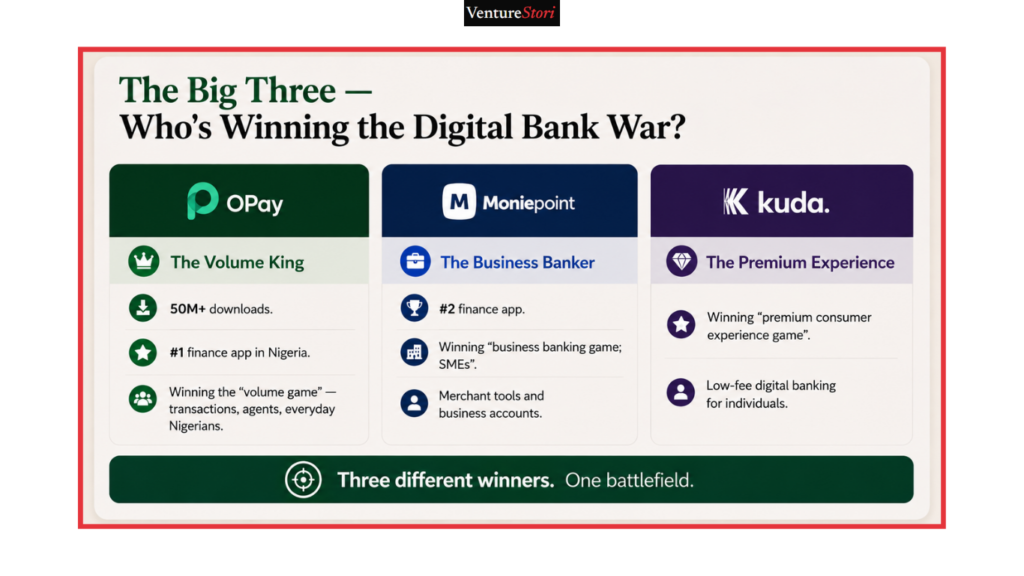
The Big Three — Who’s Winning the Digital Bank War?
The Human Cost of CBN’s Device Binding Mandate
The CBN’s regulatory logic is designed to plug critical security holes, but the operational burden of these new compliance rules falls heavily on the informal sector and multi-device professionals who rely on their mobile banking app daily:
- Point-of-Sale (POS) Agents: Operators who frequently switch SIM cards across secondary devices to handle float issues and liquidity now face severe transaction bottlenecks on every mobile banking app they manage.
- Displaced Market Traders: Small business owners who lose or replace stolen phones are hit with a strict 24-hour “cooling-off” period capped at ₦20,000, temporarily halting inventory purchases and daily stock restocking.
- Freelancers & Multi-Device Users: Flexible corporate contractors and remote workers who previously managed multiple accounts across various tablets and personal phones are now constrained by the rigid single-device limit enforced by each mobile banking app.
Despite these friction points, the CBN maintains that multi-factor authentication (MFA) and real-time database validation against Bank Verification Numbers (BVN) and National Identification Numbers (NIN) are essential safeguards to ensure consumer capital is protected from syndicate-led account takeovers on every major mobile banking app.
The UX Crisis: Millions of Users Left Stranded
According to recent customer satisfaction feedback, 71% of Nigerian users feel that in-app support within their preferred mobile banking app remains entirely impractical. When a transfer stalls or an account gets locked due to new CBN compliance rules, users find themselves trapped in endless automated chatbot loops.
A common failure cycle starts with a delayed transaction, drops users onto an uninformative error code (such as E-99) inside their mobile banking app, provides zero pathways to a human support agent, and ultimately forces a frustrating physical trip to a bank branch.
- Cryptic Error Messages: System failures are rarely explained in plain English (e.g., displaying vague codes instead of clear text like “Issuer Node Down” on the mobile banking app interface).
- Superficial Chatbots: Automated bots lack back-office authority to clear transaction flags or resolve ledger errors independently.
- Aggressive Downtime: During peak banking hours, national paydays, and end-of-month rushes, timeout errors spike dramatically across both traditional banking platforms and mid-tier microfinance apps.
The providers currently winning user loyalty are abandoning traditional dead-end chatbots, upgrading their respective mobile banking app architecture with real-time status dashboards, and introducing fast tracks for human escalation within 60 seconds of a transaction failure.
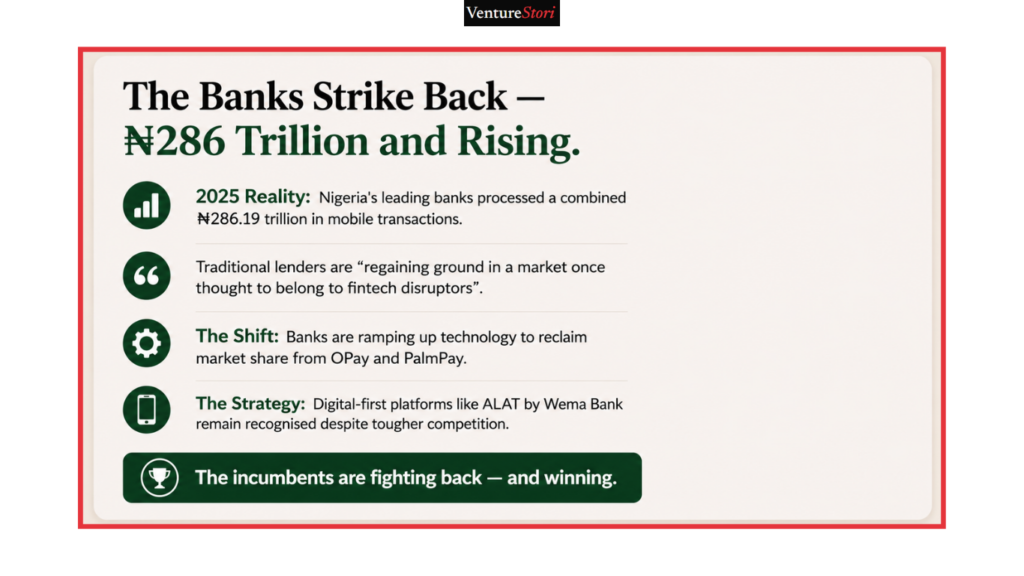
The Banks Strike Back — N286 Trillion and Rising
The Competition for the Name of “Super App”
Fintechs are making a strong push to develop an all-in-one super-app, rather than just peer-to-peer (P2P) payments. PalmPay, with more than 15 million transactions made per day, is already using its platform for micro-credit, insurance, wealth management, and utility payments, and these services are backed by more than €130 million in cumulative investments from international investors.
The super-app model will make banks such as Guaranty Trust Holding Company (GTCO) and Stanbic IBTC face off with fintechs, which have each introduced their own fintech subsidiaries (HabariPay/Squad and Zest, respectively) to generate non-interest income. CBN regulations, on the other hand, clearly differentiate between the various types of licenses. The explicit limits that are set on lending and foreign exchange restrictions under the Microfinance and Payment Service Bank (PSB) licenses require super-app aspirants to operate in the multi-license holding structure to provide a complete suite of wealth management services.
Last Mile Agent Networks
Away from the major cities, there are structural infrastructure challenges for digital banking. In 300 local government areas of Nigeria, there is no physical bank branch in the area, and agency banking is the only financial lifeline.
Some businesses, such as Moniepoint (founded by Tosin Eniolorunda), have created liquidity networks with physical POS. These platforms connect fintech liquidity points with local point-of-sale (POS) agents through strong API data connections, empowering local retail store owners to become financial ATMs and provide cash-in and cash-out financial access to the unbanked people that conventional brick-and-mortar banking institutions never reached.
Accessibility Gaps
One of the major pitfalls in the digital banking ecosystem across Nigeria is the disregard for digital accessibility standards. Independent Web Content Accessibility Guidelines (WCAG 2.1) assessments find that most mobile banking applications do not meet basic accessibility standards:
Unlabeled Input Fields: These are read on screen as an undefined element when using screen readers.
Missing Voice-Readable Tags: Not having Voice-Readable Tags to critical action buttons (“Confirm Transfer,” “Cancel”) for users who cannot see the screen.
Low-Contrast Interfaces: Low-contrast banners and visual themes make it difficult for low-vision users to see important information for transactions.
The Discrimination Against Persons with Disabilities (Prohibition) Act requires commercial banks and fintech startups to make their mobile systems accessible to people with disabilities. But neither of these entities has codified a structured mobile design pipeline that incorporates the use of screen readers or adaptive biometrics.
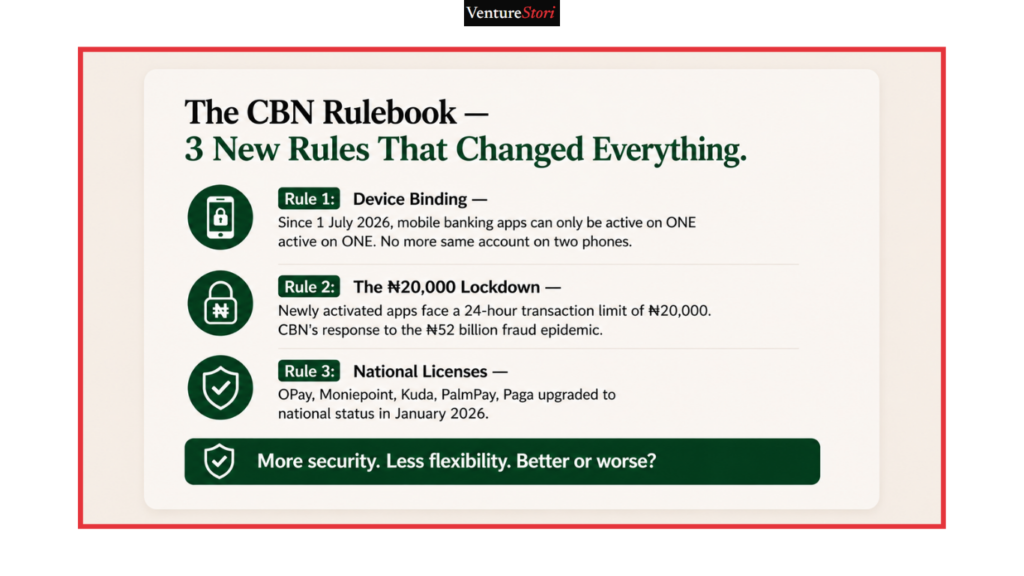
The Future of the Mobile Banking Industry in Nigeria
The line between traditional banks and fintech service providers will remain blurry at the end of 2026. More enterprise and cross-border trade will be picked up by traditional banks, and the fintech platforms will continue to power everyday retail velocity.
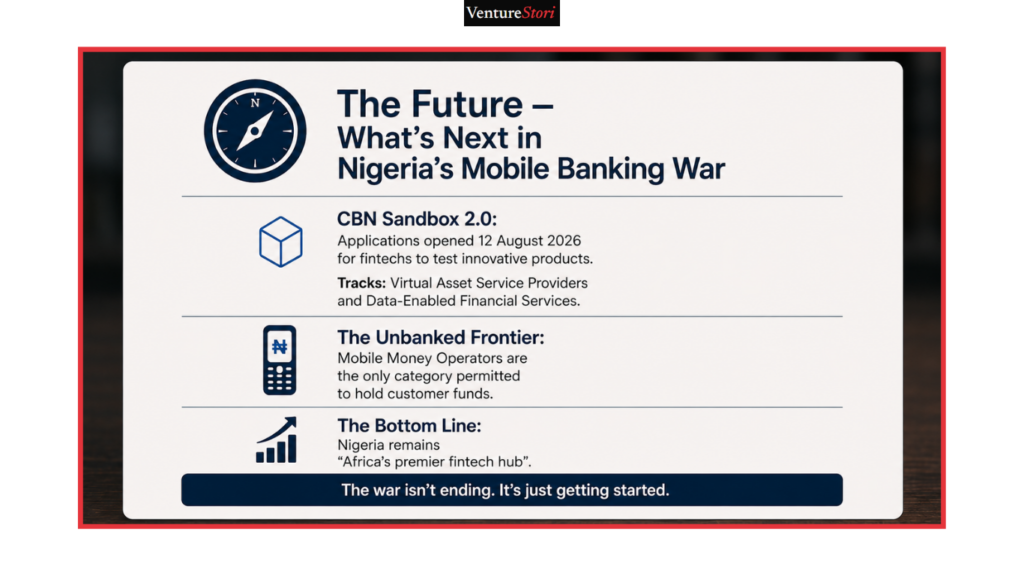
The Future — What’s Next in Nigeria’s Mobile Banking War
The days of zero-fee customer acquisition campaigns being the driver for long-term market leadership will be over for founders, product managers, and investors. The next leg of the battle will be won on the ability to integrate regulatory compliance, easy-to-use UX, a resilient back end, and reliable customer service. Those that get it right, who can seamlessly navigate between compliance requirements and user-friendly experiences, will shape the future of finance in Africa’s biggest economy.