The Borno State Business Directory highlights Maiduguri as one of the most important trade hubs in West Africa, historically serving as a vital gateway between Nigeria’s northeastern region, Chad, Niger, and Cameroon. For decades, its markets functioned as pivotal commercial hubs for cross-border livestock trade, agricultural produce from the Lake Chad basin, and manufactured goods distributed across the Sahel.
While insurgencies and security challenges since the mid-2010s have strained rural transportation networks and agricultural supply chains, Maiduguri remains a resilient, self-sustaining economic engine. Today, consulting the Borno State Business Directory reveals a dynamic urban economy driven by fast-moving consumer trade, public sector reconstruction initiatives, and an extensive humanitarian supply network.
Borno as a Business State
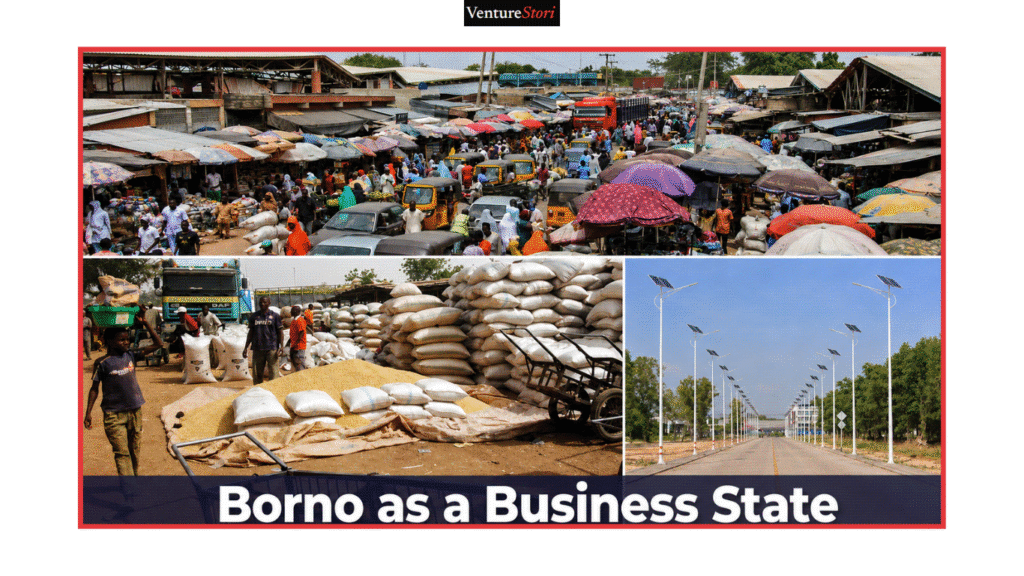
Urban Commercial Life in Maiduguri
The Maiduguri Metropolitan Council (MMC) and neighboring urban centers like Jere function as the primary institutional, financial, and administrative hubs featured in the Borno State Business Directory. In contrast to remote agricultural areas, the urban core maintains a stable security environment that supports commercial banks, formal retail outlets, corporate offices, and municipal markets.
The city’s population density has grown tremendously in the past decade. This shift from rural districts into the municipal center has created high demand for basic consumer goods, processed food, telecommunications, private education, real estate, and daily retail services across the Borno State Business Directory.
Rural communities and border local government areas present a much more complex operating environment compared to the urban core. Once recognized as one of the most fertile rice, wheat, vegetable, and freshwater fish-growing regions in West Africa, the Lake Chad basin continues to navigate localized security challenges.
Farmers in far northern LGAs frequently face obstacles such as limited access to remote farmland, occasional insurgent threats, and tight security checkpoints that impact the transportation of commercial goods to urban aggregation hubs.
Recovery, Reconstruction, and Stabilization Frameworks
Structured interventions by both Federal and State governments have given the economy in support for economic recovery. The North East Development Commission (NEC) jointly with the Borno State Government organizes multi-year civil infrastructure rehabilitation programs focusing on rehabilitation of civil infrastructure, repair of damaged road networks, rehabilitation of public housing units and reconstruction of basic public health facilities.
At the same time, humanitarian actors are slowly moving towards early recovery/livelihood restoration approaches. The programs focus on micro-grant financing for people who have been forced out of the workforce, training for new skills, and repairing municipal infrastructure and distributing agricultural inputs in secure LGAs.
The Active Sectors
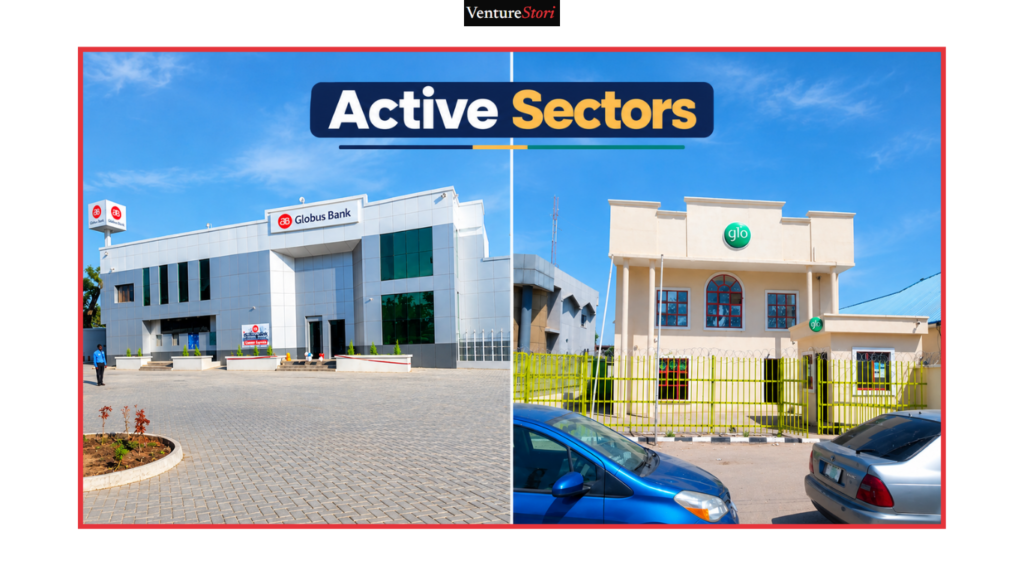
The formal and informal sector in Borno State involve several critical sectors that still generate significant revenues, employ a large workforce, and carry out significant commercial transactions.
Trade and Cross-Border Commerce
Private enterprise is still the leading force in the distribution of goods and services in Maiduguri, which is both wholesale and retail. The city is the final point of call for manufactured consumer goods, textiles, building materials, and electronics produced in the south, which is a manufacturing center, such as Lagos, Onitsha and Kano.
Agriculture and Food Processing
Despite the disruptions in the operations of agriculture caused by insecurity in the region, the sector is still the base of the Borno State economy. Historically the unique microclimates and river basins of the State provided the opportunity for multiple crops to be harvested each year. Currently, agriculture is done in the secured perimeter areas around urban centers and in the stabilized southern LGAs like Biu, Askira/Uba and Bayo.
It is a major production area of the staple grains such as sorghum, millet, maize and cowpea, as well as commercial production of sesame seeds, groundnuts, onions and tomatoes. The Komadugu Yobe River basin and the farms where farmers grow rice during the rainy season and dry-season crops around the accessible fringe of the town/farm provide substantial produce to the wholesale markets in Maiduguri.
Livestock Trading and Pastoral Logistics
One of the biggest livestock trading networks is located in Borno State in sub-Saharan Africa. Gamboru Cattle Market is a historic regional trading market in Maiduguri which serves as a trading hub for cattle, goats and sheep, which have been sourced from the pastoral routes in Chad, Niger, Sudan and northern Cameroon.
Livestock trading is done by well-established traditional livestock trading guilds. Animals are traded and transported to Maiduguri on purpose-built long-haul vehicles for transportation to major urban areas in the south such as Lagos, Ibadan, Port Harcourt, and Abuja.
The Humanitarian and Development Commercial Ecosystem
The city of Maiduguri is home to a large number of foreign non-governmental organizations, United Nations agencies and local civil society organizations, which have established a unique commercial landscape in the city. This sector has been created in order to respond to humanitarian needs but also serves as a gigantic engine for private sector service contracts all over the state.
Local vendors and service providers vie for high-priced contracts for vehicle fleet lease, heavy machinery hire, warehouse facilities, commercial printing, fuel, food and catering and office maintenance.
Reconstruction, Civil Engineering, and Building Materials
Civil construction is one of the most profitable industries in Borno State at present because of the reconstruction agenda in the state, which has been ongoing after the conflict. Large public works are being commissioned on a regular basis through federal interventions, as well as state-funded capital projects, through the NEDC. These are related to the dualization of the main urban road network, the construction of modern flyovers, mass housing estates and the rehabilitation of public schools and hospitals.
This constant physical growth generates high demand for heavy building materials, civil engineering consulting, surveying, electrical installation contracting and skilled trade manpower in the area.
Financial and Banking Services
The formal banking sector is dominated in Borno State, particularly in Maiduguri the commercial heart of the city, which is mainly along Sir Kashim Ibrahim Way and Bama Road. The major commercial banks in Nigeria have their established high-class offices, corporate banking departments and a wide network of ATMs operating in the capital city.
The main clientele of financial services in Maiduguri is institutional clients, government Payroll distribution, international development agencies and large-scale wholesale merchants.
Professional and Corporate Services
There is a relatively strong base of specialist professional service companies in Maiduguri, including both formal and informal firms, serving the formal corporate sector and international development community. The city’s corporate law firms specialize in contract negotiation, commercial litigation, real estate transactions and enforcement of regulations for foreign companies doing business in the North East region.
Likewise, accounting, tax advisory and management consulting firms are located in the capital to provide tax compliance and audit services for local companies, audit donor-funded grants, and provide procurement documentation and corporate restructuring.
The Business Districts and Key Areas of Maiduguri
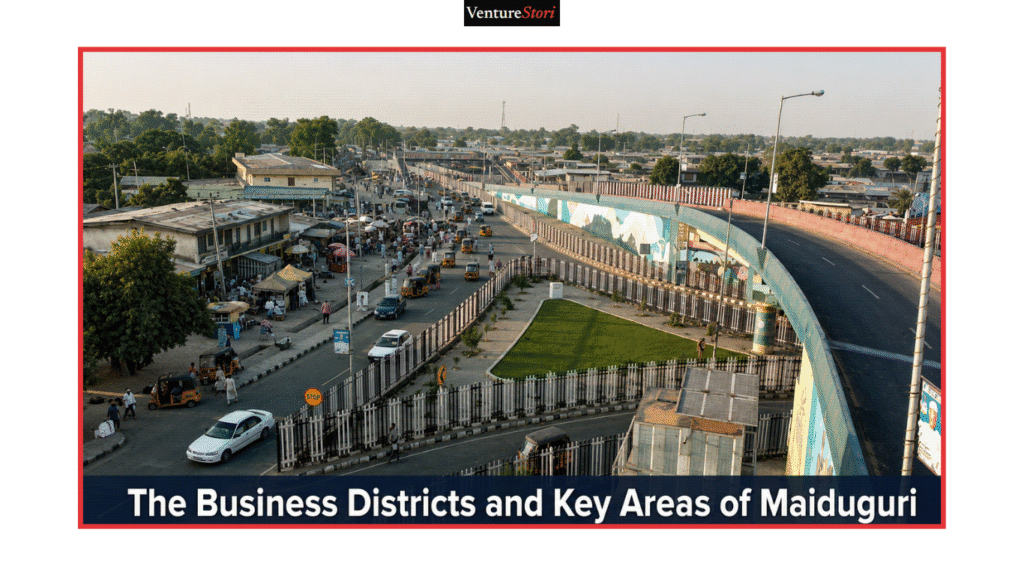
The commercial geography of Maiduguri involves understanding its key urban commercial corridors and clusters, which have different roles in the city.
Maiduguri City Centre and Monday Market
The old center of the city’s trade is the Maiduguri central market (the Monday market). This large-scale, commercial precinct has undergone a significant municipal restoration and modern redesign and has become the main shopping district for the whole state.
Bama Road Administrative and Institutional Corridor
Bama Road is the main institutional and corporate road in Maiduguri. The arterial road runs from the city center to the University of Maiduguri and has all the important state government ministries, the corporate headquarters, financial institutions, the top hotels and the country offices of major international NGOs.
Gamboru Market and Commodity Hub
The Gamboru Market axis is the main hub of agricultural commodities and livestock in the city, located on the eastern approach to the city. This region trades very large numbers of cattle, dried fish, grains and legumes, and fresh farm produce every day. Heavy haulage depots, grain storage warehouses, cattle pens and rural transport terminals to the eastern border communities are all around the streets in Maiduguri.
Bulumkutu, Kano Motor Park, and Custom Area
The western and northern entry points to Maiduguri (Bulumkutu and Kano Motor Park axis) are the logistics and transport hub of Maiduguri. Large motor parks, long-haul truck maintenance shops, parts markets, fuel depots, and light manufacturing facilities are found in these districts. This is where freight trucks from the West and South of Nigeria unload goods to hubs in the centre for distribution, or cross-border logistics firms are based at the customs area to process goods for shipment.
Investment and Development Activity
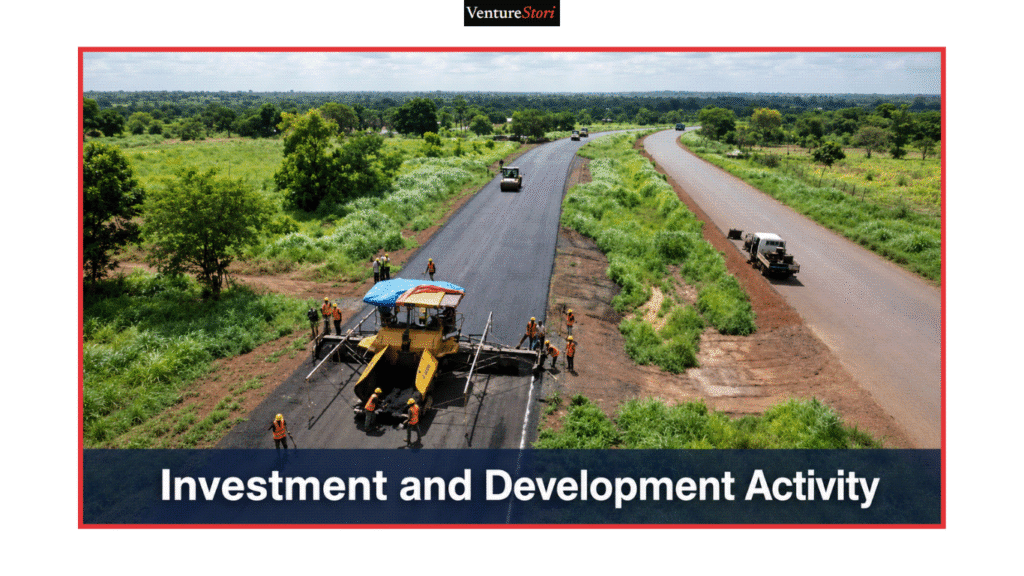
Public capital expenditure, development finance institution investments, and rehabilitation investments in the private sector are the key investment dynamics that drive investment in Borno State. Capital investment in the state is not on speculative real estate or heavy industrial investments but rather on infrastructure resilience, restoration of basic utilities, food security, and enterprise recovery.
Federal and State Infrastructure Spending
Under long-term development strategies, the Borno State Government allocates large chunks of its annual budget for the execution of capital projects. Strategic public investments include upgrading urban urbanization, providing a network of urban street drains, installing solar-powered street lighting networks and building rural roads connecting agrarian clusters with urban markets.
At the regional level, the North East Development Commission is the key link for the Federal intervention funds. The commission’s focus is on high impact reconstruction and development activities such as reconstruction of major bridges, multi-type housing projects for IDPs, rehabilitation of tertiary education institutes and funding for regional electrification projects.
Development Finance and Enterprise Support
International development organisations, Bank of Industry and the Central Bank of Nigeria periodically introduce targeted concessionary credit facilities in Borno State, acknowledging the need for the private sector to make the region stable in the long term. The initiatives for enterprise support are targeted at the Small, Medium and Micro Enterprises (SMMEs) in the Agriculture, Food Processing, Light Manufacturing and Vocational Trades sectors.
Typically, a program will provide small business loans, equipment loans, and business development technical assistance for local entrepreneurs seeking to expand business, repair and replace damaged physical equipment, and/or implement modern business management techniques, all at a low interest rate.
Private Sector Resilience Investments
Indigenous business families and existing trading syndicates in Borno State are the major providers of private capital investments. In recent years, private investments have focused on creating modern warehouses, automated grain-milling plants, cold storage facilities for perishable food products, commercial installations of solar panels, and modern hospitality facilities.
These private investments are to solve systemic operational issues. For example, as the electricity grid is unstable in the region, commercial real estate developers in the local area and hospital operators have been investing heavily in the installation of large-scale solar/grid hybrid energy systems, establishing an emerging market for solar energy contractors, battery storage suppliers, and solar maintenance technicians in Maiduguri.
Who Is Building Here
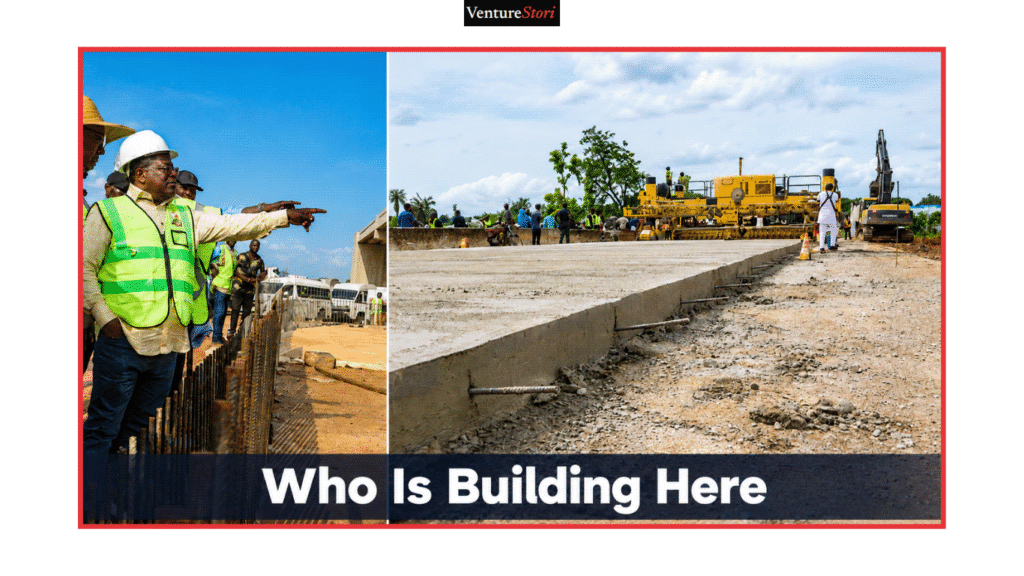
Despite a few headwinds in history, there are several operational entities, public authorities, and private operational bodies that are promoting the continuity of trade, rehabilitation of infrastructure, and the economy in Borno State.
North East Development Commission (NEDC)
The North East Development Commission is the central federal body in charge of reconstructing the North East and rehabilitating the people affected by the conflict in the region in Borno and neighboring northeastern states. The commission directly manages multi-sectoral development funds which focus on civil engineering, agricultural restoration, education, and health infrastructure with a big operational base in the region.
Maiduguri Monday Market Corporation
Maiduguri Monday Market Corporation is the state’s biggest commercial trading center managed by the municipality. After the full reconstruction of the Monday Market, the corporation is in charge of allocating the stalls, collecting the taxes, maintaining the facilities, and running the security operations of the market.
Indigenous Logistics and Haulage Cooperatives
The Borno state local transport and logistics unions such as the regional branches of the National Union of Road Transport Workers (NURTW) and specialized heavy truck owners’ association are significant props to the local daily commerce of Borno State.
Borno Business Directory
The following listings represent paid placements from commercial enterprises, service providers, and formal organizations currently operating within Borno State.
Explore Enterprise & Agriculture Across Minna & Bida
As Nigeria’s largest state by landmass and home to major hydroelectric infrastructure, explore verified company listings, large-scale agricultural investments, and strategic trade corridors in Niger State. Access the Niger State Business Directory →